
Ever wondered what actually eats a rat? You’re definitely not alone there.
Snakes, owls, foxes, cats, and even some bigger mammals go after rats. These hunters keep rat numbers from exploding, both in the wild and sometimes right in your backyard.
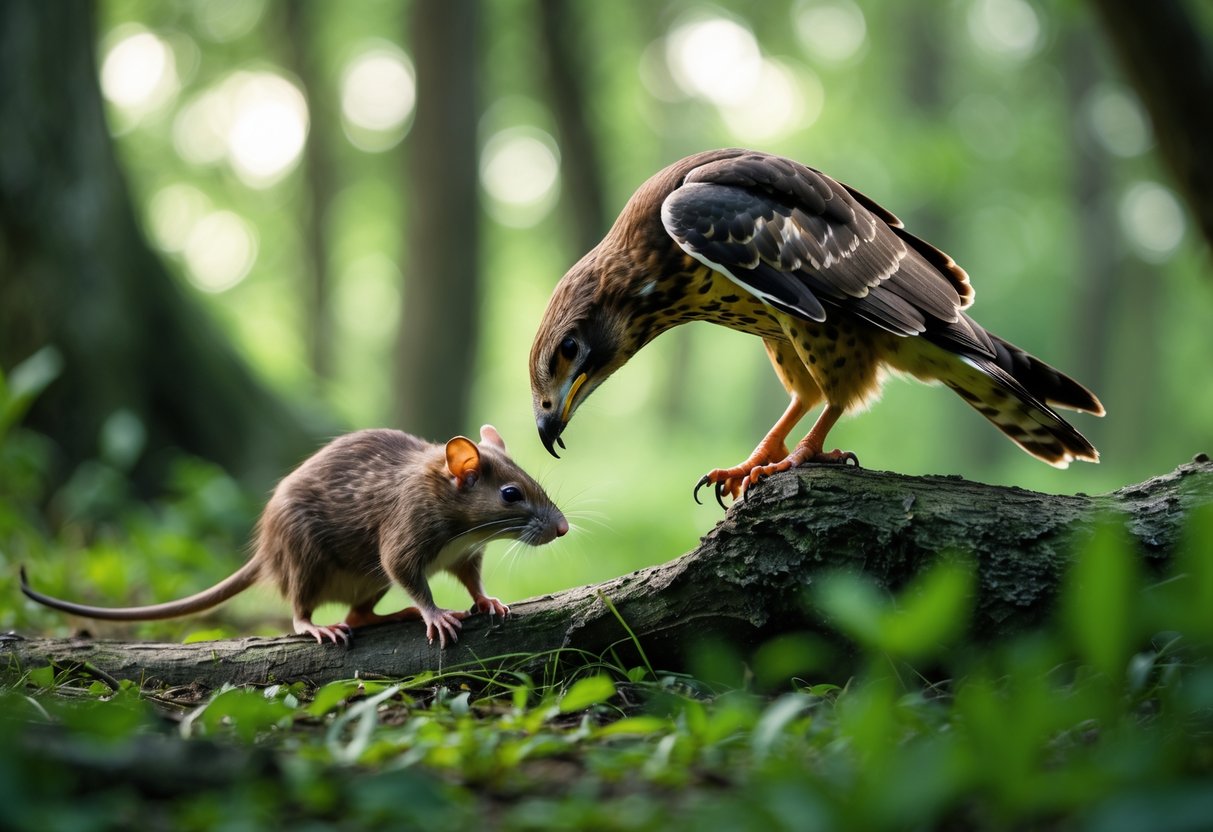
Learning about rat predators really helps you see how nature keeps everything in check. Both big and small animals depend on rats as a food source.
From silent barn owls to lightning-fast feral cats, rats fit into a huge food web that keeps things running smoothly.
It’s kind of wild to realize how many creatures are out there helping control rats—often without you noticing. Birds of prey, wild dogs, you name it, they’re all part of the system.
Curious about the whole list and why these predators matter? Let’s dig in.
Natural Predators of Rats

Rats have to watch out for quite a few natural enemies. Predators come from all sorts of animal groups—birds, mammals, reptiles.
They rely on sharp eyesight, speed, and strong senses to catch rats, which honestly, are pretty quick and sneaky themselves.
Birds of Prey: Owls, Hawks, and Falcons
Birds of prey are some of the best rat hunters out there. Owls, especially barn owls, gobble up tons of rats.
Their great night vision and nearly silent flight make them perfect for hunting rats after dark. A single barn owl can eat hundreds of rodents in a season.
Hawks like red-tailed hawks and American kestrels also go after rats, but during the day. They spot rats from way up high, then swoop down with those sharp talons.
Falcons get in on the action too, using their speed and agility to catch rats that are on the move. These birds make a big dent in rat populations, whether it’s in the city or out in the wild.
Felines: Wildcats and Domestic Cats
Both wild and domestic cats are natural rat hunters. Domestic cats, like the American shorthair, often chase rats around barns and houses.
They use sharp hearing and great night vision to catch rats in the dark. Wildcats like bobcats, lynx rufus, and mountain lions eat rats too, but it’s usually not a huge part of their diet.
Feral cats and smaller wild cats rely on speed, stealth, and sharp claws to snag rats. The cat family’s quick reflexes and retractable claws make them seriously effective at hunting rats.
Snakes: Rat Snakes, Corn Snakes, and More
Snakes take on a pretty big role in keeping rat numbers down. Rat snakes, obviously named for their favorite snack, catch rats quietly and efficiently.
They use heat-sensing pits to find rats, even when it’s dark out. Corn snakes also go after rats and show up in plenty of places.
These snakes squeeze their prey until it can’t move anymore. Some other snakes, like boas and a few vipers, will eat rats too if the opportunity comes up.
Dogs and Other Mammalian Hunters
Some mammals besides cats actively hunt rats. Wild canids like foxes, coyotes, and dingoes treat rats as a meal, especially when there’s not much else to eat.
They use their sharp noses and speed to track down rats. Certain dog breeds, especially terriers, get trained to hunt rats.
Mustelids—ferrets, weasels, stoats, mink—are small but seriously fierce. They squeeze into rat nests and catch them quickly.
Bigger mammals, like badgers, otters, and wolverines, will eat rats if they get the chance. Marsupials such as opossums and Tasmanian devils also eat rats, using strong jaws and a lot of stamina.
All these mammalian hunters help keep rat numbers under control in the wild.
If you want to go deeper, check out what eats rats.
Rats as Prey: Impact on the Ecosystem

Rats actually play a key part in ecosystems by serving as food for all sorts of predators. Their presence affects the balance of animals and plants nearby.
If you look closely, you’ll see how different species interact and keep each other in check.
How Predators Influence Rat Population
Owls, hawks, snakes, wild cats—they all help keep rat numbers in check. When these animals hunt rats, they stop the population from getting out of control.
If rat numbers go up, predators find more food and their own numbers might rise too. This cycle keeps rats from taking over.
Humans sometimes step in to manage rats, but wild animals do most of the heavy lifting out in nature. You could say these predators act like natural pest control, quietly reducing rat infestations.
Other Rodents and Small Mammals as Prey
Rats aren’t the only rodents on the menu. Predators eat mice and other small mammals too.
When food gets scarce, some predators switch from bigger prey to rats and mice because they’re easier to catch. This helps balance out the whole rodent population.
Sometimes, rats even eat smaller rodents or each other if things get tough. That kind of behavior affects how many young rats survive and helps keep their numbers steady.
Adaptations Rats Use to Evade Predators
Rats rely on sharp senses and quick reflexes to dodge danger. Their hearing picks up even the faintest sounds, and their sense of smell warns them when something’s off.
They climb and swim surprisingly well, so they can slip away into all sorts of hiding spots. Most of the time, rats prefer to move around at night—probably because hawks and other hunters are out during the day.
These little creatures also reproduce fast, which means their populations bounce back quickly. If you want to keep their numbers down, it takes patience and a good strategy.


