
If you’re a pet rabbit owner, you might wonder about the best foods for your furry friend. Rabbits can eat cucumber, but you should do so in moderation. Cucumbers offer hydration and can be a refreshing treat for your bunny, but too much can lead to upset stomachs or other issues.
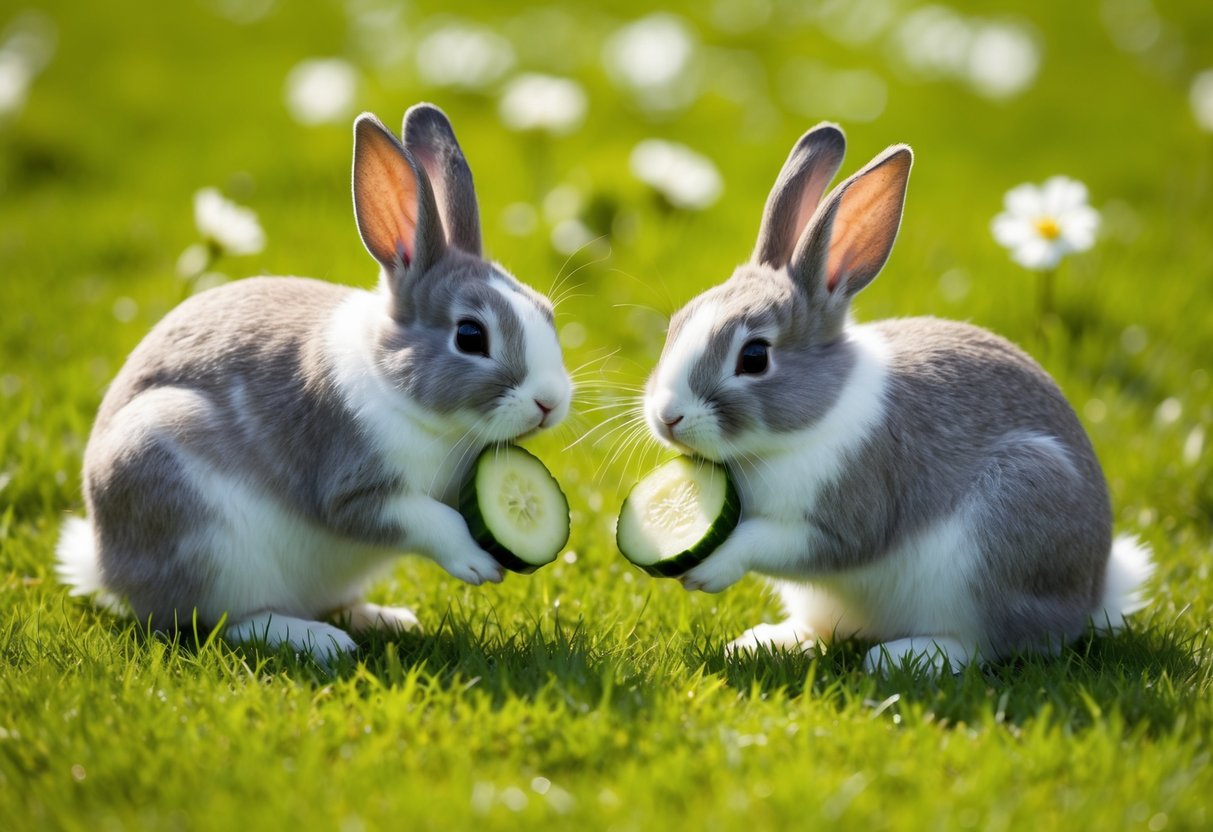
When considering your rabbit’s diet, it’s essential to focus on a variety of safe vegetables and hay. Cucumber can be a fun addition, but you’ll want to limit it to just a few slices a few times a week. This way, you can keep your pet healthy while still allowing them to enjoy new tastes and textures.
Understanding what your pet rabbit can eat will help you provide a well-rounded diet. As you explore their options, remember that each rabbit is unique, and observing how your bunny reacts to new foods is key.
Cucumber Basics and Rabbit Dietary Needs

Cucumbers can be a fun addition to your rabbit’s diet. Understanding their benefits and how they fit into your furry friend’s nutritional needs is essential for keeping them happy and healthy.
Overview of Cucumber Benefits
Cucumbers are not just a tasty treat for rabbits; they also offer many health benefits. They are very low in calories, making them perfect for rabbits prone to weight gain.
Here are key benefits:
- Hydration: With their high water content of around 95%, cucumbers help keep your rabbit hydrated, especially in warm weather.
- Vitamins and minerals: Cucumbers provide some essential vitamins like vitamin A, which supports skin health and vision.
- Fiber: The fiber in cucumbers aids in digestive health, helping to prevent issues like bloating or gas.
The blend of these factors makes cucumbers a healthy choice for your rabbit’s occasional snack.
Understanding a Rabbit’s Diet
Rabbits thrive on a balanced diet mainly consisting of hay, fresh vegetables, and a small number of pellets. Their digestive systems require fiber to function properly, and cucumber can play a supporting role.
When feeding cucumbers, it’s important to keep a few things in mind:
- Offer them in moderation to avoid digestive issues.
- Fresh, organic cucumbers with the skin attached provide the most nutritional value.
- Always wash cucumbers thoroughly to remove any pesticides.
Make sure to include a variety of other vegetables in your rabbit’s diet to ensure they receive adequate nutrients. Incorporating cucumbers can add variety and make mealtime exciting for your furry companion.
How to Safely Feed Cucumbers to Rabbits

Feeding cucumbers to your rabbit can be a refreshing treat if done the right way. Understanding how to prepare cucumbers and knowing the appropriate portion sizes are essential steps to keep your bunny happy and healthy.
Preparing Cucumber for Your Rabbit
When preparing fresh cucumbers for your rabbit, start by washing them thoroughly. This removes any pesticides or dirt.
Next, cut the cucumber into small, manageable slices. You can also peel the skin if your rabbit is sensitive to texture, but the skin contains some nutrients.
Be sure to remove any seeds from the cucumber if they are large and difficult for your rabbit to eat. While most cucumber seeds are safe, it’s best to avoid them if you’re unsure.
Always introduce cucumbers gradually to see how your rabbit reacts. If your bunny shows signs of an upset stomach, stop feeding them cucumbers.
Portion Sizes and Frequency
Feeding cucumbers should be done in moderation. A good rule of thumb is to offer only a few thin slices at a time.
Generally, you can give cucumbers two to three times a week, depending on your rabbit’s size and health.
Baby rabbits may need even smaller portions, as their digestive systems are still developing. Cucumbers should not replace your rabbit’s main diet, which should consist mainly of hay and fresh greens. Remember to monitor your rabbit after introducing cucumbers to be sure they handle the new treat well.
Risks and Considerations for Rabbit Health
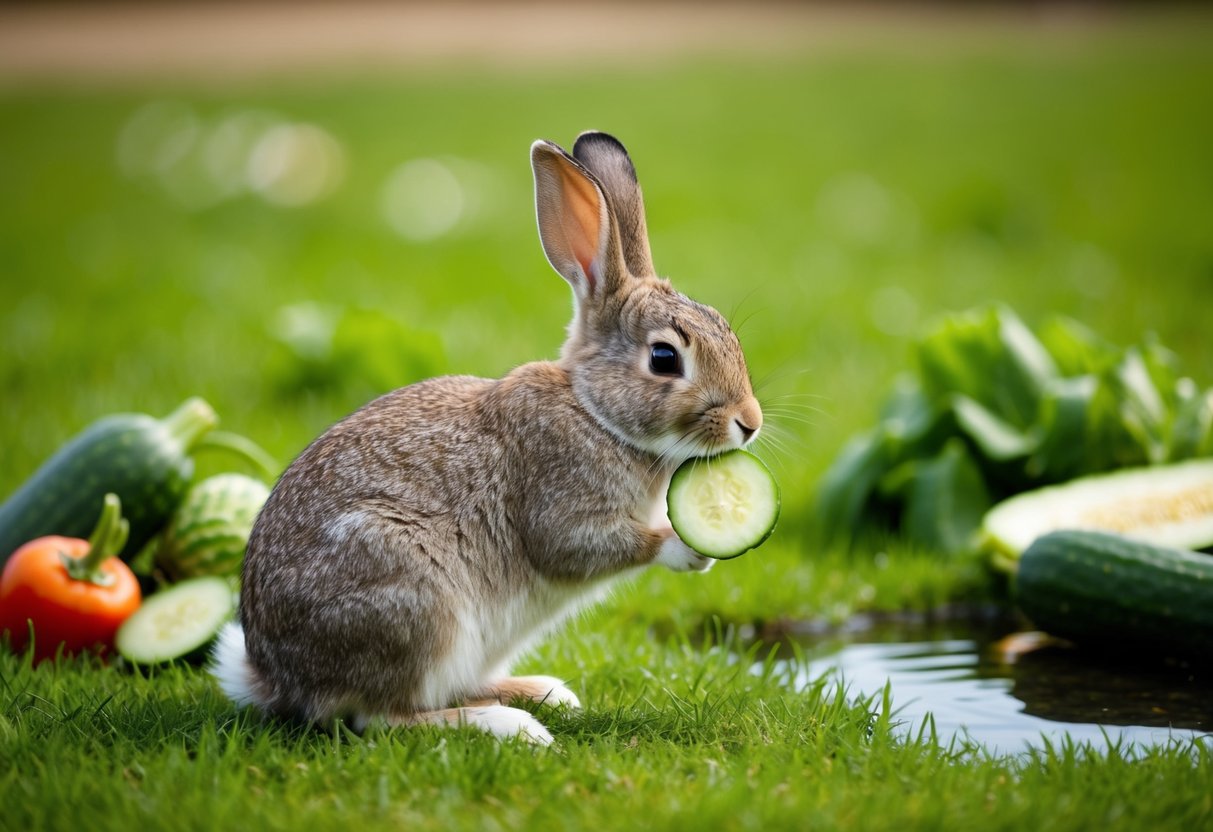
When thinking about including cucumbers in your rabbit’s diet, it’s important to consider the potential health risks. Keeping your rabbit healthy means being aware of the possible digestive upsets and knowing which foods to avoid.
Potential Health Concerns
While cucumbers are generally safe for rabbits, moderation is key. Too much cucumber can lead to digestive issues like diarrhea or gas. Rabbits have sensitive stomachs, and sudden changes in their diet can upset their digestion.
Start by introducing cucumbers slowly. This lets you monitor how your rabbit reacts. If you notice signs of discomfort or changes in their stool, it might be best to cut back. Remember, wild rabbits eat a varied diet and their digestive systems are adapted to it. Your pet rabbit might not be so tolerant of sudden dietary changes.
Foods to Avoid for Rabbits
Certain foods can be harmful to rabbits and should always be avoided. Foods high in sugar, like fruits, or starchy vegetables can lead to obesity and other health problems.
Here’s a list of foods to avoid:
- Onions: Toxic to rabbits.
- Avocado: Contains a substance that can be harmful.
- Potatoes: Starch-heavy and not suitable.
- Certain nuts: High in fat and can upset digestion.
Sticking to safe foods and maintaining a balanced rabbit diet is crucial for your pet’s well-being. Always ensure your rabbit has access to hay and fresh vegetables for the best health.


