
The Arctic fox is known for its clever hunting skills and adaptability in harsh conditions. You might wonder whether this resourceful predator can catch and eat an Arctic hare. Yes, Arctic foxes do eat Arctic hares, particularly when food is scarce during winter months. This makes the Arctic hare an important part of the fox’s diet, alongside other small mammals and birds found in their tundra habitat.
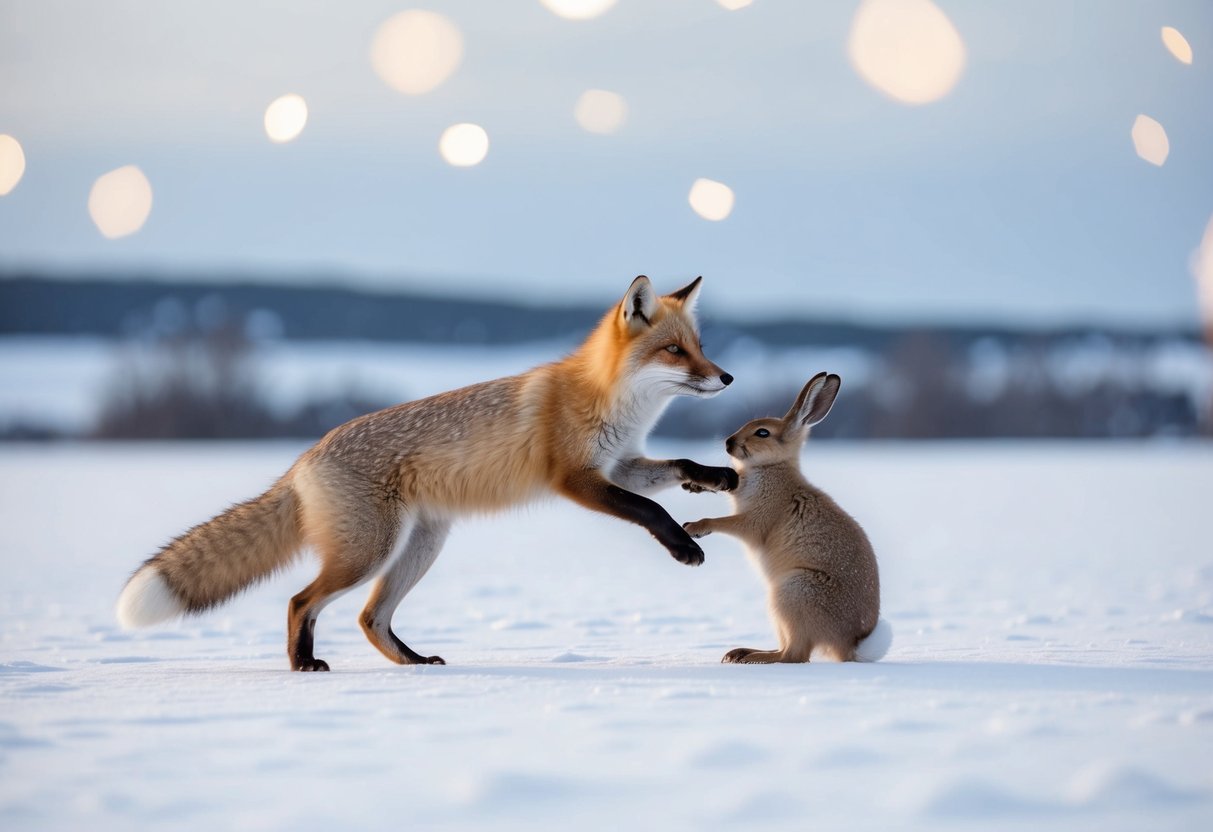
In the vast and icy Arctic habitat, Arctic hares are swift and agile, boasting a top speed that allows them to escape many predators. Yet, the Arctic fox has its own strategies and capabilities, allowing it to hunt these hares successfully at times. Predation pressure from foxes and other animals, such as Arctic wolves and snowy owls, can significantly impact hare populations, shaping the delicate balance of this ecosystem.
If you’re curious about the dynamic relationship between these two fascinating animals and how they fit into the Arctic food web, read on to explore their interactions further.
The Arctic Fox: Physical Characteristics and Habitat
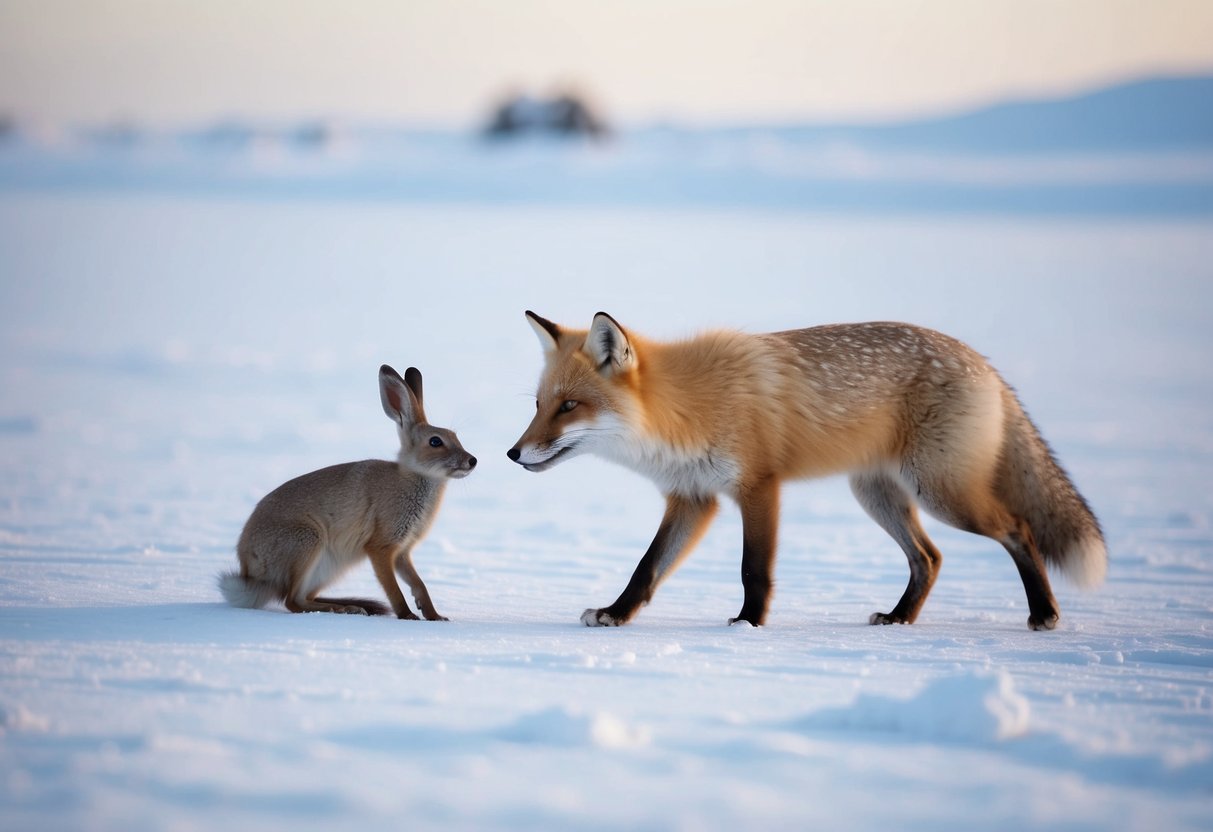
The Arctic fox, known scientifically as Vulpes lagopus, is well-suited for life in the Arctic tundra. Its survival skills are crucial in a habitat where temperatures can drop dramatically. Let’s explore how this fox adapts to its cold environment and how it hunts for food.
Adaptations to Cold Climates
The Arctic fox has several remarkable adaptations to survive harsh conditions. Its thick, warm fur keeps it insulated against freezing temperatures. In winter, the fur is bright white, which provides excellent camouflage against the snow. During the summer, it changes to a grey or brown hue, blending in with the tundra landscape.
Another key feature is its compact body, which minimizes heat loss. The fox’s bushy tail acts as a warm cover when curled up to sleep. They also have small, furry ears to reduce heat escape. Such adaptations help the Arctic fox thrive in a habitat where temperatures can fall below -50º F.
Hunting Strategies and Diet
The Arctic fox is an opportunistic eater, mainly hunting small mammals like lemmings. They cleverly use their keen sense of hearing to locate prey under the snow. In addition to lemmings, they also eat fish, seabirds, and eggs, depending on availability.
Their hunting style often includes a surprising leap through the snow to catch prey. Interestingly, they may also scavenge leftover food from larger predators, like snowy owls. This adaptability ensures they have enough food to survive the Arctic’s challenges.
The Arctic Hare: Behavior and Survival

The Arctic hare, scientifically known as Lepus arcticus, has developed unique behaviors to survive in its harsh environment. These strategies help them evade predators and find food, which is crucial for their survival in the tundra.
Evading Predators Through Agility and Speed
To escape predators like snowy owls, golden eagles, and lynx, the Arctic hare relies on its agility and speed. These hares can reach impressive speeds of up to 60 km/h. Their strong legs allow for quick, high jumps, which help them navigate the rocky tundra.
During winter, their seasonal coat turns white, providing excellent camouflage against the snow. This ability to blend in with their surroundings makes it harder for predators to spot them. In summer, their fur changes to a grayish-brown hue, helping them hide among rocks and plants.
Arctic hares are known to use zigzag patterns when fleeing, making it challenging for predators to catch them. This combined agility and speed offer them a strong chance of survival despite the numerous threats they face in the wild.
Nutritional Sources and Foraging Habits
As herbivores, Arctic hares have specialized diets that help them thrive in the tundra. They mainly feed on woody plants, leaves, and berries during the warmer months. Common dietary choices include birch, juniper, and willow.
During winter, finding food can be tough due to snow cover. To adapt, Arctic hares dig through the snow to reach their food sources. They use strategic foraging techniques to uncover hidden plants, ensuring they have enough nutrients to survive.
These hares store fat during summer to prepare for the harsh winter months. Climate change poses a threat to their foraging habits, as changing weather patterns can affect plant availability. Despite these challenges, Arctic hares continue to use their keen instincts to find food, keeping them resilient in a changing environment.
Interactions Between Arctic Foxes and Arctic Hares

Understanding how Arctic foxes and Arctic hares interact is important for grasping their roles in the ecosystem. These dynamics highlight the predator-prey relationship between these two animals and how climate change influences their interactions.
Predator and Prey Dynamics
Arctic foxes are skilled predators that often hunt Arctic hares. Hares serve as a food source, making up a part of the fox’s diet, though they are not the main prey. Foxes also eat smaller mammals, like lemmings.
The hunting strategy of Arctic foxes includes stealth and quick movements. They rely on their keen sense of hearing to locate the hares, especially under the snow. In response, Arctic hares have developed swift running abilities and excellent camouflage to evade their predators.
The competition for food also plays a role in their interactions. When food is scarce, both species may have to adapt their behaviors to survive. This ongoing dance between predator and prey influences their populations and behavior patterns.
Climate Change Impacts on Species Interactions
Climate change is reshaping the habitats of both Arctic foxes and Arctic hares. Warmer temperatures and changing snow patterns affect their lifestyles and interactions.
For example, as the snow cover changes, it impacts how foxes hunt. They may experience difficulties finding hares, which rely on snow for cover. Additionally, changes in vegetation can affect hare populations and their food sources.
These shifts can lead to increased competition among carnivores, including Arctic foxes, as they search for alternative food sources. This may affect their hunting strategies and overall survival, making adaptability crucial for both species in a changing environment.
Conservation Status and Human Influences
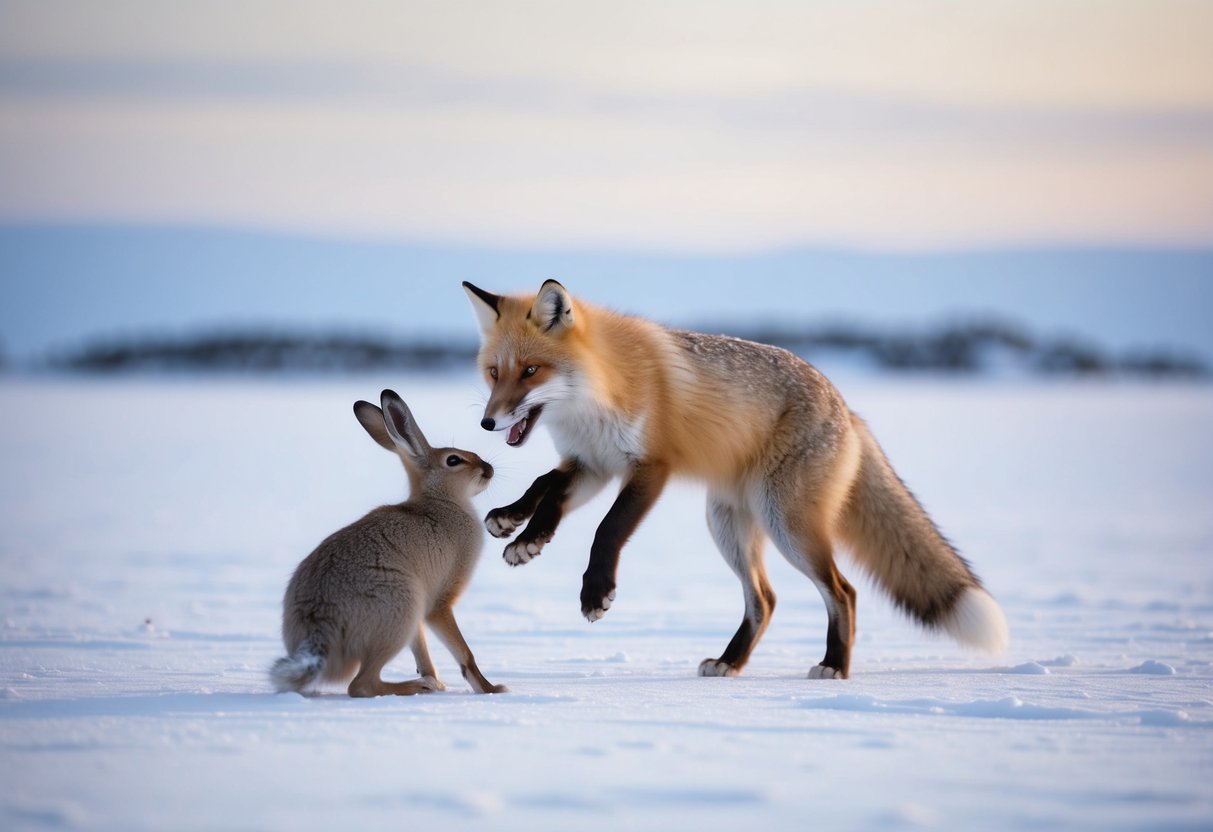
The Arctic fox is facing various challenges due to human activity and environmental changes. Understanding these factors can help you appreciate the importance of effective conservation efforts.
Preservation Efforts for Arctic Wildlife
Conservation actions aim to protect species like the Arctic fox, which is listed as Near Threatened on the IUCN Red List. In some areas, humans implement measures such as habitat protection and wildlife management.
Efforts include creating protected territories to ensure the foxes have safe environments to thrive. In regions where Arctic hares are present, preserving their habitats is also essential. With a lifespan of about 3 to 6 years in the wild, every individual counts.
Ongoing studies help monitor populations and their health, allowing for adjustments in conservation strategies as needed. Community involvement and awareness are key to these initiatives, making you a vital part of the solution.
The Role of Humans in Arctic Ecosystems
Humans significantly impact Arctic ecosystems through activities like climate change and land development. The warming climate affects prey availability, including lemmings and hares, which are crucial for the Arctic fox’s diet.
As ice melts and habitats change, Arctic foxes may struggle to find food. Human encroachment can also lead to habitat loss, disrupting their living spaces.
While hunting pressures have decreased, the Arctic fox still faces risks. Understanding your role in reducing carbon footprints can help protect these animals.
Simple actions, like supporting sustainable practices, can contribute to the well-being of Arctic ecosystems and the animals that call them home.


