
Snowy owls are fascinating creatures that capture the imagination with their striking appearance and hunting skills. Living in the Arctic tundra, these birds of prey are well adapted to the harsh conditions of their environment. You might be wondering about their diet and whether they rely on local wildlife for food.
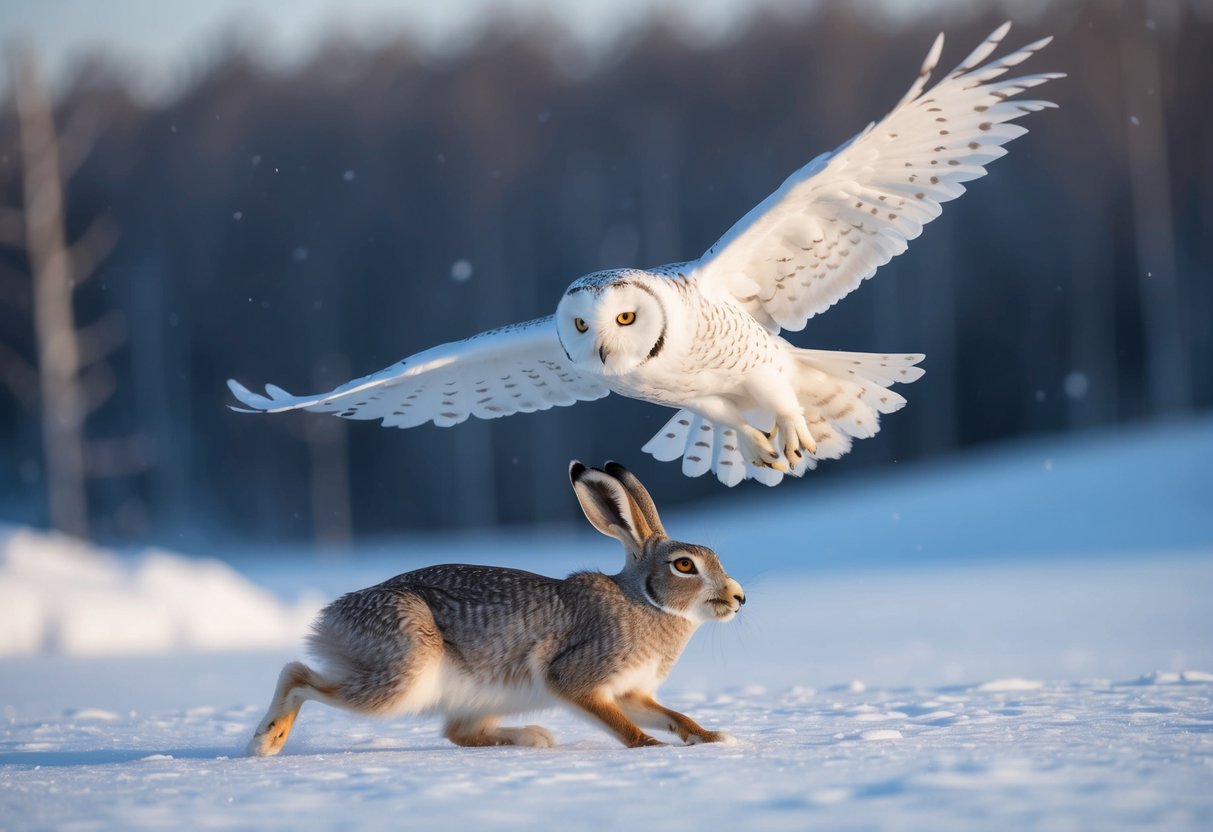
Yes, snowy owls do eat arctic hares! These hares are among their primary prey, along with other small mammals. In the tundra, where food can be scarce, snowy owls have learned to hunt effectively. They make use of their keen eyesight and excellent hearing to find their meal. This connection between snowy owls and arctic hares is vital to understanding the ecosystem of this unique habitat.
As you explore more about snowy owls and their role as predators, you’ll see how their relationship with arctic hares highlights the intricate balance of life in the Arctic tundra. Whether you’re a birdwatcher, a nature lover, or just curious about wildlife, learning about how these majestic owls hunt can offer you a new perspective on the wonders of nature.
The Snowy Owl: An Overview
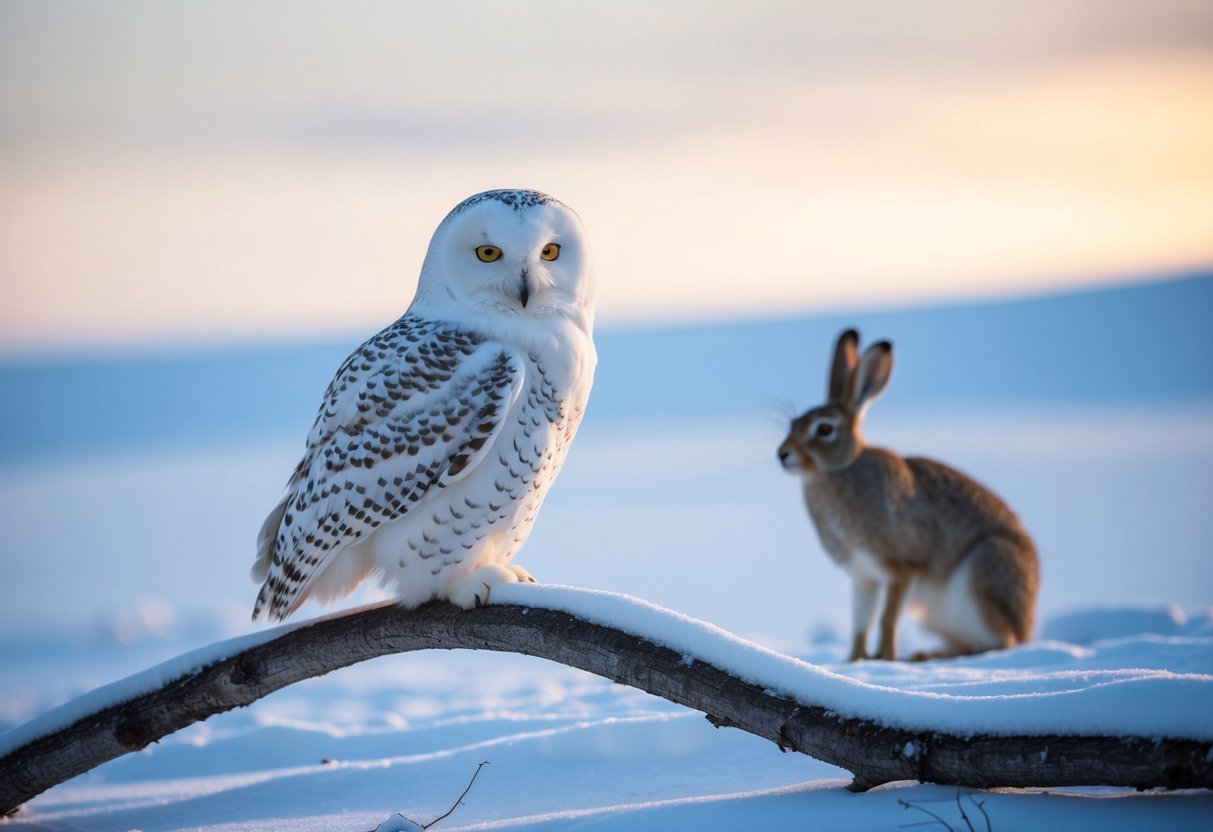
The snowy owl is a fascinating bird that captures attention with its stunning appearance and unique behavior. Known scientifically as Bubo scandiacus, this carnivorous owl thrives in the harsh conditions of the Arctic tundra.
Key Characteristics
One of the most striking features of the snowy owl is its white plumage. This helps it blend seamlessly into the snowy environment. The white helps in camouflage, making it easier to hunt.
Its wingspan ranges from 49 to 59 inches, allowing for great agility in the air. You’ll also notice the snowy owl has bright yellow eyes, perfect for spotting movement even in low light.
Snowy owls are mostly female and larger than males. They can be exceptional hunters with a diet that often includes small mammals like lemmings, voles, and even arctic hares.
Habitat and Distribution
Snowy owls are predominantly found in the Arctic region, including areas in North America, Europe, Asia, and Greenland. They prefer the open tundra, where they can easily spot their prey.
During winter, some snowy owls migrate to more temperate areas in search of food. This adaptability helps them survive in different environments.
You may spot them perched on rocks or low buildings, scanning the ground for potential meals. These birds are known for their remarkable ability to thrive in extreme cold and snowy conditions.
Dietary Patterns of Snowy Owls

Snowy owls are fascinating creatures with specific dietary patterns. They adapt their hunting strategies based on prey availability and are known for their diverse diet, primarily consisting of small mammals and birds.
Hunting Strategies
As opportunistic hunters, snowy owls use various techniques to catch their prey. They rely on their excellent eyesight and hearing to locate food from high perches. From there, they can spot lemmings, voles, or even rabbits moving in the tundra.
Snowy owls are particularly patient hunters. They often wait for the right moment to swoop down and catch their target off-guard. This approach allows them to take advantage of the abundant food sources during peak seasons. Hunting often occurs during dusk or dawn, exploiting the lower light conditions for better chances of success.
Common Prey Species
Snowy owls mainly eat lemmings, which are small, abundant rodents in their Arctic habitats. During times when lemmings are less available, they turn to other small mammals like voles and squirrels. Adult snowy owls can also catch and consume arctic hares, which can weigh twice as much as the owls themselves.
Their diet also includes various birds, such as ducks and seabirds. Occasionally, they might eat fish in coastal areas when the opportunity arises. Snowy owls even produce pellets from the indigestible remains of their prey, which provides insight into their diet. This diverse menu plays a crucial role in their survival in harsh tundra environments.
Snowy Owls and Arctic Hares: Predation and Interaction
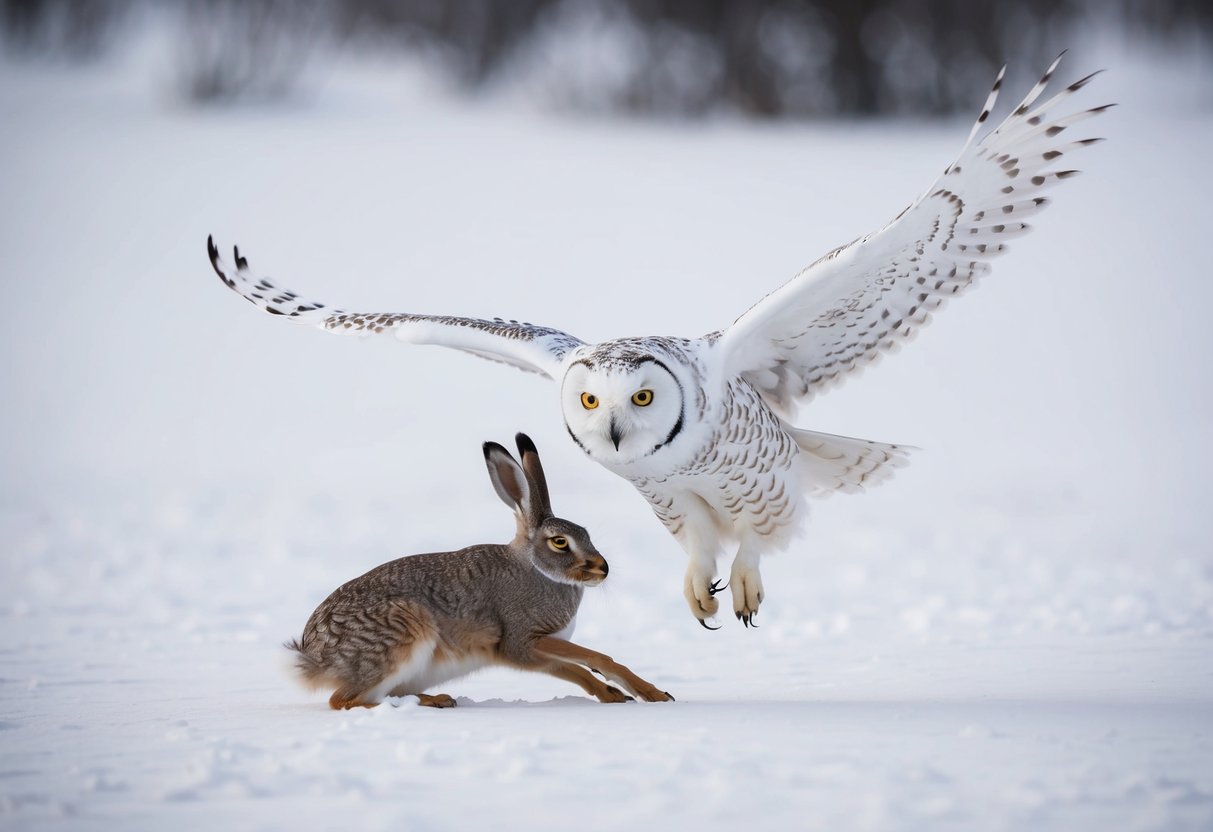
Snowy owls play a significant role in the tundra ecosystem as hunters. Their interaction with Arctic hares reveals much about their feeding habits and adaptations. Understanding these dynamics sheds light on how these animals thrive in harsh Arctic conditions.
Feeding Habits During Breeding Season
During the breeding season, snowy owls increase their hunting activity. They target juvenile Arctic hares, which are abundant and provide essential nutrition for the owls while they raise their young. Hares become more active in spring, which can make them easier targets.
Snowy owls use their exceptional vision to spot their prey from great distances. Once they identify a hare, they rely on their silent flight to approach closely without alerting it. Their powerful talons then allow them to catch the hare quickly when the moment is right.
These feeding habits are critical, as they ensure a steady food supply for the snowy owls, helping them sustain themselves and their chicks during the demanding breeding season.
Adaptations for Hunting in the Arctic
Snowy owls possess unique adaptations that make them effective hunters in the tundra. One of their key features is their striking white plumage, which provides excellent camouflage against the snowy landscape. This adaptation allows them to blend seamlessly with their surroundings while they hunt.
Their physical traits, such as keen eyesight and sharp talons, enhance their hunting efficiency. They can spot an Arctic hare even from a long distance, quickly scanning the terrain for movement.
In addition to visual adaptations, snowy owls have an incredible ability to fly silently. This stealthy approach helps them surprise their prey, like Arctic hares, which are often oblivious to the danger until it’s too late. These skills are vital for survival in the harsh Arctic environment.


