
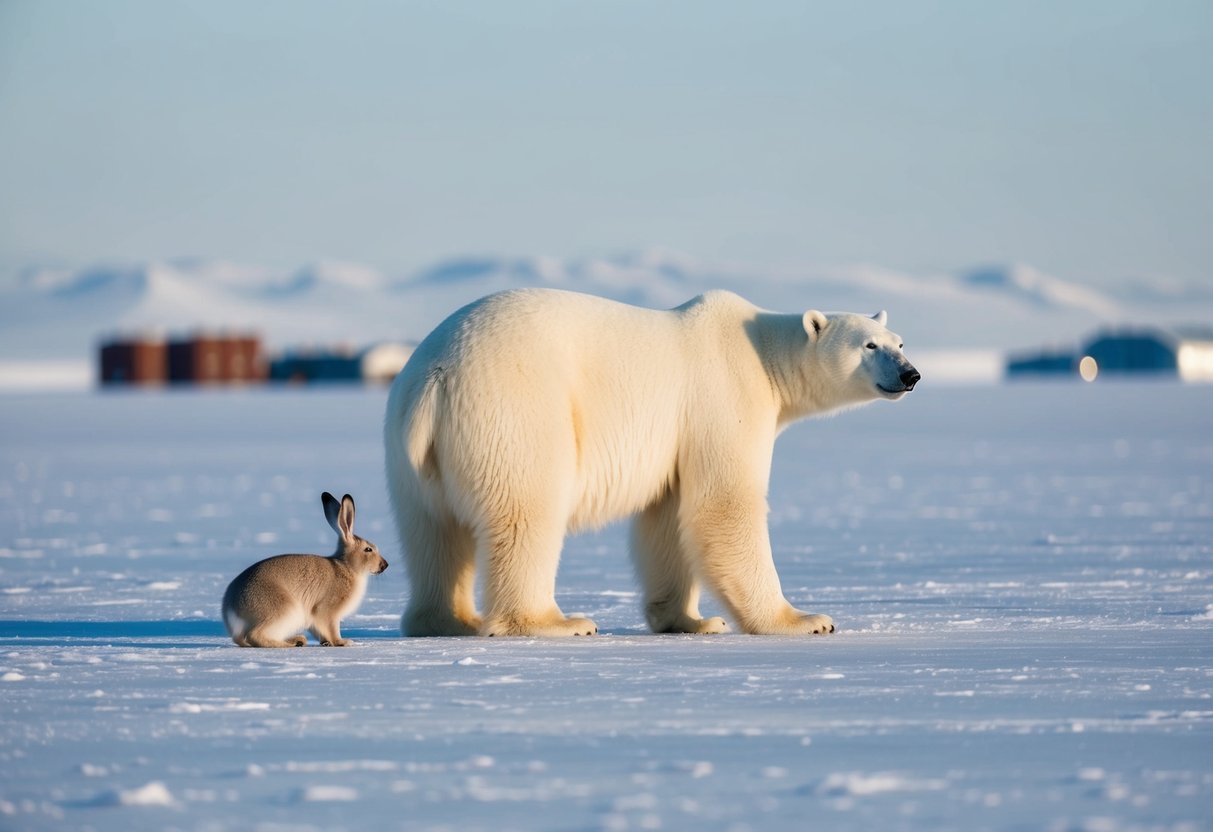
When you think of polar bears, you might picture these massive creatures hunting seals on the icy shores of the Arctic. But, polar bears do not typically target Arctic hares as their main food source. While they are opportunistic hunters and may eat an Arctic hare if food is scarce, seals make up the bulk of their diet.
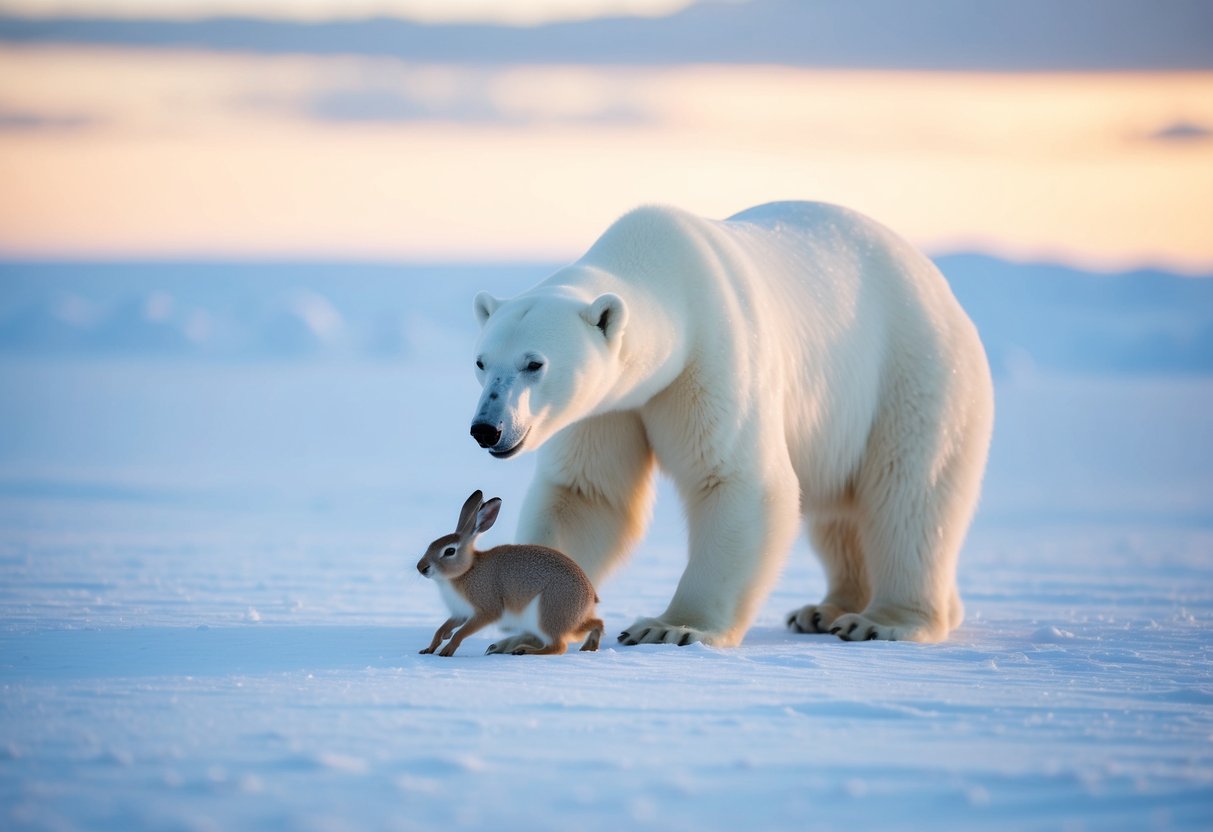
Arctic hares, on the other hand, are better known for being preyed upon by other animals like foxes and owls. This makes them an important part of the Arctic food web, relying on their speed and camouflage to escape predators.
By learning more about the relationship between these two iconic Arctic animals, you can gain a deeper appreciation for how they survive in such a harsh environment.
Curious about how polar bears manage to find their food and how Arctic hares defend themselves? Let’s explore the fascinating dynamics between these two residents of the Arctic!
Polar Bear Habitats and Diet
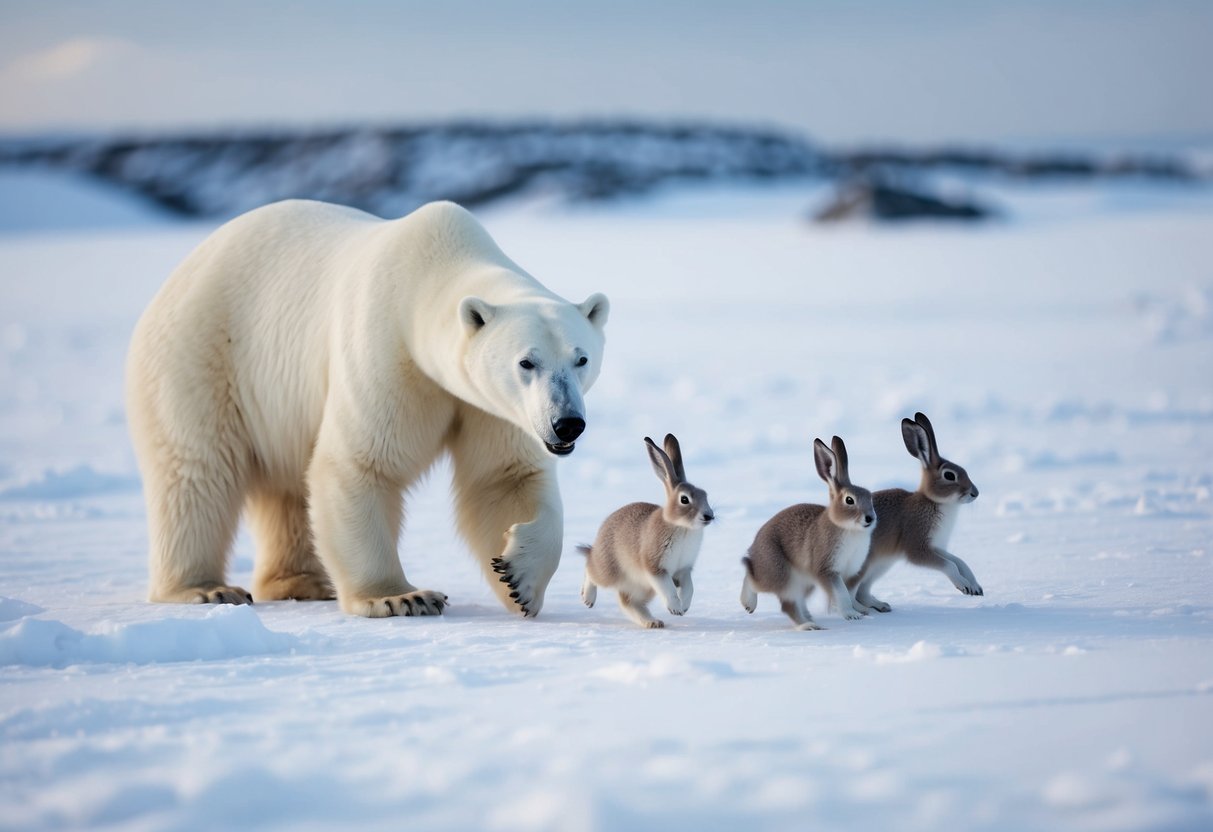
Understanding the habitats and dietary patterns of polar bears gives you insight into their survival in the Arctic. These magnificent animals rely on specific food sources, mainly found in their icy homes.
Dietary Patterns of Polar Bears
Polar bears are apex predators with a diet mainly composed of seals, particularly ringed and bearded seals. They rely on the fat from these marine mammals for energy. The high-fat content is crucial for maintaining their body temperature in the frigid Arctic climate.
Occasionally, polar bears may consume fish, birds, or even berries when their preferred food is scarce. This makes them opportunistic feeders. Their efficient digestion helps them absorb about 84% of the protein and 97% of the fat they eat.
As climate change impacts their habitat, the availability of seals could decline. This shift may force polar bears to adapt their diet, affecting their role in the Arctic food web.
Arctic Hare Habitats and Behavior
While arctic hares live in tundra habitats, they are not a primary food source for polar bears. These hares prefer areas with dense shrubs and low vegetation, which provides cover from predators. Their habitats are often at the edges of ice-covered regions.
Arctic hares are herbivores, feeding mainly on grasses, leaves, and berries. They have developed adaptations to survive harsh winters, including using burrows for shelter.
Interaction Between Polar Bears and Arctic Hares
Polar bears and arctic hares have a unique relationship in the Arctic ecosystem. Understanding their interactions reveals the balance of predator and prey dynamics. Let’s explore how polar bears hunt and how arctic hares defend themselves.
Predatory Behaviors of Polar Bears
Polar bears primarily hunt seals, but they may occasionally encounter arctic hares. Their strong sense of smell helps them detect prey, even under layers of snow. When hunting, polar bears can use their speed and stealth.
They often rely on surprise, stalking their target quietly. If they spot an arctic hare, they will use both their agility and strength to catch it.
Defensive Mechanisms of Arctic Hares
Arctic hares have several defenses against predators including polar bears. One major strategy is camouflage. Their white fur blends into the snowy environment, making it harder for bears to spot them.
Arctic hares are also extremely fast. They can quickly dash away from danger. When threatened, they often zigzag to confuse predators. Their strong hind legs allow them to leap over obstacles as they flee.
Additionally, these hares rely on their keen hearing and sense of smell to detect danger. They often remain alert and can escape before a predator gets too close. This combination of traits helps them survive in a challenging environment.
Impact of Environmental Changes
Environmental changes greatly affect polar bears and their habitat. These changes mainly stem from climate change, which disrupts the delicate balance of Arctic ecosystems. Understanding these impacts helps you see how they influence polar bears and the animals they rely on.
Effects of Climate Change on Arctic Species
Climate change leads to a significant loss of sea ice, which is vital for polar bears and their prey, like seals. As the ice melts, polar bears have fewer places to hunt. This change puts stress on their ability to find food.
Additionally, the melting ice alters the habitats of other Arctic species. Animals like Arctic hares depend on stable environments to thrive. With ice and snow patterns shifting, their food sources, such as lichen and grasses, also face threats. When habitats change, the entire ecosystem can feel the effects.
Adaptations to the Changing Arctic
In response to these challenges, many Arctic species have started to adapt. Polar bears, for example, may travel longer distances to find food or seek out new hunting grounds as their traditional areas become less reliable.
Other species, like Arctic hares, may change their diets to include different vegetation available during warmer months. Some hares may start eating more flowers or grass if lichen becomes scarce. These adaptations show how resilient Arctic animals can be, though the speed of climate change poses a constant challenge for their survival.
Conservation Efforts and Human Influence
Understanding how to protect Arctic wildlife is crucial. Efforts focus on preserving polar bears and their habitat. At the same time, human activities can significantly impact these efforts.
Protection of Arctic Wildlife
Various organizations work to safeguard polar bears and their environment. These efforts include creating protected areas and establishing wildlife reserves in places like Canada and Greenland.
In Canada, for instance, some regions restrict human activity during the polar bear breeding season. This helps reduce stress on the animals and ensures their survival.
Your involvement in conservation can make a difference. Educating others about polar bears and contributing to preservation projects can support these majestic creatures.
Human Activities and Their Effects
Polar bears are majorly impacted by human activities. Industrial pollution and resource extraction drive climate change, which threatens their icy habitats. The sea ice they depend on shrinks as the Arctic warms.
In North America, oil drilling and shipping routes can disturb polar bears. These changes not only affect their habitat but can also increase encounters with humans.
As food sources change, other Arctic wildlife can be more easily hunted. By supporting sustainable practices, you can help polar bears thrive despite these challenges.


