
Arctic hares are fascinating creatures, especially when winter arrives and their fur changes color from brown to white. This color change helps them blend into the snowy landscape, providing excellent camouflage and protection from predators.
You might wonder what triggers this transformation and how these amazing animals survive in such harsh conditions.
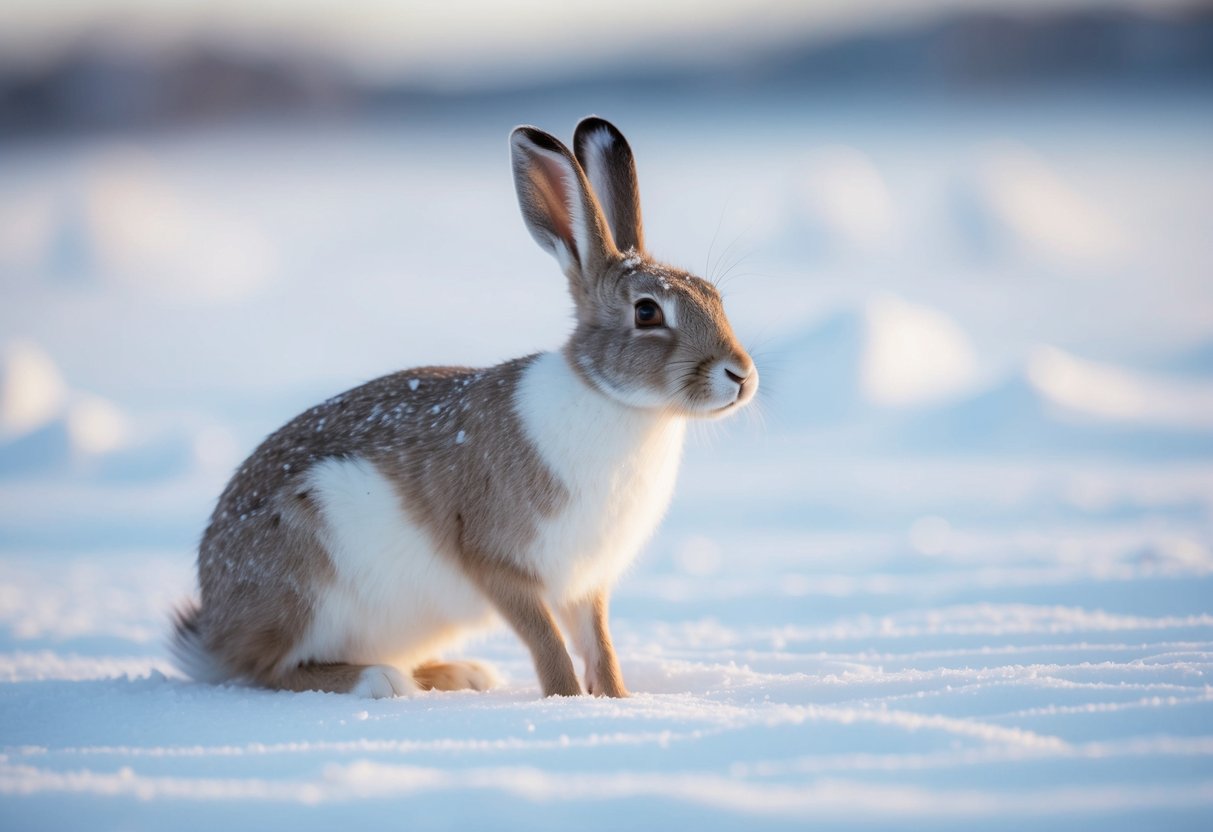
The shift in fur color is mainly due to changes in daylight. As the days get shorter in winter, the hares’ bodies respond by altering their fur.
This adaptability is crucial for their survival in icy habitats. Learning how Arctic hares manage this change offers great insight into the incredible strategies animals use to thrive in the wild.
Understanding why Arctic hares turn white isn’t just about the animals themselves; it teaches us more about nature’s amazing ability to adapt and survive. As you explore this topic, you’ll uncover the science behind this transformation and the role it plays in the hare’s life.
Understanding Arctic Hare Adaptations

Arctic hares have developed unique adaptations that help them survive in their extreme environment. These adaptations include changes in their fur and behaviors that support their survival during cold winters.
Evolution of the Arctic Hare’s Winter Coat
The Arctic hare, known scientifically as Lepus arcticus, evolves its coat to adapt to seasonal changes. In winter, its fur turns a striking white. This color change is not just for beauty; it provides effective camouflage against the snowy background.
This transformation is a vital part of their evolution. Over time, hares that blended in better had a higher chance of escaping predators. The white fur offers protection, allowing them to thrive in the Arctic regions.
During spring, as the snow melts, their coats shift back to a brownish-gray color. This change helps them blend into the tundra’s rocky landscape, ensuring their continued survival throughout the year.
Adaptation to Extreme Arctic Conditions
To cope with extreme cold, the Arctic hare has several adaptations. The thick fur covers its body, providing essential insulation against freezing temperatures. Their fur grows denser during winter months to offer maximum warmth.
In addition to their coat, Arctic hares have large hind legs that enable swift movement. They can reach speeds of up to 40 miles per hour. This speed helps them escape predators quickly.
Another adaptation is their behavior. Arctic hares do not hibernate but remain active throughout the winter. This choice allows them to search for food, primarily woody plants and other vegetation, as they have learned to forage even in harsh conditions.
The Science of Camouflage

Camouflage helps animals blend into their surroundings, making it harder for predators to spot them. For Arctic hares, their coat color changes with the seasons, offering a perfect disguise in snow. This section will explore how these hares use camouflage strategies in snowy environments and the effects of light exposure on their fur color changes.
Camouflage Strategies in Snowy Environments
Snowy landscapes present unique challenges and opportunities for Arctic hares. In winter, they develop a thick, white fur coat that matches the snow. This white fur acts as an excellent disguise, allowing them to hide from predators like foxes and birds of prey.
The transformation to white fur is not just about color. It serves as a form of background matching.
In this method, an animal conceals itself by resembling its surroundings. During the cold months, when snow covers the ground, white fur makes Arctic hares less visible.
When spring arrives, the snow melts, and their coat transitions back to brown. This brown fur helps them blend in with the earth and vegetation, ensuring they remain unnoticed by any lurking predators.
Photoperiod’s Role in Fur Color Change
The change in fur color for Arctic hares is significantly influenced by photoperiod, which is the amount of light they receive during the day.
As days become shorter in the fall, these hares sense the reduction in light and prepare for winter. This reduction triggers genetic changes in the hares.
The genes responsible for producing pigments in their fur react to the light exposure. When the days lengthen again in spring, the hares’ fur genes shift, leading to the return of brown coloration.
This process is crucial for their survival. Mastering these adaptations allows Arctic hares to thrive in their ever-changing habitat while evading predators effectively.
Predators and Survival Mechanisms
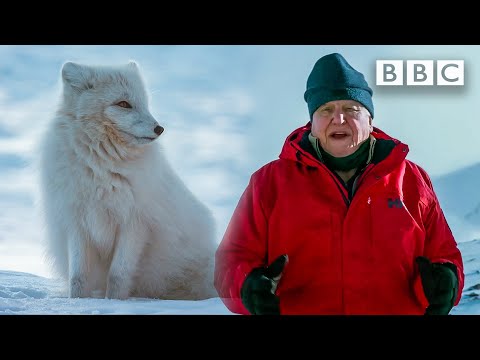
The Arctic hare faces various challenges in the wild, especially from natural predators. To survive, they have developed remarkable adaptations, including changing their fur color with the seasons. This helps them remain hidden from threats.
Natural Predators of the Arctic Hare
Your first concern might be the predators that hunt Arctic hares. Common natural predators include arctic foxes, weasels, and eagles.
- Arctic Foxes: These skilled hunters often ambush hares in snowy landscapes. Their white fur allows them to blend into the winter environment, making them stealthy assassins.
- Weasels: Smaller than foxes, weasels are quick and agile, using their speed to catch unsuspecting hares.
- Eagles: These large birds of prey soar high above, spotting any movement on the ground. Their keen eyesight helps them target hare movements.
By changing their fur color, Arctic hares increase their chances of survival against these predators.
Survival Benefits of Seasonal Color Change
The primary purpose of the Arctic hare’s seasonal color change is camouflage. In winter, their white fur blends in with the snow, making it hard for predators to spot them.
Benefits include:
- Avoiding Detection: A white coat during snowy seasons helps hares stay hidden from arctic foxes and other hunters.
- Adaptive Strategy: As the seasons change, their fur transitions to brown in summer, matching the tundra landscape, ensuring they remain concealed.
This ability to adapt their coat helps Arctic hares thrive in harsh environments, reducing predation risks as they go about their lives.
Environmental Impacts and Future of Arctic Hares
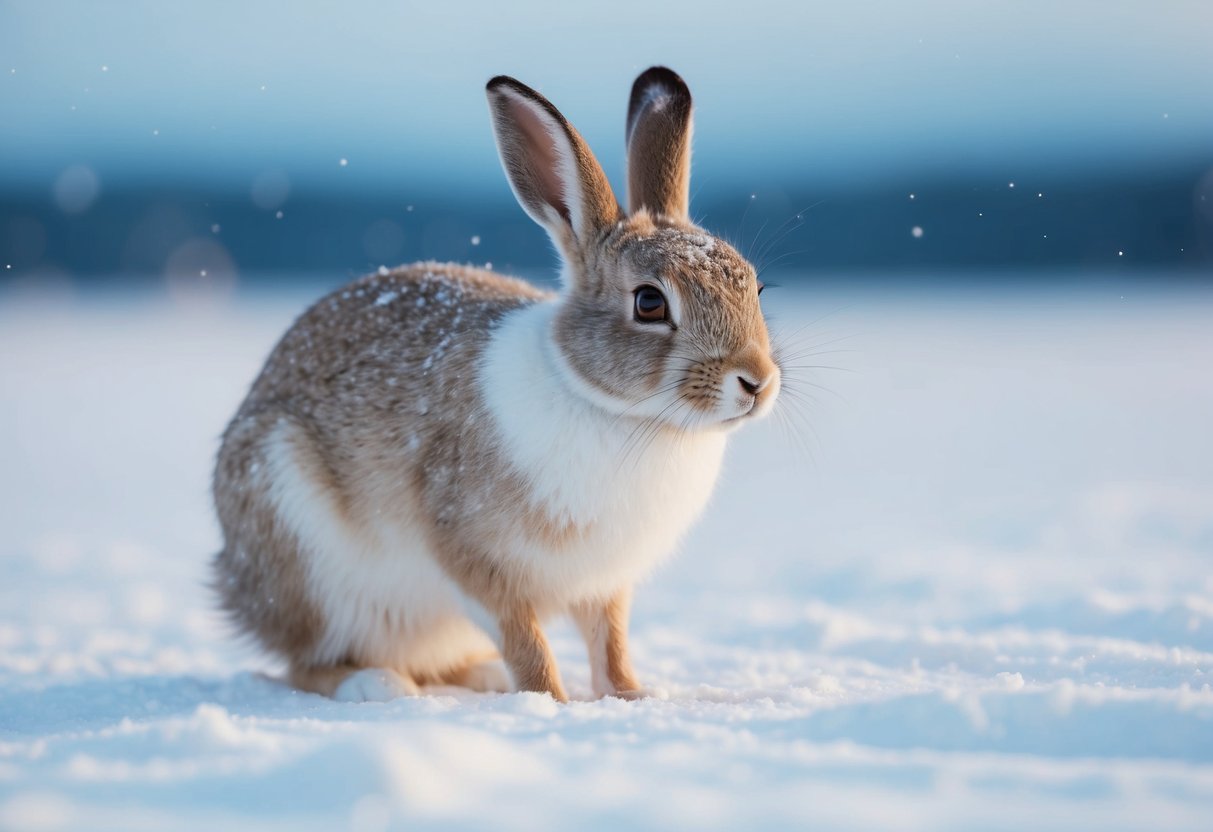
As climate change continues to affect habitats, Arctic hares face challenges related to their fur color and overall survival. These changes impact not only the hares but also the ecosystems they inhabit.
Climate Change and Fur Color Adaptations
Climate change alters snow patterns in the Arctic, impacting when and how long it snows. Arctic hares depend on their white winter coats for camouflage against predators.
As warmer temperatures lead to less snow, these hares may not turn white in time to blend in, leaving them vulnerable.
The white coat is also influenced by genetic traits. Hares with dominant brown genes may have better chances of survival in changing environments, as they can adapt their fur color more quickly.
This means that interbreeding among hare populations could become crucial for maintaining color adaptation and ensuring their survival.
Long-Term Implications for Arctic Hares and Ecosystems
The future of Arctic hares is closely linked to climate trends. If habitats continue to warm, their survival could hinge on adaptability.
Without enough snow cover, they might struggle to find food and evade predators.
Moreover, these changes affect the entire food web. As hares adapt or fail to adapt, other Arctic animals that rely on them for food will also face challenges.
Losing hare populations could disrupt the balance of local ecosystems.
Maintaining genetic diversity among these hares becomes essential. Interbreeding with other populations may give them a better chance to thrive in changing conditions.
This interconnectedness highlights the importance of protecting Arctic habitats for all species.


