
Have you ever wondered, could a chimpanzee actually carry a human baby? It sounds like something out of a science fiction movie, right? But honestly, the answer’s pretty straightforward. A chimpanzee can’t carry a human baby—their biology and genetics just don’t line up.

Sure, humans and chimps share a lot of DNA, but the differences are bigger than you might think. Humans have 46 chromosomes, chimps have 48, and their reproductive systems are just too different. Those differences stop a human embryo from developing inside a chimp’s womb.
If you’re still curious about why this can’t happen, stick around. Let’s dig into the science behind it and see why this idea stays in the realm of imagination.
Can a Chimpanzee Carry a Human Baby?
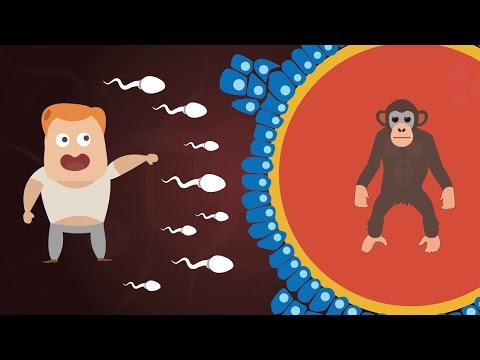
It’s pretty natural to wonder if a chimpanzee could carry a human baby since we share some DNA with them. But, the reality is, differences in genetics, reproductive systems, and older experiments show it’s just not possible.
Major Genetic Differences Between Humans and Chimpanzees
You share about 98% of your DNA with chimps, but that last 2%? It makes a huge difference. Humans have 46 chromosomes. Chimps have 48.
When it comes to reproduction, your body and a chimp’s body send out different signals for growing a fetus. If a human embryo tried to grow in a chimpanzee, the mismatched genetic instructions would stop it from developing normally.
These genetic hurdles make it impossible for a chimpanzee to carry a human baby.
Reproductive System Barriers
Human and chimpanzee reproductive organs aren’t the same. A chimpanzee’s uterus usually runs smaller and is shaped differently than a human’s.
Human babies have much bigger heads compared to chimp babies. That alone would make birth dangerous or even impossible for a chimpanzee.
Pregnancy hormones and body changes that support a human fetus don’t match what happens in chimps. So, a chimpanzee’s body just can’t support a growing human baby.
Chromosome Incompatibilities
Chromosomes hold the instructions for making embryos. Humans have 23 pairs—46 total. Chimps have 24 pairs—48 total.
When human sperm and egg meet, the chromosomes line up to form a new human embryo. In chimps, those extra chromosomes don’t match up with the human ones.
This mismatch stops embryos from forming or growing. Even if fertilization happened, the embryo would fail quickly because the chromosomes can’t pair up right.
Attempts at Human-Chimp Hybridization
Back in the 1920s, a scientist named Ilya Ivanov tried to create hybrids by inseminating female chimps with human sperm. Nothing came of it—no pregnancies, no babies.
Eventually, they stopped those experiments because of ethical concerns and failure. No one has ever verified a human-chimp hybrid.
Most scientists agree: biology and ethics make these hybrids impossible. The differences in genetics and reproduction just won’t allow it.
If you want more details, check out this article on scientific barriers to chimpanzee and human reproduction.
Scientific and Ethical Perspectives

So, what else makes this impossible, besides just biology? The challenges go beyond science—they bring up serious ethical questions about the health and rights of both species.
There’s also the long evolutionary gap between humans and chimps. Past experiments taught us some tough lessons about trying to cross these boundaries.
Ethical Concerns in Cross-Species Surrogacy
Trying to make a chimpanzee carry a human baby raises big ethical issues. The chimp’s body isn’t built for a human embryo, and that could mean pain or even danger during pregnancy and birth.
That risk puts the chimp’s health in real jeopardy. We also have to respect the chimp as a living being, not just a tool.
Using chimps this way causes suffering and isn’t fair to them. Experts say these experiments are wrong because they treat chimps like objects, not creatures with needs of their own.
And what about the child? Mixing species opens up complicated legal and moral questions that, frankly, society isn’t ready to answer.
Evolutionary Separation of Chimps and Humans
Humans and chimps split from a common ancestor about 6 or 7 million years ago. Since then, our species have gone down very different paths.
One obvious difference: chromosome count. Humans have 46, chimps have 48.
That mismatch alone blocks a human embryo from surviving in a chimp’s body. Their reproductive systems also look and work differently.
The shape of the birth canal and hormone patterns during pregnancy just don’t support human babies. Over millions of years, these deep biological changes mean a chimpanzee’s womb can’t give a human embryo what it needs to develop safely.
Lessons from Historical Cross-Species Experiments
Back in the 1920s, some scientists actually tried to inseminate female chimps with human sperm. They wanted to see if hybrids could happen.
None of these experiments led to pregnancy or live offspring. Honestly, it’s a bit unsettling to think about what they attempted.
These experiments didn’t just fail; they set off a lot of ethical concerns. The whole thing really highlighted just how strong the biological barriers are between species.
Most scientists today agree that these kinds of experiments are unsafe, ineffective, and, to be blunt, morally wrong. It’s hard to imagine anyone defending them now.
If you’re curious about the ethical and scientific problems here, this article breaks it down pretty well. It makes a good case for why crossing this species line doesn’t make sense—and honestly, just isn’t respectful.


