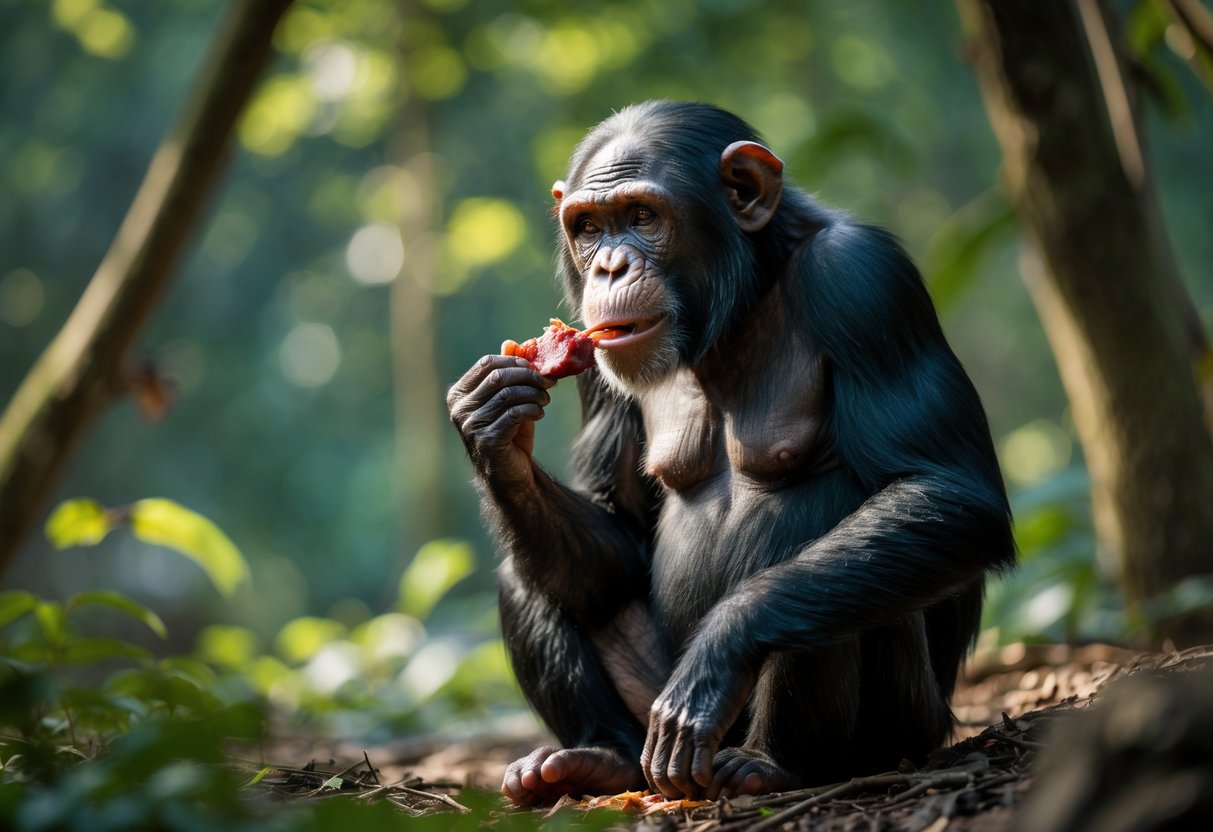
You might assume that only male chimpanzees eat meat, since they do most of the hunting. But if you’re wondering about female chimps—yep, they eat meat too, though it’s a smaller chunk of their diet compared to the guys. Usually, they get meat through sharing, especially if they’re high-ranking or pregnant.
Most of the time, female chimps stick to fruits, leaves, and insects. Meat still matters, though, especially when they need extra nutrients.
Their meat-eating habits shift depending on social status and life stage. Pregnancy or caring for babies can change what they eat.
Curious about how female chimps get meat and why it matters for their health and social life? Let’s dig into their surprising eating habits and social world.
Do Female Chimpanzees Eat Meat?
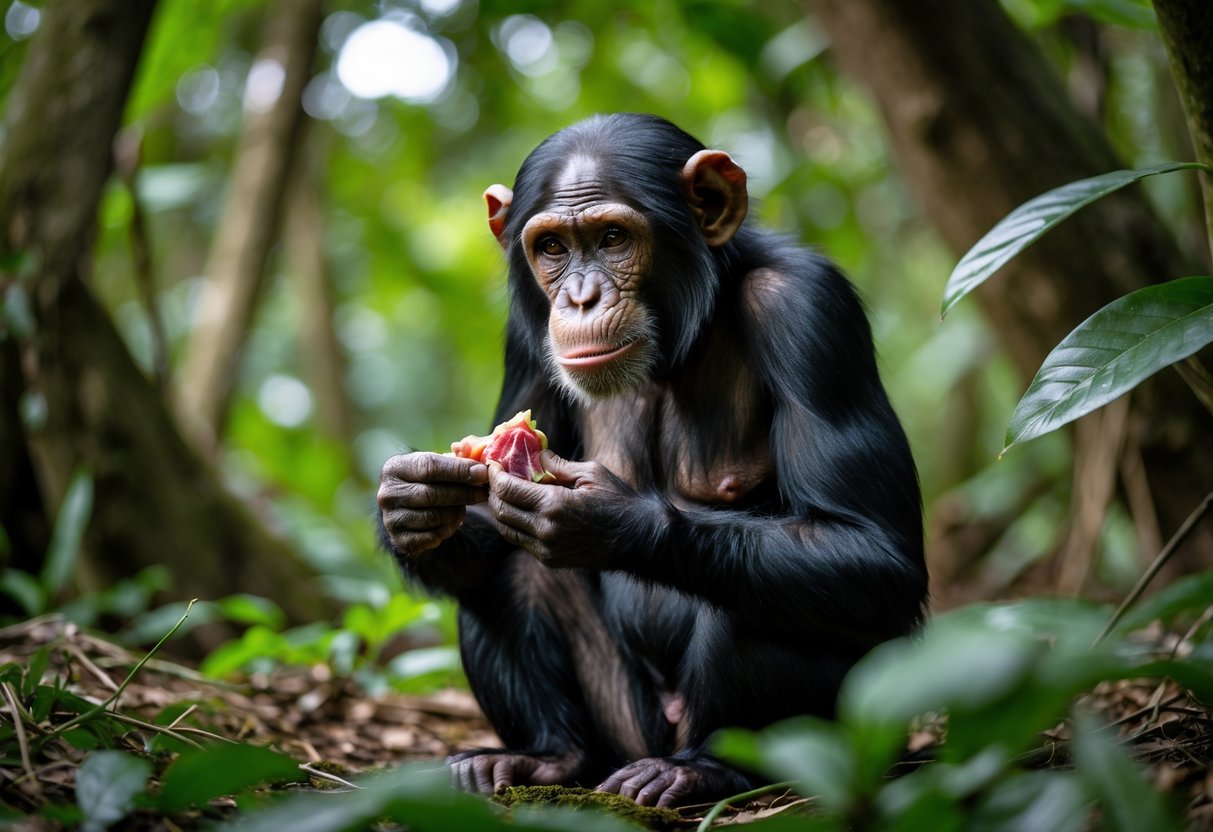
Female chimpanzees eat meat, but their eating patterns don’t match the males. Their access to meat depends a lot on social rank and whether they’re pregnant or not.
Meat’s valuable but not as common in their diet as fruit or insects. You’ll notice their role in hunting and sharing meat reflects some pretty complex social behavior.
Observations of Meat-Eating Among Females
Female chimps eat meat, though not as often as the males do. Studies in places like Gombe National Park show that high-ranking females get more meat than those lower in the hierarchy.
Pregnant females usually eat more meat compared to times when they’re lactating or not having babies. This pattern suggests that meat gives them critical nutrients during pregnancy.
Most of the time, females get meat through sharing, not hunting. They usually go for vertebrate meat, not so much insects. Social rank and reproductive status shape how much meat a female chimp eats.
Comparisons With Male Meat Consumption
Male chimps hunt and eat meat more regularly than females. They’re the main hunters and often go after small mammals like monkeys or bushpigs.
Meat holds a lot of value among chimps, and males typically control who gets it. Males share meat with females and others, but they usually take the first—and biggest—helpings.
Female chimps rely on males for meat since they don’t hunt as much. This difference really shows a gender gap in hunting and meat intake.
Still, female meat-eating plays a big role in their diets, especially when they’re pregnant or nursing.
Social Aspects of Meat Sharing
Meat sharing in chimp groups gets complicated and ties into social bonds. Males often share meat to build alliances or get favors.
Females with higher social rank usually get better access to shared meat. Dominance can decide who eats first or gets more.
Sharing helps pregnant or nursing females when their nutritional needs go up. Meat acts as a kind of premium food that can affect both social status and reproductive success.
It’s clear that meat sharing isn’t just about food—it’s tangled up in social life for chimps.
Female Participation in Hunting
Female chimps rarely hunt. When they do, it’s less frequent and less organized than the hunts led by males.
In some communities, females sometimes join hunts, especially for smaller prey or insects. Still, males handle most of the big animal hunts.
Jane Goodall saw that adult males usually lead hunting parties, with females mostly waiting or watching for a chance at shared meat.
Sometimes, high-ranking females might join in more, but overall, hunting stays a male thing in chimp groups.
Chimpanzee Diet and Hunting Behavior

Chimps eat all sorts of things, so they’re true omnivores. Fruit makes up a big part of what they eat, but meat matters too. How much meat they eat and what kind depends on where they live and the time of year.
Role of Meat in Chimpanzee Diet
Meat only makes up about 1 to 3 percent of a chimp’s diet. Even so, it’s packed with protein and nutrients that help chimps stay healthy and active.
Male chimps hunt and eat meat more often than females. Female chimps eat meat too, especially when they’re pregnant.
High-ranking females get more meat because they have better access. The group shares meat, which helps build social bonds.
Primary Prey: Red Colobus Monkeys
Red colobus monkeys are the main prey that chimps hunt. These monkeys live up in the trees and move fast, so catching them isn’t easy.
Male chimps usually hunt in groups to catch red colobus. Females don’t hunt these monkeys as much.
Females often travel in smaller groups and avoid the big male hunting parties. When females do hunt, they go for easier prey or use sneak attacks.
Other Animal Foods: Insects and Small Mammals
Besides monkeys, chimps eat insects and small mammals too. Ants, termites, and other bugs are common snacks, and chimps use sticks and other tools to catch them.
Females hunt insects more often than males do. Some chimps also go after smaller animals like bushpigs or young bushbucks.
These animals are easier to catch than monkeys. Hunting them takes patience and stealth—skills that females sometimes use.
Regional and Seasonal Variations
Where a chimp lives really shapes what it eats. In East Africa, for example, chimps munch on more red colobus monkeys since those monkeys just happen to be everywhere.
In some spots, the female chimps end up hunting more often. I guess that’s because they run into prey that’s easier to catch.
The seasons shake things up, too. Once the dry season hits and fruit gets scarce, chimps turn to meat and insects to fill the gap.
But when fruit is everywhere, they don’t go after meat as much. Even the way females hunt can shift depending on what food is around.


