
Ever found yourself face-to-face with a chimpanzee and wondered if it’s okay to look them in the eye? The short answer: yes, but only if it’s brief and gentle. Staring too long can make chimps feel threatened or upset. You’ll want to read their reactions to keep things safe and respectful.
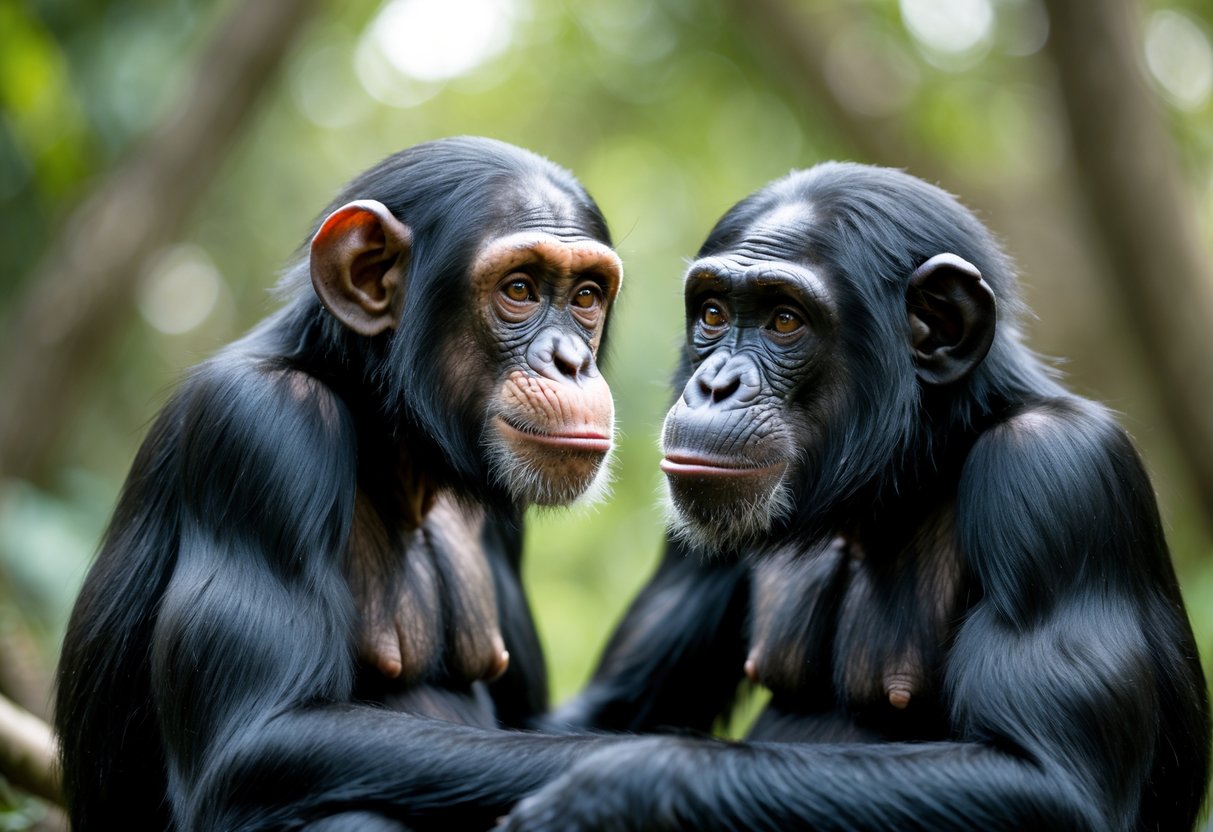
Chimps use eye contact in all sorts of ways, depending on the situation and their personality. Some chimps, especially those familiar with people, don’t mind it as much, but wild chimps often see a long stare as a challenge.
If you pay attention to their body language, you’ll quickly figure out if your gaze is welcome or not.
Understanding how to make eye contact with chimps isn’t just about safety. It’s also about connecting with these clever animals in a way that makes sense to them.
If you want to do this without stressing them out, it helps to learn a few simple things about their social signals.
Understanding Eye Contact With Chimpanzees

Eye contact plays a unique role when you interact with chimpanzees. But it’s not quite the same as with humans.
You need to watch how chimps send signals and how the situation affects their response. Captive and wild chimps don’t always see eye contact the same way.
Communication Signals in Chimpanzees
Chimpanzees use their eyes to send a bunch of different messages. Unlike us, they often focus on the mouth, but eye contact can still show curiosity, challenge, or connection.
Prolonged staring usually means a threat or challenge to a chimp. If you stare too long, the chimp might feel threatened and could react aggressively.
Brief eye contact is a different story. Quick glances show curiosity without being dangerous, and can even build trust if you do it gently.
Look for signals in the chimp’s body language. If they relax or look back calmly, your eye contact is probably fine.
But if they bare their teeth or tense up, it’s smart to look away.
Social Context and Eye Contact
Chimps react to eye contact differently depending on where you meet them and who they are. Their personality and mood matter a lot.
In a peaceful place like a sanctuary, chimps might accept short eye contact because they’re used to people. But in the wild, eye contact is a bigger deal—often a warning or a challenge.
Pay attention to social cues like posture or sounds. If a chimp seems stressed, it’s better to avoid eye contact and keep things calm.
Stay gentle and move slowly so you don’t make them nervous.
Comparing Eye Contact in Wild and Captive Chimps
Wild chimps generally use eye contact to show power or to warn others. If you stare at them for too long, you might cause tension or even aggression in their group.
Wild chimps stick to quick, low-key eye contact, especially with friends.
Captive chimps, especially those raised with people, usually react differently. They tend to be more relaxed about eye contact since they’re used to humans and don’t see brief glances as threats.
That’s why brief, polite eye contact is usually fine with sanctuary chimps.
Just remember: Always watch the chimp’s behavior, whether they’re wild or captive, to figure out when eye contact feels safe or risky for them. For more on eye contact safety, check out Should You Make Eye Contact With a Chimp? Safety and Social Signals.
Guidelines for Safe Encounters With Chimpanzees
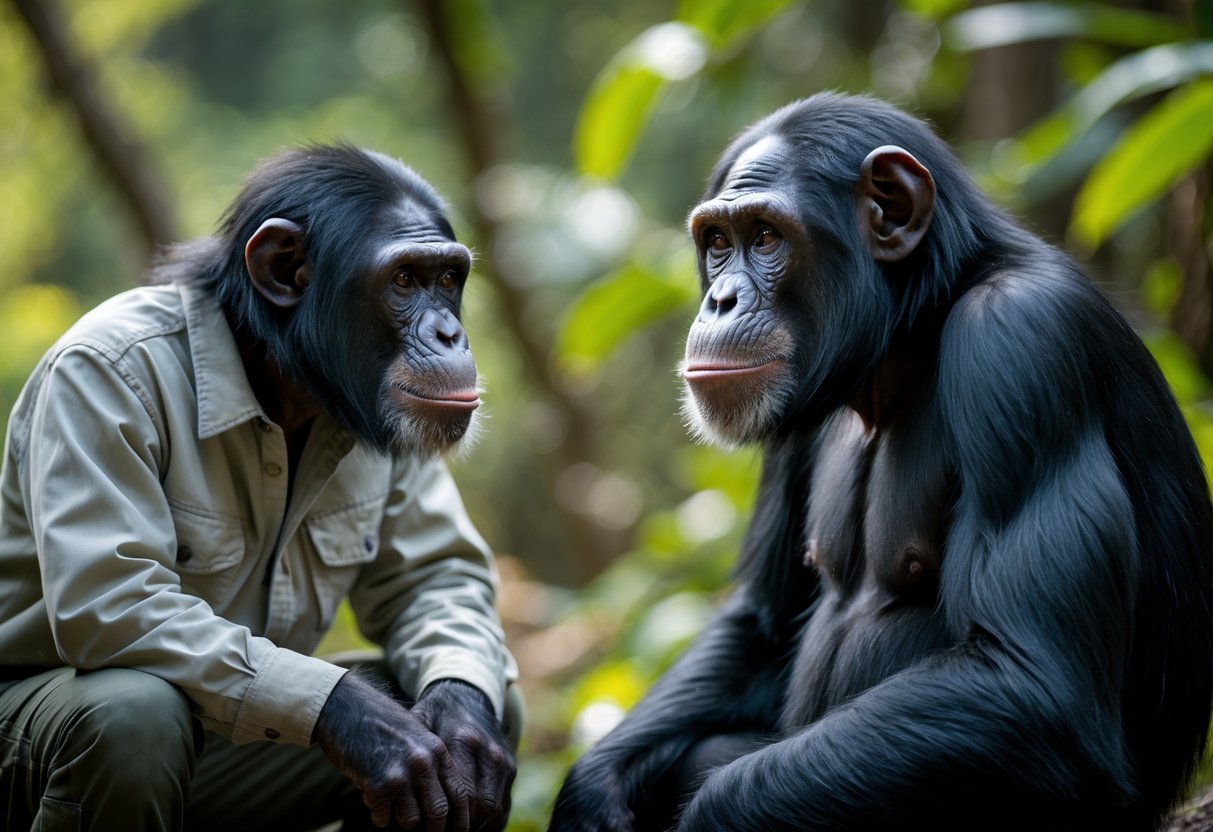
When you meet chimpanzees, your behavior really matters. You need to stay calm, notice their signals, and respect their space.
How you use eye contact and gestures can make the difference between a peaceful interaction and upsetting the chimps.
Appropriate Eye Contact Etiquette
With chimpanzees, brief and gentle eye contact works best. If you look into a chimp’s eyes for too long, they might think you’re challenging them.
Keep your gaze soft, and don’t stare. A quick glance shows curiosity, not threat.
If the chimp returns your gaze briefly, they’re probably just curious. But if they look away, respect that and do the same.
You should also avoid darting your eyes up and down or locking eyes for a long time. Slow, calm glances are safer.
Recognizing Signs of Discomfort
Chimps show how they feel through body language. Watch for signs like stiffening, baring teeth, or sudden movements.
If a chimp looks tense, backs away, or breaks eye contact quickly, they’re probably uncomfortable.
Other signs of stress include loud noises, aggressive staring, or standing tall. If you see any of these, it’s time to give them more space.
Stay alert and be ready to step back slowly so you don’t make the chimp feel trapped or threatened.
Dos and Don’ts When Interacting With Chimps
Do
- Move slowly and calmly when you approach chimps.
- Keep your eye contact short, and keep it gentle.
- Watch their body language closely.
- Give them plenty of personal space.
Don’t
- Don’t stare at chimps for too long.
- Avoid sudden movements or making loud noises.
- Don’t block their path or back them into a corner.
- Try not to show your teeth or make any threatening gestures.
If you stick to these guidelines, you’ll probably avoid making chimps feel threatened or aggressive. Want more details? Check out this guide on safely approaching wild chimpanzees.


