
Ever find yourself wondering if chimpanzees might someday evolve into humans? Well, here’s the thing: chimpanzees won’t evolve into humans. Both species actually share a common ancestor but split off onto different evolutionary paths. So, humans and chimps? More like cousins—neither one descended from the other.

Even though chimps are our closest living relatives, evolution isn’t a ladder you climb rung by rung. It’s more like a tree, with every branch twisting in its own direction. Chimps keep evolving as chimps, and humans have taken their own wild route.
When you think about it, that’s why humans have traits like upright walking, complex language, and tool use. Knowing a bit about evolutionary history makes it easier to appreciate what makes each species unique. If you’re curious about how this all works, let’s dive in.
Why Chimpanzees Will Not Evolve Into Humans
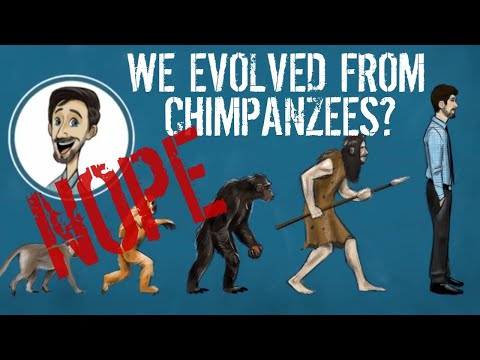
Why don’t chimpanzees, who are so closely related to us, just evolve into humans? It comes down to how evolution actually works, your shared history with apes, and the different routes each species has taken over millions of years.
Misconceptions About Human Evolution
A lot of people think humans evolved from modern chimpanzees. That’s just not how it happened. Humans and chimps both came from a common ancestor that lived millions of years ago. Since then, both groups have gone their separate ways.
Evolution doesn’t put species on a ladder where some are “more evolved.” It’s a branching tree, with each species adapting to its own world. Chimps keep evolving to fit their forests. They’re just as evolved as humans, but in their own way.
There’s also no big goal in evolution to create humans. Species just change in ways that help them survive and have babies in their own environments.
The Role of Common Ancestors
Picture the last common ancestor of humans and chimps as a distant great-great-great-grandparent. This ancestor wasn’t a chimp or a human but had traits that both lines inherited and changed.
About 6 million years ago, humans, chimps, and bonobos split from this ancestor. Each group then evolved separately, picking up new traits to help them survive. Humans developed upright walking and bigger brains. Chimps stuck with climbing and life in the trees.
So, chimps are your cousins on the evolutionary tree. They haven’t stopped evolving—they just took a different path after splitting from that common ancestor.
Branches of the Evolutionary Tree
The evolutionary tree isn’t some straight line. It’s full of branches, with humans, chimps, and bonobos each on their own.
| Species | Key Traits | Evolutionary Role |
|---|---|---|
| Humans | Bipedalism, complex language | One branch with unique adaptations |
| Chimpanzees | Tool use, social hunting | Separate branch, adapted for forest life |
| Bonobos | Peaceful, social structure | Another branch closely related to chimpanzees |
These branches split off long ago, so chimps won’t just morph into humans. Every species fits into its own niche and lifestyle.
It’s kind of nice knowing evolution isn’t about being “better”—it’s just about fitting into your world.
The Evolutionary History of Apes and Humans

Humans and apes have a tangled past that goes back millions of years. This history shows how groups like gorillas, chimps, and humans are all connected—and how your species changed step by step, through all sorts of twists and turns.
The Great Apes and Their Relationship
Great apes include chimps, gorillas, orangutans, and humans. You share a common ancestor with all of them, but chimps and bonobos are your closest living relatives. That ancestor lived somewhere between 6 and 9 million years ago. After the split, humans and chimps went their own ways and picked up different traits.
African apes—chimps and gorillas—share more with you than orangutans do. These species differ in size, diet, and behavior, but they all come from the same ape family. Chimps and gorillas mostly stayed in forests. Your ancestors started spending more time on the ground, which led to changes like upright walking.
Key Milestones in Human Evolution
Your human ancestors hit some big evolutionary milestones. One of the first was bipedalism—walking on two legs. Early species like Ardipithecus (about 6 million years ago) started walking upright, but still climbed trees.
Then, about 1.9 million years ago, Homo erectus showed up. This species had a bigger brain and used tools, which hints at growing smarts. Later, Neanderthals lived in Europe and Asia and had pretty complex behaviors before disappearing about 40,000 years ago.
You, Homo sapiens, appeared around 300,000 years ago. Humans developed advanced language, culture, and technology, which set your species apart from other hominins. These milestones show the gradual changes that led to modern humans.
Important Fossil Discoveries
Fossils crack open a window into our evolutionary past. Take Ardipithecus ramidus—it had traits for both tree climbing and upright walking.
That mix hints at an early stage of human-like movement. Kind of wild to imagine, right?
Homo erectus fossils show us bigger brains and the use of tools. When scientists found Neanderthal bones, they realized Neanderthals were closely related to us, but their features and lifestyles set them apart.
Other fossils show we weren’t alone. We lived alongside species like Homo habilis and Homo heidelbergensis.
Studying these ancient bones lets us trace how our bodies and behaviors shifted over millions of years. The story of our evolution gets a bit clearer with each discovery.
Curious about the steps from apes to humans? Dive into the details of the chimpanzee-human last common ancestor.


