
Ever spot a raccoon and an opossum and wonder if they’re actually the same animal? You’re definitely not alone. People mix them up all the time since both show up at night and wander through the same backyards.
But here’s the thing: opossums and raccoons aren’t the same at all. They’re totally different animals with their own features and quirks.
Opossums are marsupials, so they carry their babies in a pouch. Raccoons? They’re regular mammals, no pouch involved.
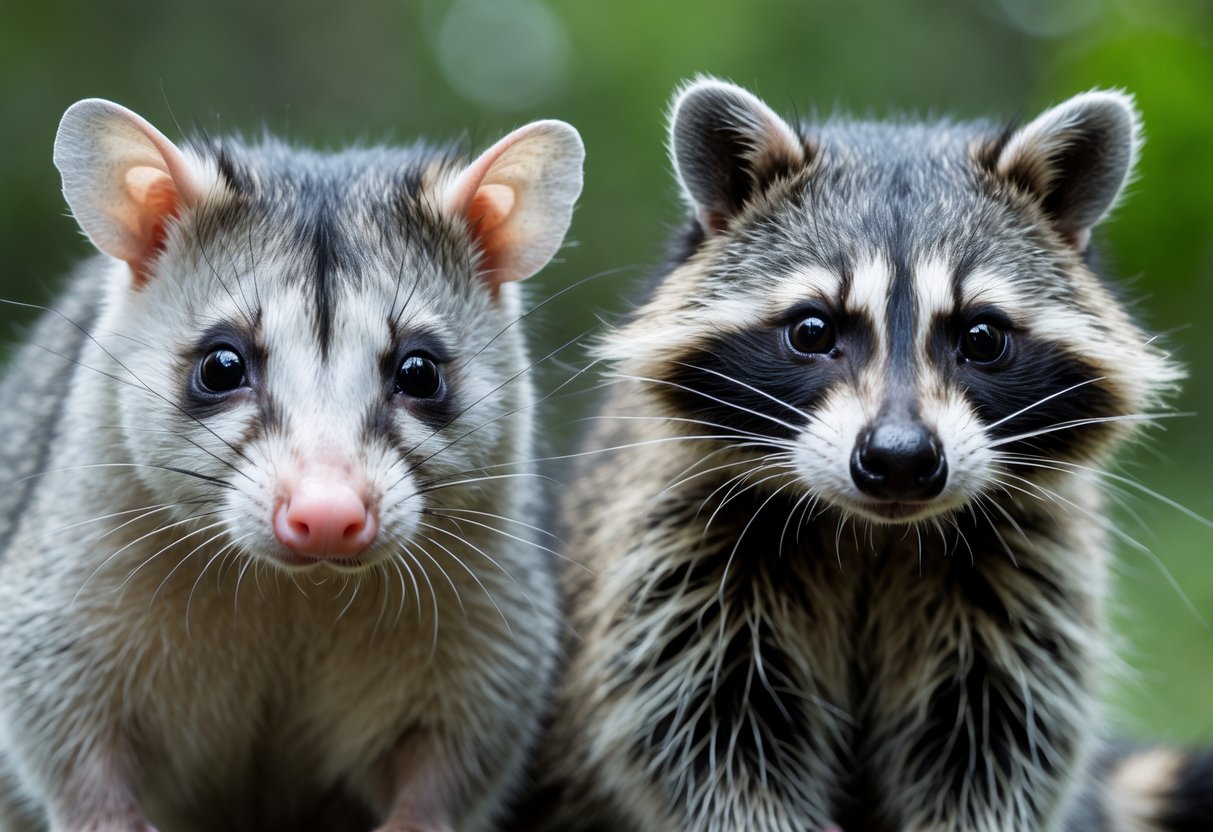
You can usually tell them apart by looking at their faces and tails. Opossums have lighter, almost ghostly faces and these long, scaly tails. Raccoons sport that black mask over their eyes and have bushy, ringed tails.
If you know what to look for, you can spot the difference next time you bump into one on a late walk.
Being able to tell them apart helps you figure out their habits and how they might mess with your yard or trash cans. Curious about what makes them unique? Let’s dig in.
Are Opossums the Same as Raccoons?

At first glance, opossums and raccoons might seem similar, but trust me, they’re not. Their bodies, habits, and even their family trees set them apart.
Taxonomy and Classification
Opossums and raccoons sit on different branches of the animal family tree. The Virginia opossum is a marsupial, so its babies finish growing in a pouch after they’re born.
Raccoons, on the flip side, are mammals that give birth to live young, just like dogs or cats.
Opossums are actually the only marsupials hanging out in North America. Raccoons belong to the Procyonidae family, which also includes animals like raccoon dogs and coatis.
Knowing this explains why they act so differently and look the way they do.
Physical Differences Between Opossums and Raccoons
Raccoons stand out with that bold black mask over their eyes. Opossums don’t have that at all.
Raccoons are pretty fluffy, especially their bushy, ringed tails. Opossums, though, have these skinny, mostly bare tails that help them grab branches when they climb.
Their faces differ too. Opossums usually have pale, white or gray faces and pink noses. Raccoons just look more mischievous, don’t they?
When it comes to size, opossums are often shorter, but can weigh a bit more. Raccoons tend to be longer—sometimes up to 28 inches before you even count the tail.
Behavioral Traits and Habits
Both animals come out at night and love searching for food in city neighborhoods and wild places. Raccoons act bolder and more curious; they use their front paws almost like hands to pry things open.
Opossums usually “play dead” when something scares them. It’s called thanatosis, and they can keep it up for several minutes or longer.
Raccoons might hiss, growl, or bare their teeth if they feel threatened, but most of the time, they just bolt. Opossums adapt to all sorts of environments, so they’re pretty flexible about where they live.
If you’re trying to deal with wildlife in your yard, knowing these habits can help you handle each animal in a safe, kind way.
Want more details? Here’s a raccoon vs possum comparison.
Opossums and Raccoons in the Neighborhood

You might see opossums or raccoons around your house, especially after dark. Both animals search for food and shelter in similar places, but their habits and how they interact with your pets and property are different.
Diet and Feeding Habits
Raccoons have a reputation for raiding garbage cans and snacking on pet food left outside. They’ve got clever, nimble paws that can open lids and doors, so nothing’s really safe. Their menu? Nuts, fruits, small animals, and sometimes whatever leftovers they find.
Opossums eat just about anything—bugs, small mammals, birds, fruit. They even clean up dead animals, which actually helps cut down on pests. Opossums usually ignore your pet’s food and hunt for insects or worms instead.
To keep both animals away, don’t leave pet food outside. Make sure your trash cans are closed tight.
Habitats and Urban Encounters
Opossums and raccoons both like living near people. They’ll set up dens in hollow trees, under porches, or in abandoned spaces. Raccoons sometimes pick small caves or big logs, while opossums prefer hidden, quiet spots.
Neither animal hibernates, so you could spot them any time of year. In cold weather, they mostly stay tucked away in their dens.
If you notice footprints or droppings, you might want to call wildlife control to get them out safely.
You could find both animals in the same neighborhood, but they usually keep to themselves.
Interaction With Pets and Other Animals
Opossums usually act pretty shy and tend to avoid pets like cats and dogs. If they get scared, they’ll often just play dead instead of fighting back.
That makes them a lot less risky to have around your pets, honestly.
Raccoons, on the other hand, can get aggressive. If a raccoon feels threatened, it might bite or scratch.
So, if you spot raccoons nearby, definitely keep a close watch on your dog or cat. Both raccoons and opossums might go after birds or fish in your outdoor ponds.
If you want to keep your backyard wildlife safe, it’s smart to protect those areas.
Try bringing pet food inside at night and make sure outdoor water sources aren’t easy for wild animals to get to. It’s surprising how much that can help cut down on unwanted animal visits.


