
Ever wondered which animal is most closely related to an opossum? You’re definitely not alone. Opossums look pretty unique, but they’ve got relatives that share a bunch of their quirks.
It turns out, the Virginia opossum you might spot in North America is actually pretty closely related to other opossums living mostly in Central and South America.
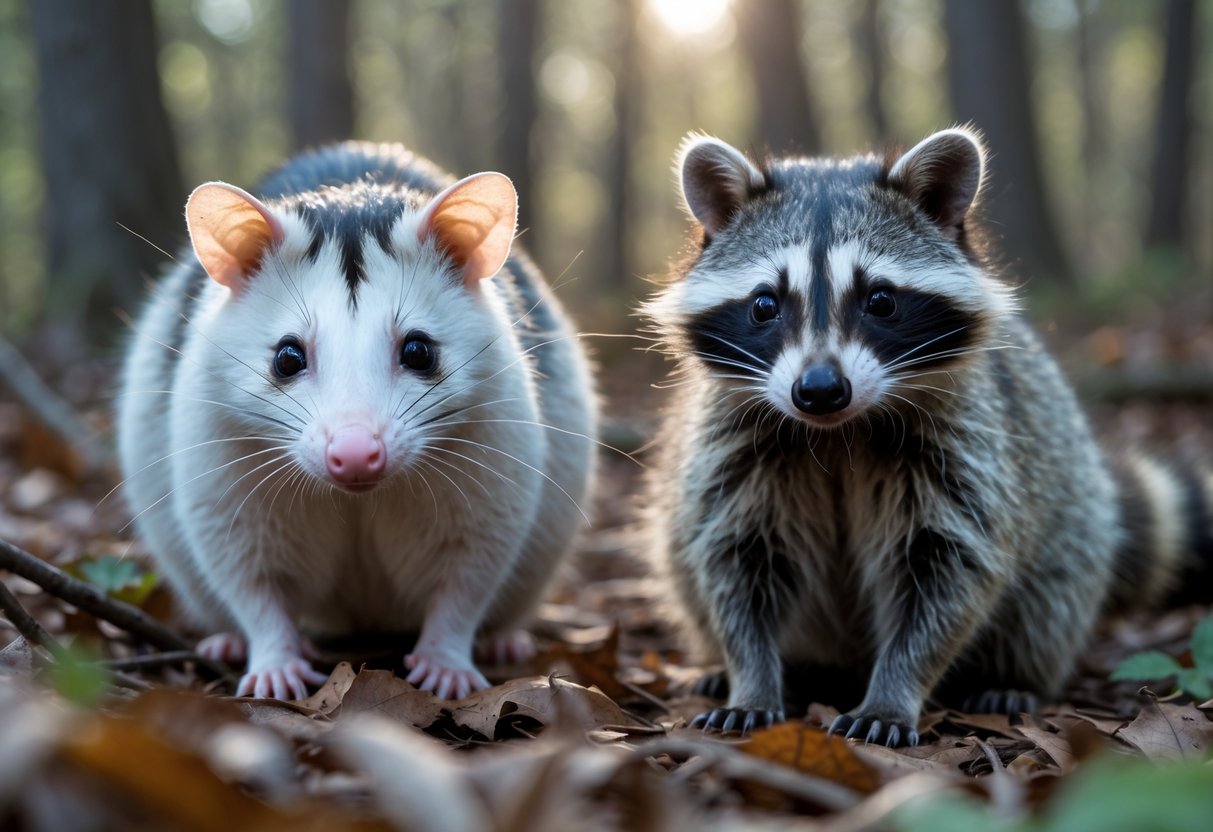
The closest relative to the Virginia opossum is the common opossum from Central and South America. Both belong to the same family, and you’ll notice they share a lot in how they look and act.
At first, you might think they’re worlds apart, but their connection reveals how opossums spread through the Americas.
It’s a bit surprising, but opossums are pretty different from those Australian possums you might have heard about. Knowing these differences can give you a better sense of just how varied marsupials really are.
If you want to dig into the opossum’s family ties, check out this opossum’s closest relative discussion.
Opossum Relatives and Their Place in the Animal Kingdom

Opossums belong to a bigger family called marsupials. These animals have some pretty special features that set them apart from other mammals.
Most of their closest relatives hang out in Australia, but opossums stick to the Americas. Some animals, like possums, might look similar, yet they’re actually not that close in the family tree.
It’s kind of wild how these differences help you see where opossums fit in the animal world.
Marsupials: The Opossum Family Tree
Marsupials are mammals that carry their babies in pouches. Opossums belong to a really old group called Didelphimorphia.
This group has over 100 species, including the Virginia opossum that’s common in North America.
Opossums first showed up in South America about 20 million years ago. They later moved north after the continents connected.
Most marsupials, like kangaroos and koalas, live in Australia, but in the Americas, opossums are the main marsupials around.
You can picture the opossum family as just one branch on the marsupial tree. The rest of the marsupials live far away, even if they share basics like pouches and early births.
Differences Between Opossums and Possums
It’s easy to mix up opossums and possums because of their names and looks. But honestly, they’re not that closely related.
Opossums live in the Americas, while possums are from Australia and Southeast Asia.
Opossums, like the Virginia opossum, usually have long snouts, naked tails, and spend most of their time on the ground. Possums, on the other hand, have bushy tails and hang out in trees more often.
These differences show how each animal adapted to its own environment.
Even though both are marsupials, their family lines split off a long time ago. So, even with similar names, their closest relatives are pretty different.
Main Characteristics of Opossums
If you take a close look at an opossum, you’ll see a long face, sharp teeth, and a tail that can grab things. That tail is prehensile—it’s kind of like a fifth hand for climbing.
Opossums usually weigh between 4 and 14 pounds, about as big as a house cat.
They’re mostly active at night and eat just about anything—bugs, plants, you name it. Some even have immunity to snake venom, which lets them hunt snakes.
Opossums don’t bother building their own homes. Instead, they use abandoned burrows or whatever safe spot they can find.
When threatened, they might “play dead” to fool predators. These habits help them survive in all sorts of places, especially near people.
The Curious Case of Monito del Monte
The Monito del Monte is a tiny marsupial that lives only in South America. It kind of looks like a mouse, but it’s actually related to opossums.
Scientists find this little animal fascinating because it’s one of the few marsupials outside Australasia that’s closely tied to opossums.
It helps show how marsupials spread and evolved over time. The Monito del Monte doesn’t look exactly like an opossum, but it shares things like a pouch and similar teeth.
It survives in dense forests, making it a unique animal for studying marsupial history in the Americas.
Geographic Distribution and Notable Species
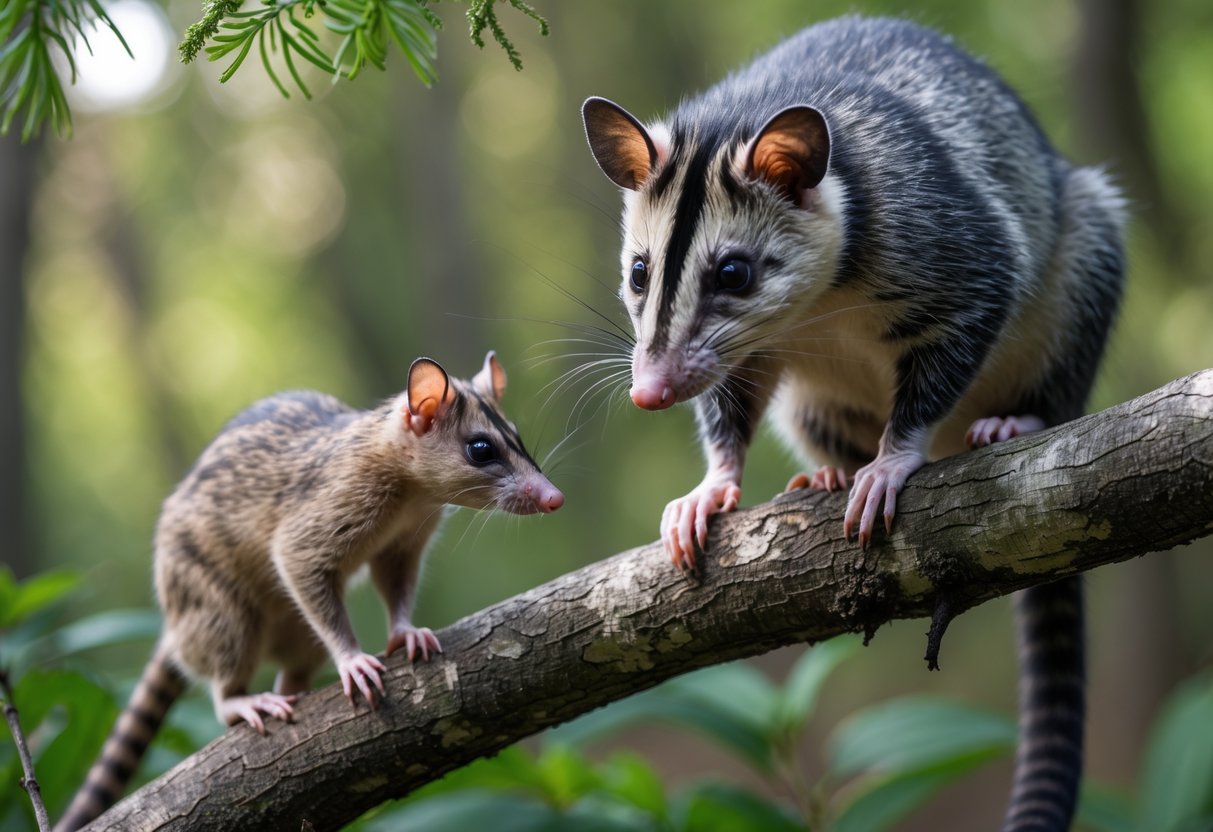
Opossums and possums live in totally different parts of the world, each with their own quirks and habitats. Where they live and how they act really shows how they’ve adapted to their own corners of the planet.
Where Opossums Are Found
Opossums live mostly in North and South America. You can spot them from southern Canada all the way down to Argentina and Chile.
The Virginia opossum is the only marsupial native to the United States and Canada north of Mexico.
In South America, opossums thrive in all kinds of places, from rainforests to grasslands. They usually live near water and have gotten pretty good at surviving in cities, too.
They use trees, burrows, or even abandoned spaces for homes. While there are lots of opossum species, most share traits like being nocturnal and eating a bit of everything.
Possums of Australia and Beyond
Possums, unlike opossums, come from Australia, New Guinea, Indonesia (including Sulawesi), and New Zealand. Australia has a bunch of possum species, including the well-known brushtail possums and ringtail possums.
Sir Joseph Banks, the explorer, helped introduce these animals to Europe after his trip to Australia.
Australian possums mostly live in trees and often show up in cities, too. New Guinea and parts of Indonesia have their own possum species, which can look and act a bit different from their Australian cousins.
People in Australasia usually say “possum,” while “opossum” refers to the American animals.
Comparing Defensive Mechanisms and Behaviors
Opossums have this wild reputation for “playing possum.” When they feel threatened, they’ll just flop over, lie completely still, and even give off a nasty smell to trick predators. Sometimes, they’ll keep up the act for several minutes—or even hours.
Australian possums? They don’t bother with the whole fake-death routine. Instead, they count on their climbing skills and quick getaways, darting into tree hollows or thick branches as soon as trouble shows up.
If they get cornered, both types will use their sharp teeth and claws. Some possums get noisy or show off with aggressive postures to scare threats away.
It’s pretty interesting to see how each group has come up with defenses that fit their own local predators and environments.


