
Ever wondered if possums and opossums are the same animal? You’re definitely not the only one. Their names sound almost identical, but these critters actually live worlds apart and have some pretty big differences.
The main difference? Opossums are native to North America, while possums come from Australia and nearby islands.
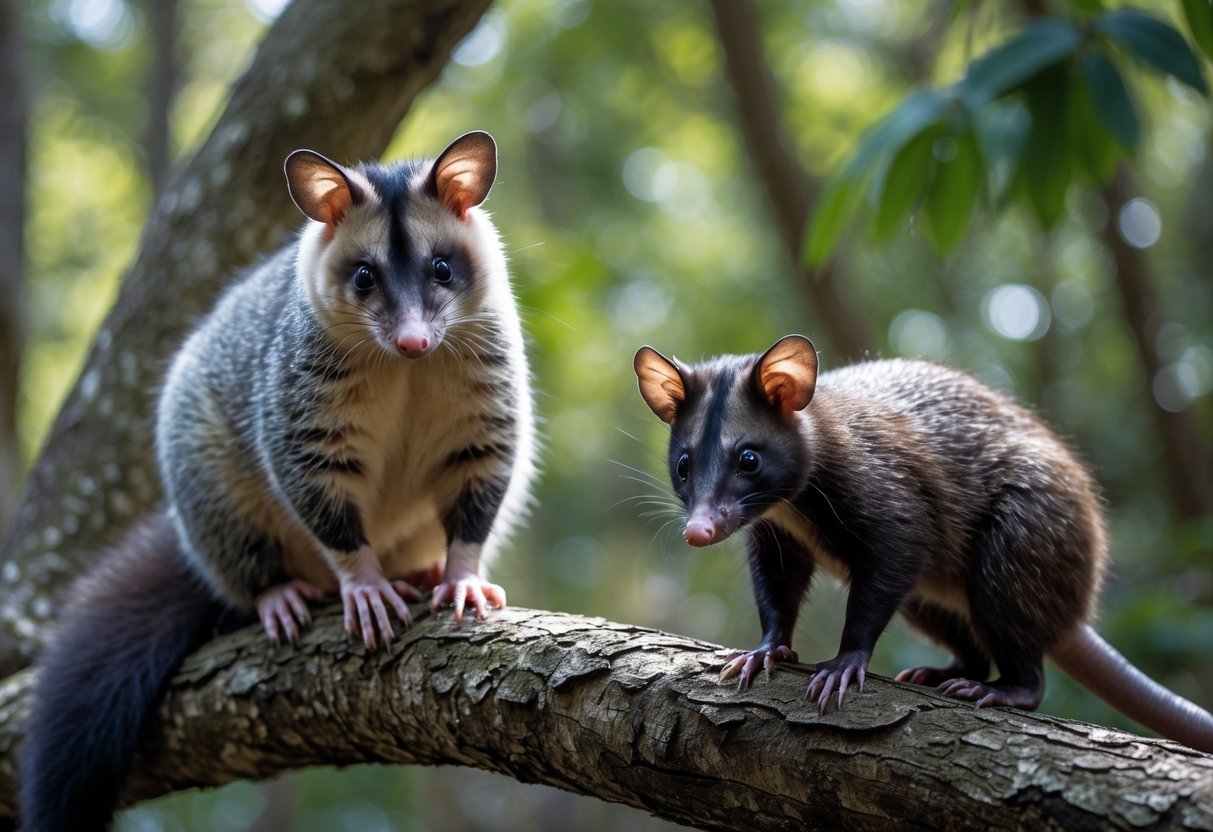
Opossums have long, pointed snouts and mostly hairless, scaly tails. Possums, though, have rounder faces and bushy, furry tails.
If you spot one in the wild or even in a photo, these details can help you figure out which is which.
Learning the difference is kind of fun, honestly, and it clears up a lot of confusion. If you’re curious about their habits, looks, or where you might run into one, let’s dig in a bit more.
Core Differences Between Possum and Opossum

People mix up possums and opossums all the time, but honestly, they’re not the same at all. Their scientific groups, where they live, how they look, and even how they got their names all set them apart.
Taxonomy and Scientific Classification
Opossums belong to the order Didelphimorphia. The most familiar is the North American opossum, or Didelphis virginiana.
You’ll only find this marsupial natively in the United States and Canada.
Possums, on the other hand, fit into the order Diprotodontia. Animals like the Australian brushtail possum are part of the family Phalangeridae.
This group includes lots of possum species, and they’re all native to Australia and nearby islands.
So, opossums group together as marsupials mostly in the Americas, while possums belong to a different marsupial family found mainly in Australia.
Geographic Distribution and Habitat
Opossums live across North America, from Canada through the U.S. and into parts of Central and South America. They handle city life or rural areas pretty well.
Possums—especially brushtail possums—live in Australia and nearby islands like New Guinea. They like forests and bushy spots where they can climb at night.
If you know where you are, you can usually guess which animal you’re seeing.
Key Physical Appearance Contrasts
One of the easiest ways to tell them apart? Check out their tails. Opossums have long, mostly bare, scaly tails.
Possums have thick, furry tails, almost like a squirrel’s.
Opossums are usually bigger—about two to three feet long—with pointed snouts and sharp teeth. Possums are smaller, often only one to two feet, and have rounder noses.
Opossums usually have grayish fur. Possums tend to be softer and fluffier, with fur colors that vary by species.
Common Naming and Historical Origins
The name “opossum” comes from a Native American Algonquian word that means “white beast.” English colonists started using it in North America back in the 1600s.
British explorers in Australia in the 1700s started calling local animals “opossums” too. Eventually, possums got their own name, but the confusion stuck around.
In North America, people often just say “possum” when they mean “opossum.” That mix-up still happens a lot, but now you know they’re actually different animals.
If you want to read more, check out this article on the difference between possums and opossums.
Unique Features, Behaviors, and Ecological Roles

Opossums and possums don’t just look different—they act differently too. Their diets, behaviors, and roles in their environments all set them apart.
Diet and Feeding Habits
North American opossums, like the Virginia opossum, eat just about anything. Insects, small rodents, fruit, even leftovers you forgot outside—nothing’s off the menu.
One cool thing: opossums eat thousands of ticks every season, which helps cut down on diseases like Lyme disease.
Australian possum species, like the brushtail possum, mostly munch on leaves, flowers, and fruit. They’re mainly herbivores.
Possums love leaping from tree to tree to find food, while opossums usually forage on the ground at night.
Both animals help control pests, but their favorite foods depend on where they live and what species they are.
Notable Behaviors and Defensive Traits
Opossums are kind of famous for “playing possum.” When they get scared, they flop over and go into a fake coma—sometimes for hours.
They even release a nasty smell to keep predators away. It’s not something they choose to do; it just happens.
Possums, like brushtails, are mostly nocturnal and use sharp claws to climb trees quickly. They’re more agile than opossums.
Opossums have a pointed snout and a prehensile tail for climbing, but they move slower and usually stick close to the ground.
If threatened, both animals might hiss or bare their teeth. Opossums rarely attack—they’d rather just play dead and hope you go away.
Role Within Their Native Ecosystems
If you spot opossums in your area, they’re actually doing you a favor. They eat ticks and clean up dead animals or leftover food, which helps stop diseases from spreading in your neighborhood.
Opossums can even handle snake bites that would harm most animals. Because of that, they help keep venomous snake numbers in check.
Over in Australia, possums like the brushtail species do their own version of cleanup. They scatter seeds around and eat insects, which helps forests stay healthy.
These possums usually hang out way up in the trees. Their habits support the balance of plant life in those forests.
Honestly, both of these animals play a big role in their ecosystems. Whether they’re cutting down on pests or helping plants grow, they make nature work a little smoother—right outside your door or deep in the wild.
For more about differences between opossums and possums, see this guide on opossum vs. possum differences.


