
Ever wondered if chimpanzees can be friendly to humans? Well, yes—they can, but honestly, it really depends on the situation.
Chimpanzees sometimes show kindness or curiosity, especially when they feel safe and don’t sense a threat. They’re social animals, and often respond well to calm, gentle people.
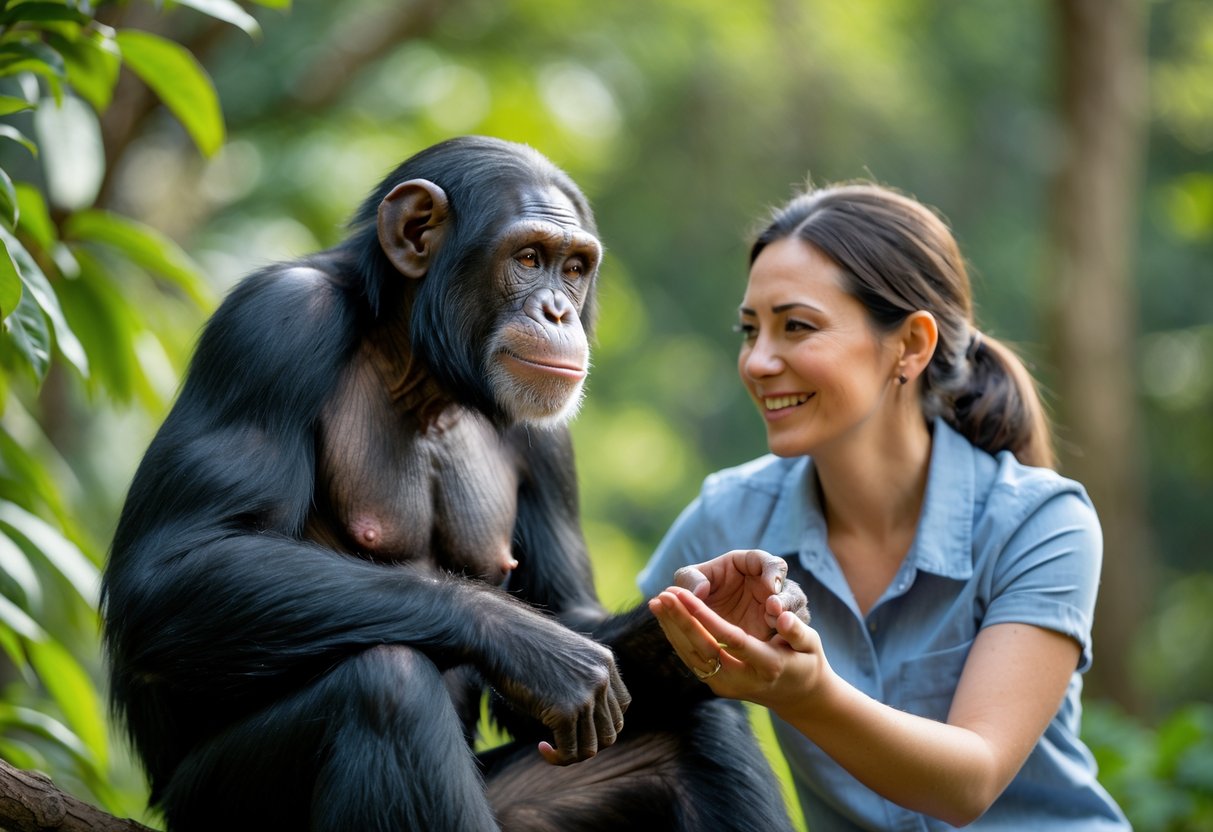
Your experience with chimps will shift depending on where you meet them.
Wild chimpanzees usually keep their distance and sometimes act defensively. Chimps in captivity, though, might feel more comfortable around humans.
If you understand their nature, you’ll have a better idea of when and how they might act friendly.
Chimpanzee Social Behavior and Friendliness

Chimpanzees live in pretty complex groups and interact all the time.
You’ll notice they form strong friendships, and also keep up with a wider social circle. These connections shape their behavior, especially when it comes to friendliness.
Their emotions and social habits can look surprisingly familiar—almost human, really.
Natural Social Structure of Chimpanzees
Chimpanzees stick together in communities that might have just a handful of individuals or over a hundred.
Within these big groups, they split into smaller subgroups that change around. This flexible living style helps them share food and look out for each other.
In their groups, chimpanzees build bonds by grooming and playing.
Grooming isn’t just about getting clean—it’s a way to grow friendships. Chimps in large groups spread their attention around, but they also focus on a few close pals.
That balance helps them manage all their relationships.
Friendly Behaviors Observed in Chimpanzees
You’ll see chimpanzees being friendly by grooming, sharing food, or just playing together. Sometimes, if one starts playing, others join in, and before you know it, the whole mood lifts—kind of like how laughter spreads in a group of friends.
Chimps occasionally act kindly toward humans, but it really depends on what they’ve experienced before and where they are.
Friendly gestures do happen, but chimps also act cautiously around people they don’t know. If you pay attention to their signals, you might spot when they’re open to interaction.
Empathy and Emotional Intelligence in Primates
Chimpanzees have a real knack for emotional awareness.
You might see one comfort a friend who’s upset or share in the fun when they’re all playing. They pick up on social cues and remember who treated them well—or not—which helps build trust.
Because they feel empathy, they can connect with others far beyond simple actions. For example, chimps might copy friendly behaviors like grooming or playing when they see others doing it.
That shows just how much their feelings and social learning matter in their lives.
If you spend a little time watching, you’ll spot chimpanzees using emotional skills to keep peace and strengthen their bonds.
Learn more about chimpanzees and their social lives at Can Chimpanzees Be Friendly to Humans? Social Bonds, Habitats & Behavior.
Interactions Between Chimpanzees and Humans

Chimpanzees can act friendly toward humans, but their behavior really depends on what they’ve gone through and the situation at hand.
You’ll see different reactions if a chimp knows you well or feels uneasy. Knowing how chimps get used to people—and how you should act—makes a big difference.
Familiarization with Humans in the Wild
In the wild, chimps don’t usually trust humans right away.
If a chimp has had calm, positive contact with people, it might become curious or even gentle. Over time, some chimps living near people start to recognize and accept certain folks.
This trust builds up slowly. You have to be calm and patient if you want to get anywhere.
Wild chimps usually keep their distance at first. But if you respect them and avoid sudden moves, sometimes they’ll approach or play nearby.
Chimps in captivity often get used to people more quickly. If they feel safe, they might respond with playful behavior or even try to groom the people they know well.
Guidelines for Safe Human-Chimpanzee Contact
If you ever find yourself near chimpanzees, it’s smart to keep a safe distance and stay calm. Sudden moves or loud noises can startle them and cause stress.
Here are some tips for your safety and theirs:
- Move slowly and speak softly.
- Avoid direct eye contact, since that can feel threatening.
- Don’t try to touch or feed chimps.
- Respect their personal space and keep an eye out for any signs they’re uncomfortable.
Smaller groups or chimps you know might act less nervous, but it’s always best to stay cautious. Being respectful helps chimps feel safer and can lead to friendlier moments.
Potential Risks and Misunderstandings
Even the friendliest chimpanzees are, at the end of the day, wild animals. Their instincts run deep, and if they get scared or feel trapped, they might lash out before you even realize what’s happening.
It’s surprisingly easy to misread their body language. What starts out looking playful could suddenly get a bit too rough.
Sometimes, you might see them vocalizing loudly, baring their teeth, or even charging. These are clear signs of aggression, and they’re not just for show.
Honestly, your best bet is to approach with respect and a good dose of caution. Don’t force interactions—chimps definitely have their own boundaries with humans.
If you understand these risks, you’ll do a better job of keeping both yourself and the chimps safe. That way, you might actually get to enjoy some peaceful, positive moments together—if you’re lucky.
Learn more about how chimpanzees can be friendly to humans.


