
Ever wondered if you could actually outrun a chimp? Well, it really depends on the distance. Chimps can sprint faster than humans—sometimes hitting 30 miles per hour—but they burn out pretty quickly. In a short dash, they’ll leave you in the dust, but they just can’t keep that pace up.
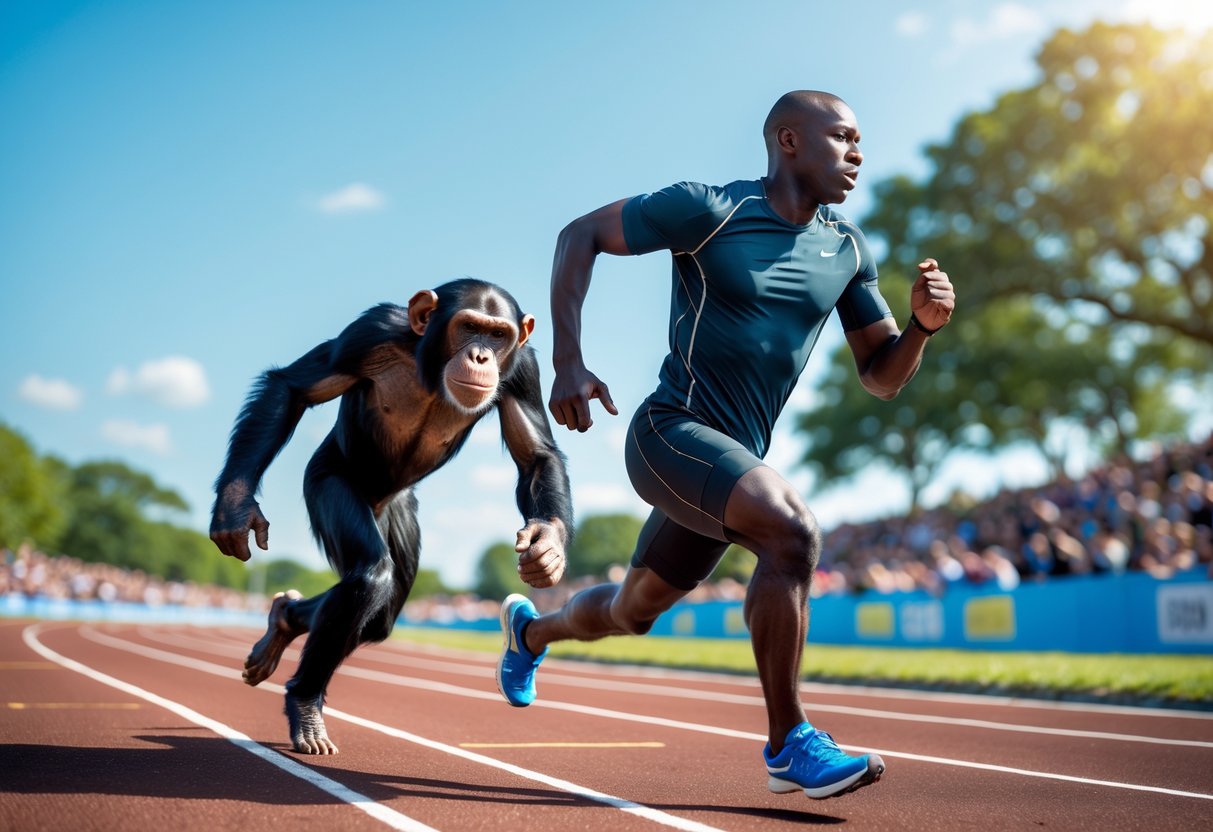
Humans have the edge in endurance. Our bodies let us run longer distances, mainly because we sweat and cool off so well. So if the race drags on, our steady pace and cooling tricks can actually help us win.
It’s kind of wild to see how humans and chimps evolved for different survival needs. Speed isn’t the only thing that matters when you’re trying to outrun a chimp, right?
Comparing Human and Chimpanzee Running Speed

Chimps can blaze past us in a sprint, but only for a short distance. Humans depend on pacing and endurance, which changes the game depending on how far and where you’re running.
Top Running Speeds of Chimps vs Humans
Chimps hit 25 to 30 miles per hour for a few seconds. They use all four limbs and those crazy-strong muscles to launch themselves.
Elite human sprinters, like Usain Bolt, top out around 20 to 28 miles per hour. Most of us are closer to 15 or 20 at our fastest.
But here’s the twist: we can keep going at a lower speed for much longer. Chimps just can’t keep up that explosive pace.
Physical Attributes Affecting Speed
Chimps show off muscles that are about 1.35 times stronger than ours, especially those fast-twitch fibers. That’s why they explode off the line in a sprint.
We humans rely more on slow-twitch muscle fibers, which keep us moving without burning out. Our upright stance and longer legs help us cover ground efficiently.
We sweat to cool down, which lets us keep running, while chimps overheat faster because they don’t sweat much. Our bodies just handle endurance better.
Terrain Impact on Race Outcomes
Chimps move like pros in forests, climbing or sprinting over rough ground. Their bodies just fit that world.
On flat, open ground, we do a lot better. Our long legs and upright bodies help us keep a steady pace on trails or roads.
If you’re racing a chimp in the woods, it’ll probably win a short sprint. But in an open, longer race, we have a real shot because we can keep going.
You can check out more details in this speed comparison and facts.
Other Survival Factors Beyond Speed
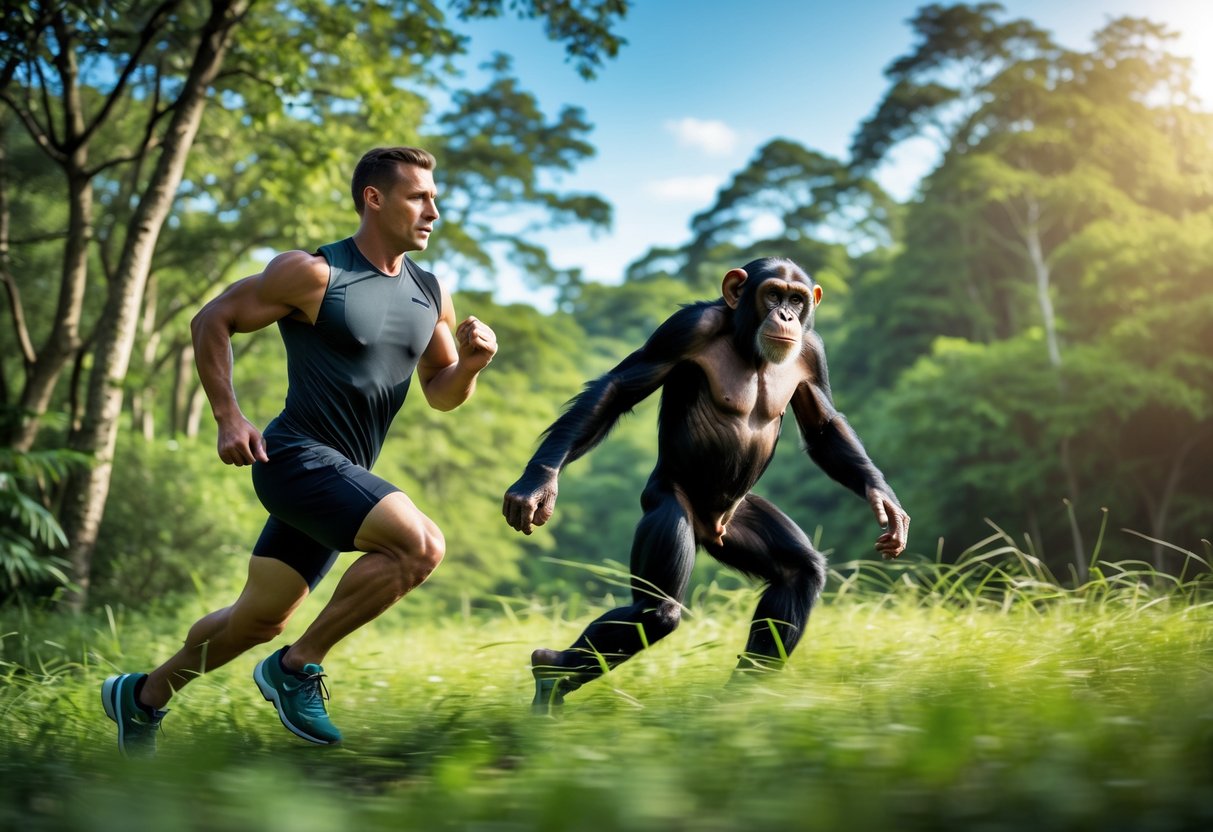
Trying to outrun a chimp? Speed isn’t the only thing that matters. Strength and endurance play a big part in whether you’d actually get away.
Strength Differences and Escape Scenarios
Chimps outmuscle us by a lot. Their muscles are about 1.35 times stronger, which helps them climb, sprint, and fight.
If you ever faced a chimp, you’d notice its raw power and agility. Honestly, it’s not a fair fight.
They use their quick bursts and climbing skills to their advantage, especially in forests or tight spaces. So, if you think you’ll just run away, maybe rethink how you’d avoid a close encounter—because their strength really changes the odds.
Human Endurance Compared to Chimps
Your body’s built a bit differently, you know? You’ve got more slow-twitch muscle fibers, which let you run for longer stretches without burning out so fast.
Chimps, on the other hand, rely on fast-twitch fibers. That gives them a burst of speed, but they tire out in no time.
Humans can cool off by sweating. Chimps barely sweat at all, so they overheat and get worn down pretty quickly if they try to keep up over distance.
If you ever wondered why you can keep a steady pace, it’s partly because you run upright. That helps you use less energy and breathe more easily.
So, if you just keep moving and don’t stop, you’ve actually got a shot at outlasting a chimp. Curious about the details? Take a look at how humans use slow-twitch muscles for endurance.


