
If you’ve ever wondered about the size differences between Arctic foxes and red foxes, you’re not alone. Many people find these clever animals fascinating.
Red foxes are generally larger than Arctic foxes. Red foxes average 14 to 20 inches tall at the shoulders and weigh up to 31 pounds. In contrast, Arctic foxes are smaller, standing around 10 to 12 inches tall.
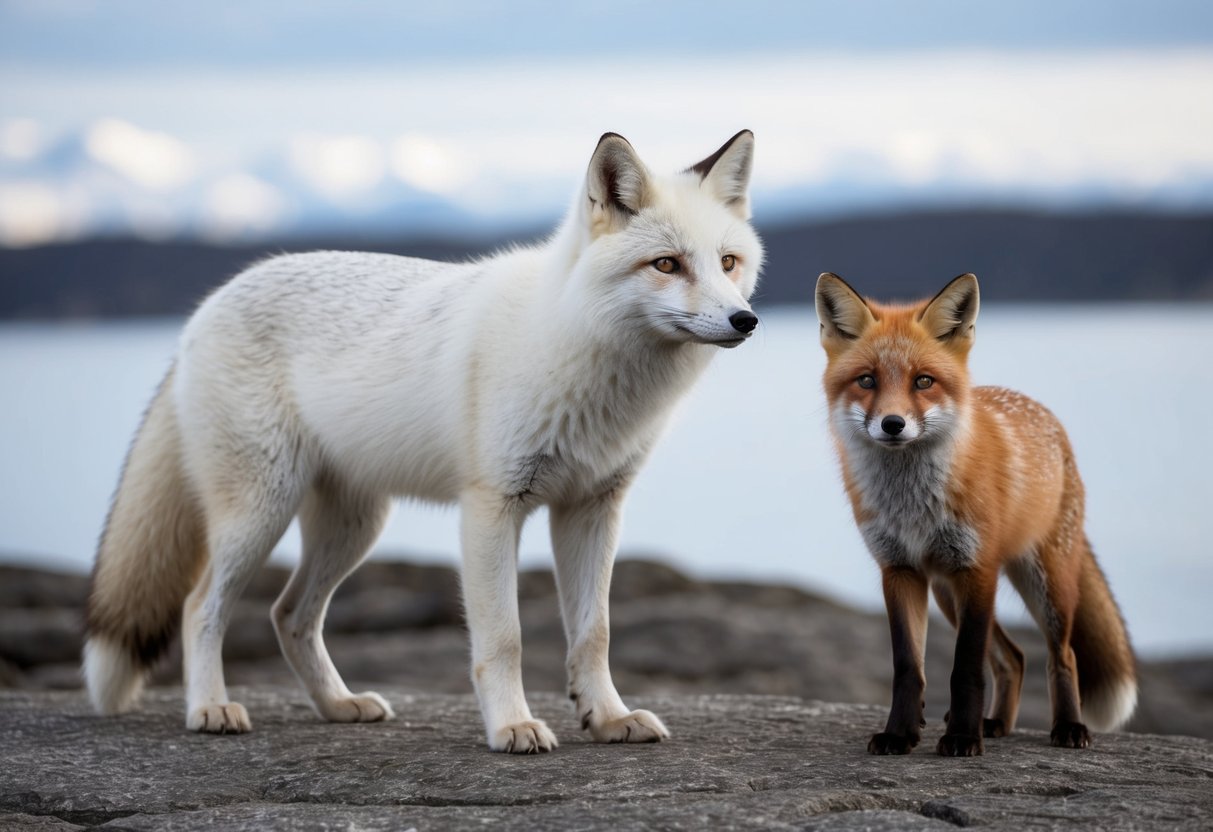
When comparing these two species, Vulpes vulpes (the red fox) and Vulpes lagopus (the Arctic fox), you’ll discover interesting traits unique to each. Red foxes thrive in various habitats, whereas Arctic foxes are adapted to survive in icy environments. This affects not only their size but also their physical features and behaviors.
Understanding these differences can deepen your appreciation for these remarkable creatures. As you explore the characteristics of both Arctic and red foxes, you’ll uncover more about their lifestyles and the ecosystems they inhabit.
Physical Characteristics
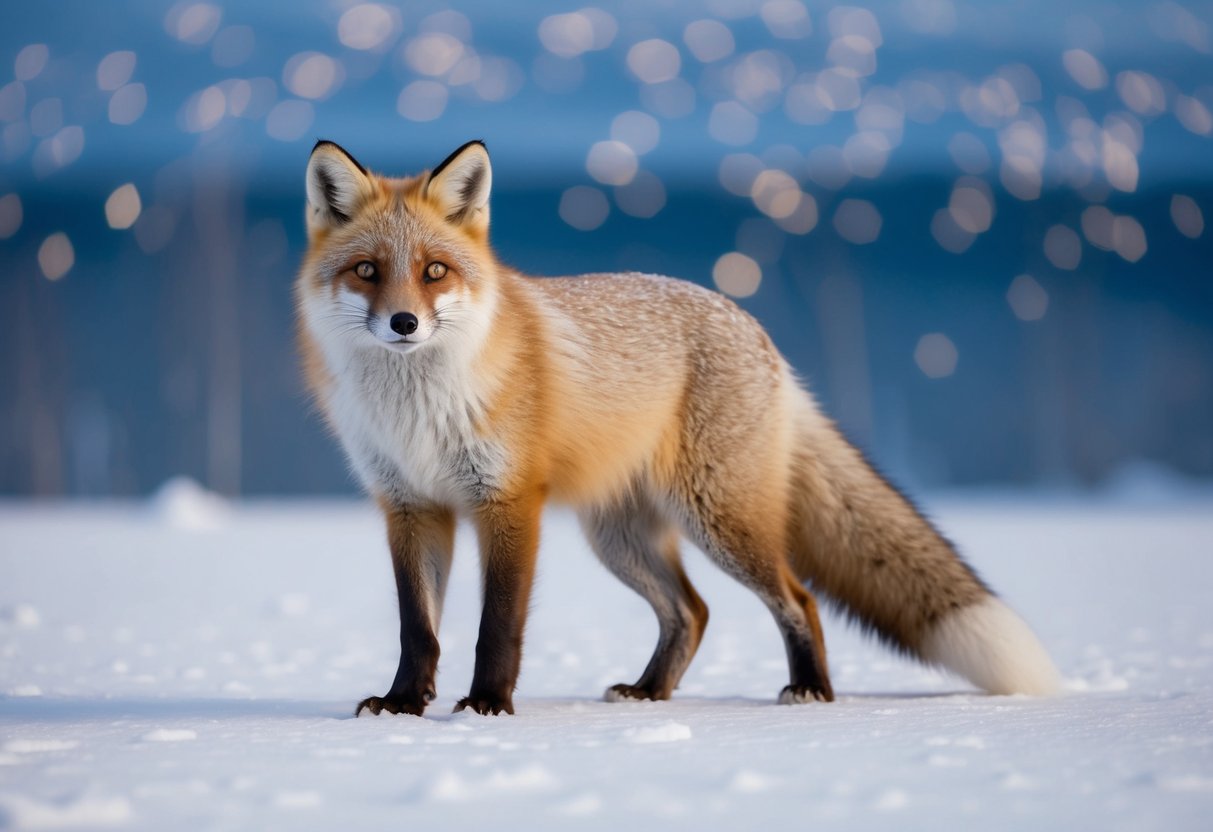
When comparing the physical traits of Arctic foxes and red foxes, you’ll find some distinct differences. Size, appearance, and fur are key aspects that set these two species apart.
Size and Appearance
Red foxes are generally larger than Arctic foxes. An average red fox stands about 14 to 20 inches tall at the shoulders and can weigh up to 31 pounds. In contrast, Arctic foxes are smaller, with an average height of just 10 to 12 inches.
The length of red foxes can reach 18 to 35 inches, excluding their tails, which add another 12 to 16 inches. Arctic foxes usually measure around 24 inches long. Their faces also differ: red foxes have longer, slimmer snouts, while Arctic foxes have rounder faces and shorter snouts.
Fur and Adaptation
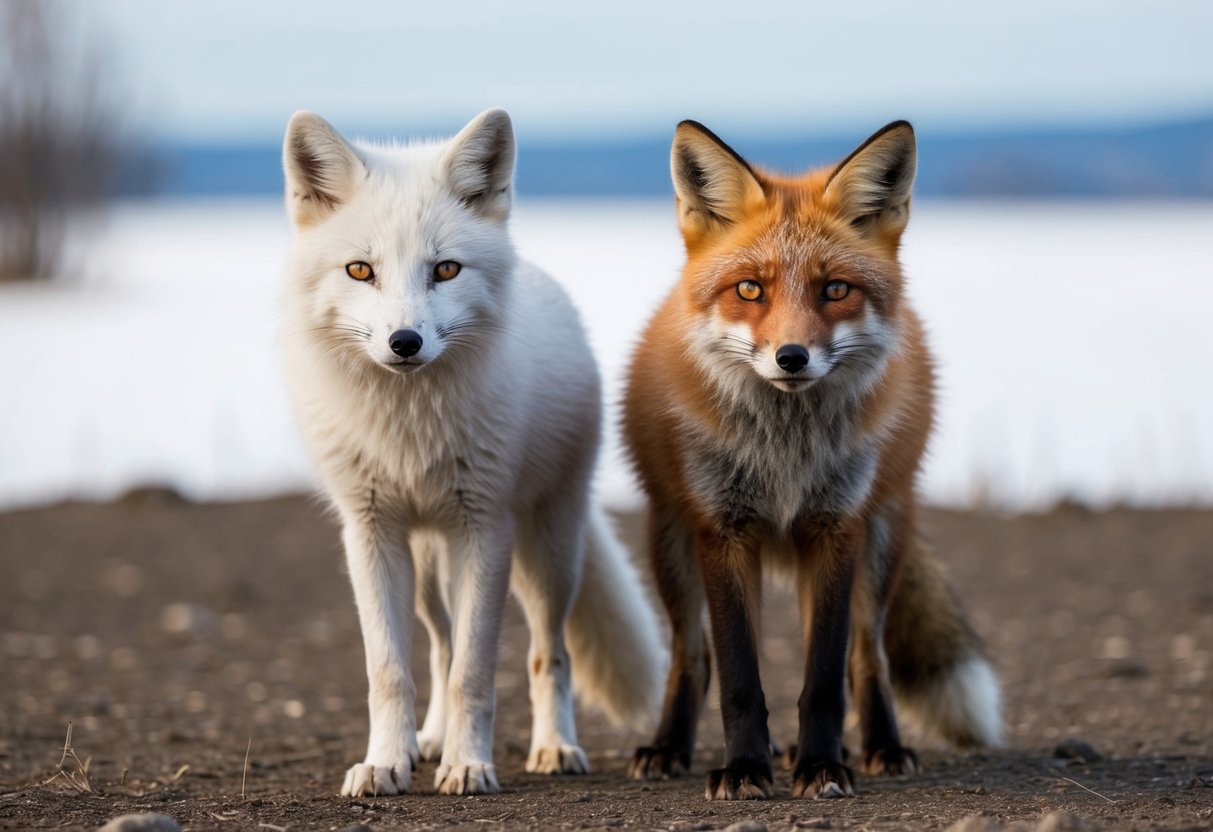
Both foxes have unique fur that helps them survive in their habitats. Red foxes sport a reddish-brown coat with a white-tipped tail, making them quite striking. This coloration helps them blend into forests and grasslands.
Arctic foxes, on the other hand, have thick, fluffy fur that is white or blue-gray. This fur keeps them warm in frigid temperatures. In summer, their fur turns brown or gray to help with camouflage in the tundra. The adaptation in fur not only protects them from the cold but also allows them to hunt more effectively in different environments.
Habitat and Distribution
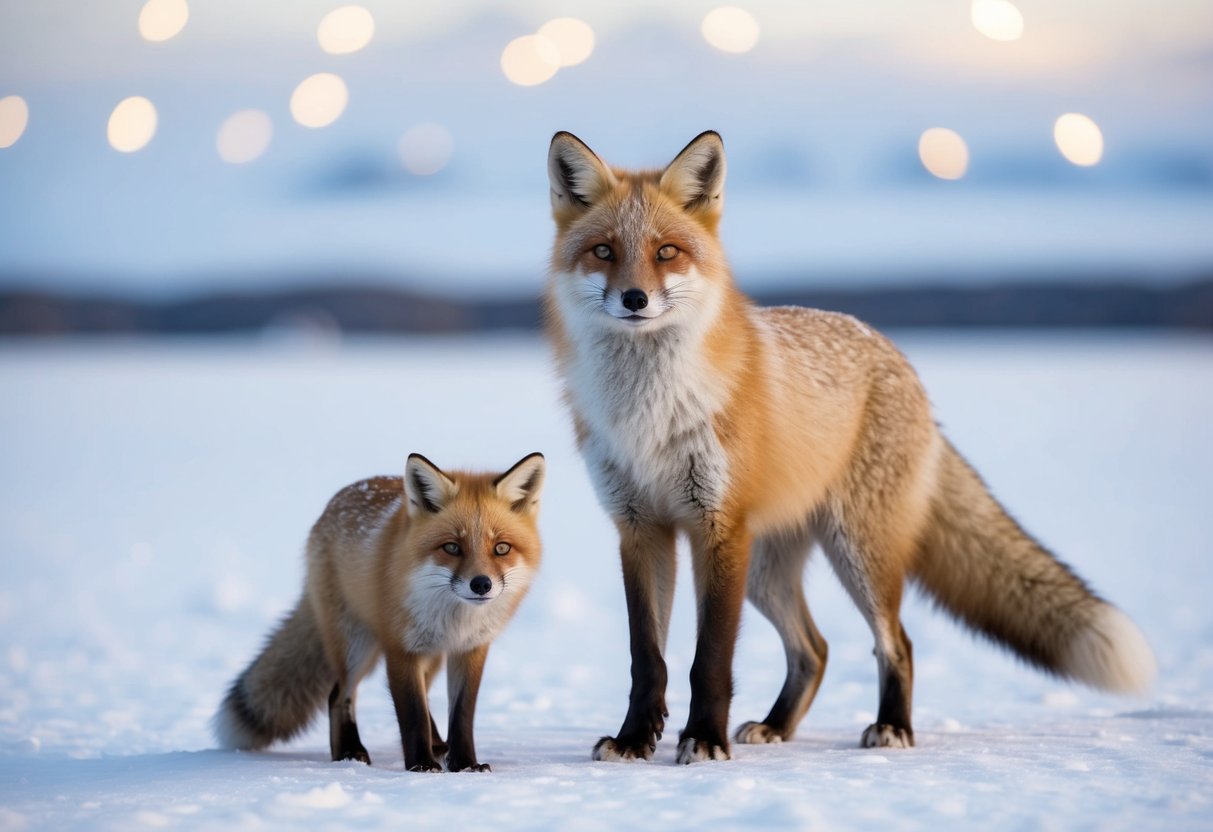
When it comes to habitat and distribution, Arctic foxes and red foxes occupy different environments that shape their lifestyles. Each species has adapted to its surroundings, which affects its physical traits and behavior.
Tundra vs. Diverse Ecosystems
Arctic foxes thrive in the harsh conditions of the Arctic tundra. This area is characterized by its cold climate, permafrost, and limited vegetation. You will find these foxes in places like Greenland, Iceland, and Siberia.
Red foxes enjoy more diverse ecosystems. They can be found in forests, grasslands, and even urban areas. Their adaptability allows them to survive in varying climates across North America, Europe, and Asia.
This difference in habitat plays a role in their size. Arctic foxes are generally smaller, which helps them conserve heat. In contrast, red foxes, benefiting from a variety of food sources, often grow larger.
Effects of Climate Change
Climate change significantly impacts the habitats of both fox species. In the Arctic, global warming leads to melting of the permafrost. This disrupts the tundra ecosystem, affecting food sources for Arctic foxes. As ice melts, polar bears may move further inland, which can threaten the survival of Arctic foxes.
For red foxes, rising temperatures can expand their range into new areas. As their habitat changes, they may compete with Arctic foxes. This could lead to more aggressive behavior as red foxes encroach on Arctic lands.
Diet and Hunting Behavior
Arctic foxes and red foxes have different diets and hunting behaviors that help them survive in their environments. Knowing what they eat and how they hunt gives you insight into their daily lives.
Prey and Food Availability
Arctic foxes primarily eat small mammals such as lemmings and voles. These creatures make up a significant part of their diet, especially in winter when other food sources are scarce. During warmer months, Arctic foxes may also munch on birds, eggs, and even berries.
In contrast, red foxes have a more varied diet. They eat rabbits, rodents, birds, and fruits, allowing them to thrive in diverse habitats. Both types of foxes adapt their diets based on what foods are available. This flexibility in their food choices is crucial for their survival.
Hunting Methods and Adaptation
Arctic foxes use clever hunting methods to catch their prey. They often employ a technique called cache hunting, where they hunt in the snow to locate hidden lemmings. They can even jump to surprise their prey!
Red foxes are also skilled hunters. They rely on their keen sense of hearing to locate small animals underground. They may use stealth and speed to pounce on their prey. Both foxes are excellent scavengers and will eat leftovers when available. This ability to adapt their hunting techniques helps them thrive in their respective environments.
Reproduction and Life Cycle

When it comes to reproduction, both Arctic and red foxes have interesting habits and life cycles. Understanding their mating and parenting practices helps you appreciate how they thrive in their environments.
Mating Habits
Arctic foxes are monogamous, which means they mate for life. The breeding season often occurs from April to July. During this time, pairs establish and guard their territory fiercely.
Red foxes also form lifelong bonds. They usually mate between February and March, but their strong social structure can lead to complex group behaviors. After mating, the female fox becomes pregnant for about two months.
This commitment can lead to stable family groups, contributing to their populations. Both species face challenges due to their habitats, but strong mating habits help them adapt and survive.
Raising Offspring
After a successful mating season, Arctic foxes give birth to 5 to 14 kits in a den. They choose well-protected areas to keep their young safe. Both parents help care for the kits.
Red foxes typically have smaller litters, averaging about 5 pups. They also take turns caring for the kits and teaching them important survival skills.
Both Arctic and red foxes focus on raising healthy offspring. They stay attentive to their young’s needs, which can ensure a higher survival rate. This nurturing behavior is vital, as the life span of both species can be affected by environmental factors.


