
When a bee lands on you, it’s hard not to wonder—will it sting? Here’s some relief: most bees won’t sting just because they touched down on your skin. Bees really don’t want to hurt you. They might be curious or maybe they like your scent, but honestly, they’re not out to cause trouble.
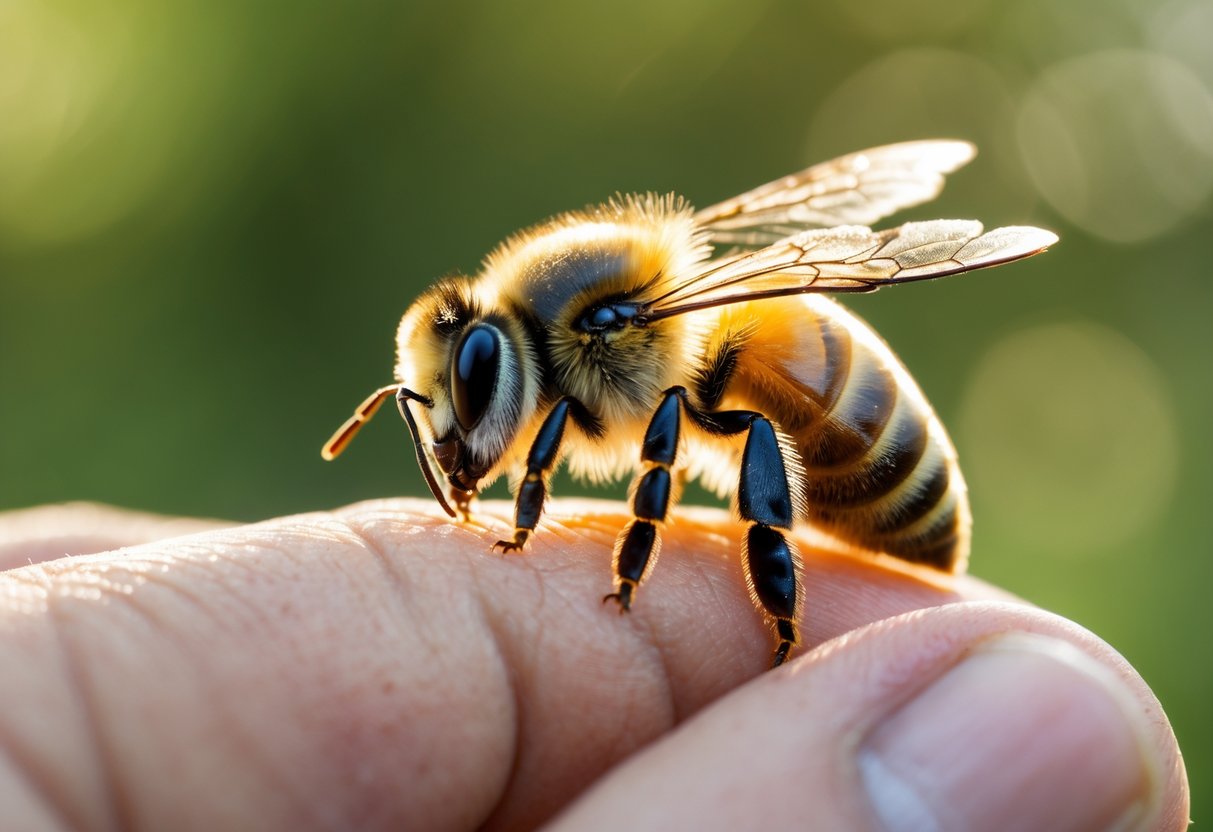
Try to stay calm when a bee lands on you. That’s usually the best way to keep things safe and sting-free.
If you stay still or gently nudge the bee away, it’s less likely to feel threatened. Learning a bit about why bees act this way makes these moments less scary—and maybe even a little fascinating.
Will a Bee Sting If It Lands on You?

When a bee lands on you, it’s usually just checking things out. Bees get curious about scents or the colors you’re wearing.
Most of the time, they won’t sting unless they feel threatened or cornered.
Bee Landing Behavior and Triggers
Bees sometimes land on people because something about you catches their attention. Maybe it’s a sweet smell from your lotion or perfume, or even just sweat.
Bright or flowery clothes can also draw them in. Bees actually use their feet to “taste” surfaces, which is wild if you think about it.
If they pick up on nectar or something sugary, they might hang around a bit longer. Try not to panic or swat at them—staying calm really helps, since a startled bee might sting to defend itself.
Aggressive vs. Non-Aggressive Bees
Different bees act differently. Honey bees and bumble bees usually keep to themselves and only sting to protect their hive.
They won’t sting unless you press them or move suddenly. Male bees can’t sting at all—they don’t have stingers.
Some bees get defensive if you mess with their nest or block their path. It’s always smart to give bees some space and let them do their thing.
Types of Bees Most Likely to Sting
Honey bees are probably the most famous for stinging. After they sting, they die because the stinger stays stuck in your skin.
Bumble bees can sting too, but only if they really have to, and they don’t lose their stinger. Carpenter bees look a lot like bumble bees.
Males don’t sting, and females almost never do. If you see these bees, just stay calm and avoid sudden moves.
| Type of Bee | Likelihood to Sting | Notes |
|---|---|---|
| Honey bee | High | Dies after stinging |
| Bumble bee | Medium | Stings only if threatened |
| Carpenter bee | Low | Males don’t sting; females rarely sting |
| Male bees | None | Cannot sting |
Distinction Between Bee and Wasp Stings
Bees and wasps aren’t the same, and their stings definitely feel different. Bees (like honey and bumble bees) sting to defend themselves or their hive.
Their stingers are barbed, so they get stuck in your skin. Wasps, like yellow jackets, have smooth stingers and can sting over and over.
Wasps tend to be more aggressive and might sting without much warning. Wasp stings usually hurt more and can happen more often if you get too close.
Bees are less likely to sting if you just stay calm and still.
If you want more details on what to do when a bee lands on you, check out this bee landing behavior and safety guide.
How to Respond When a Bee Lands on You

How you react when a bee lands on you really matters. Staying calm and moving carefully can keep you safe and help the bee, too.
It’s worth knowing how to gently get a bee off you and what to do if you get stung, especially if allergies are a concern.
Staying Calm and Preventing Stings
If a bee lands on you, try to stay still and calm. Swatting or moving suddenly can scare the bee and make it sting.
Bees usually only sting if they feel threatened. Breathe slowly and keep your hands down.
Don’t wave your arms or run, since that can make the bee nervous. Bees are important pollinators, and being gentle helps them out.
If you’re patient, the bee will probably fly away on its own in a few seconds. Honestly, this is the easiest way to avoid a sting.
Safe Removal Techniques and When to Help the Bee
If the bee doesn’t leave, gently brush it off with a soft, slow motion using a piece of paper or a leaf. Try not to crush the bee—doing so can release alarm pheromones that make other bees defensive.
Don’t flick or swat at the bee, since that increases your chances of getting stung. If it lands on your clothes, shake your clothing gently to encourage it to leave.
If you find a bee struggling indoors, open a window or door and let it fly out. Helping the bee get outside supports bee populations and their work as pollinators.
What to Do If Stung and Recognizing Severe Allergic Reactions
If a bee stings you, try to get the stinger out as quickly as you can. Scrape it off gently with something flat—honestly, a credit card usually works best.
Don’t pinch or pull at the stinger with your fingers. That just pushes more venom in, which nobody wants.
Wash the area with soap and water. This helps keep infection away.
Grab some ice and press it on the sting. It’ll help with the pain and swelling.
Keep an eye out for any scary symptoms. If you notice trouble breathing, swelling in your face or throat, dizziness, or a racing heartbeat, don’t mess around.
If you or someone nearby has a known allergy to stings, always keep an epipen close. Call emergency services right away if anything serious happens.
Even if you aren’t allergic, pay attention to the sting site. If it gets redder or more swollen over several hours, you might need to see a doctor.
If you want more tips on staying calm or dealing with bees in general, check out these resources on preventing bee stings and treating bee stings safely.


