
So, a bee lands on you. Your first instinct might be to panic and wonder, “Is it about to sting me?” But honestly, bees usually won’t sting just because they’ve landed. Most of the time, they’re just curious—maybe something about your scent or your clothes drew them in.
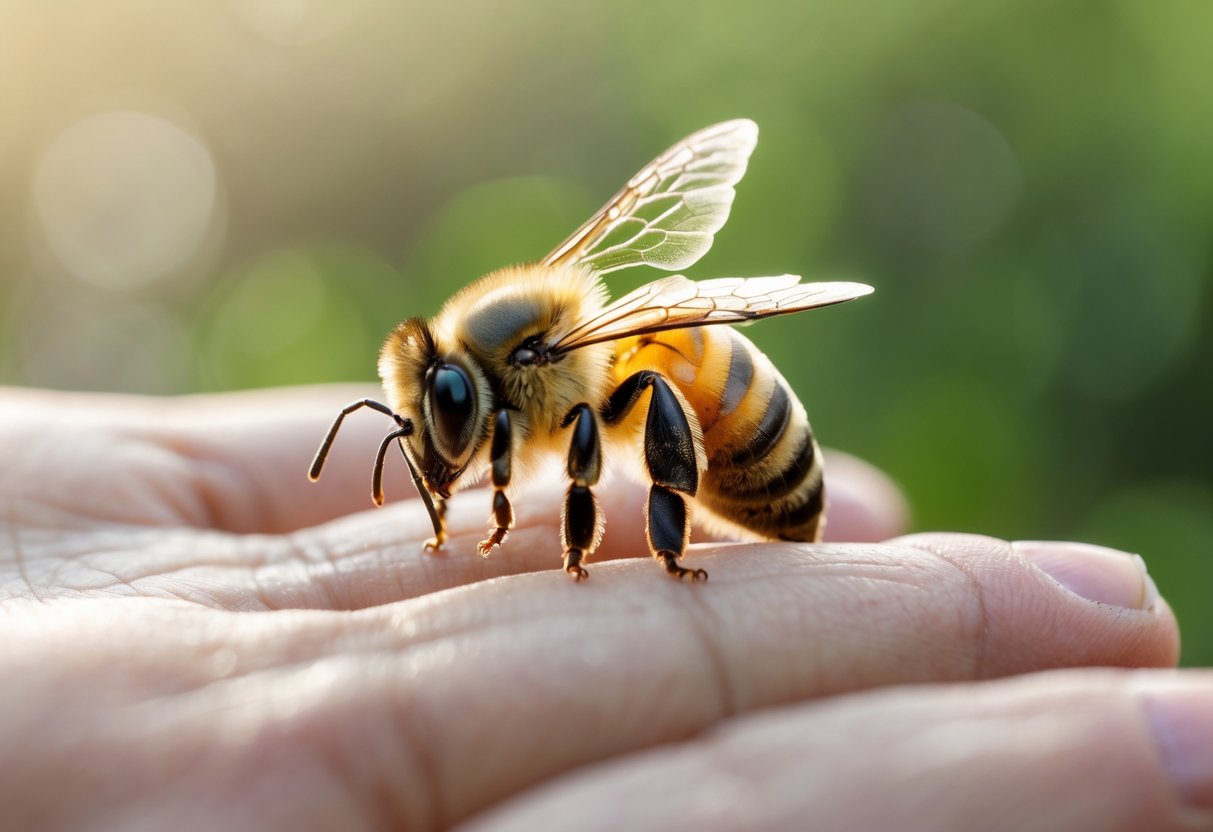
Still, bees will sting if they feel threatened. Staying calm and skipping sudden moves really helps keep things peaceful.
If you get why bees act the way they do, you’ll feel a lot safer around them. Sometimes, you might even enjoy the close-up experience—though, let’s be real, it’s not everyone’s cup of tea.
Let’s get into why bees might land on you and what to do next. It’s not rocket science, but a little know-how goes a long way.
Will a Bee Sting If It Lands on You?

When a bee lands on you, it’s usually not there to attack. Bees tend to surprise people by being calm or even a bit nosy.
If you can spot the difference between a curious bee and an aggressive one, you’ll have an easier time avoiding trouble.
Typical Bee Behavior on Humans
Honey bees and bumble bees often land on people and just hang out for a second. Sometimes, they’re drawn in by a smell or just need a break.
Most bees won’t sting unless they feel like you’re a threat. Male bees don’t even have stingers, so they literally can’t sting.
If you stay still and keep cool, the bee will probably just take off again. But if you start swatting or waving your arms, that’s when things can go sideways.
Why Bees Land on People
Bees usually land on people because something about you caught their attention. Maybe it’s your sweat, a nice fruity perfume, or even your shirt’s color.
Sometimes, they just want the warmth or moisture from your skin. They’re exploring, not hunting for someone to sting.
In a way, bees check people out the same way they check out flowers. So, if a bee lands on you, it’s probably just curious—not angry.
Recognizing Aggressive Versus Non-Aggressive Bees
Bees aren’t all the same. Honey bees usually keep to themselves unless you mess with their hive. Bumble bees are pretty chill, though they’ll defend themselves if pushed.
You’ll notice a bee getting aggressive if it buzzes loudly, circles you, or darts around fast. If you see that, yeah, a sting might be coming.
But if a bee is just hanging out or moving slowly, it’s not likely to sting. Give it space, or gently brush it away if you need to.
Watching for these signs can save you some pain. Here’s more on bee behavior if you’re curious: will a bee sting if it lands on you.
Staying Safe During and After a Bee Encounter

If a bee lands on you, the best thing you can do is stay calm. Freaking out or moving too fast just makes things worse.
How you react in those first moments really matters for avoiding a sting.
Immediate Steps to Take When a Bee Lands on You
First, just breathe and try not to move suddenly. Bees sting when they think they’re in danger, and quick moves make them nervous.
Stay still, or slowly walk away without swatting at the bee. Usually, it’ll just leave on its own.
Don’t yell or wave your arms around—loud noises and wild gestures can set the bee off. If you’re with other people, quietly let them know to keep calm, too.
If you can, head somewhere safe like inside a car or a building. That’ll lower your chances of another bee dropping by.
How to Remove a Bee Without Getting Stung
If the bee won’t budge, gently brush it off using a soft object like a piece of paper. Or, if you’re careful, a light flick with your hand works.
Try not to squash or hit the bee. That’s a fast track to getting stung.
If the bee seems stubborn, move away from flowers or plants—bees usually lose interest then. And hey, treating bees gently helps them out, since they’re important pollinators.
What to Do If You Get Stung
If a bee does sting you, act fast. Scrape the stinger out using your fingernail or something flat like a credit card.
Don’t pinch or squeeze the stinger; that just pushes more venom in. Wash the area with soap and water.
Put a cold pack or some ice (wrapped in cloth) on it to help with swelling and pain. If it’s itchy or sore, you can use over-the-counter meds or antihistamines.
Try not to scratch, since that can lead to infection. If things get worse or you have a bad reaction, go see a doctor.
Recognizing and Responding to Severe Allergic Reactions
Some folks react badly to insect stings—bees, wasps, yellow jackets, even carpenter bees can cause trouble.
If you start noticing any of these after a sting, don’t wait:
- Trouble breathing or swallowing
- Swelling in your face, lips, or throat
- Fast heartbeat or feeling dizzy
- Hives or a rash spreading everywhere
These symptoms might mean you’re having anaphylaxis, which is really serious and can be life-threatening.
If you know you have these allergies, keep an epipen handy and use it as soon as you notice symptoms.
Head to the hospital after using your epipen, even if you feel better. Sometimes, the reaction sneaks back, so it’s safer to get checked out.


