
Giving bees honey can seem harmless, especially when you have extra honey on hand and a colony looks hungry. The main reason to avoid it is disease risk, because honey can carry spores and contaminants that spread quickly through a hive and even across an apiary.
When you are feeding bees, the safest choice depends on the honey’s source, the colony’s condition, and whether you can prevent robbing or contamination. In many cases, sugar syrup or a trusted hive-safe feed is the lower-risk option.

The Main Reason It Is Unsafe
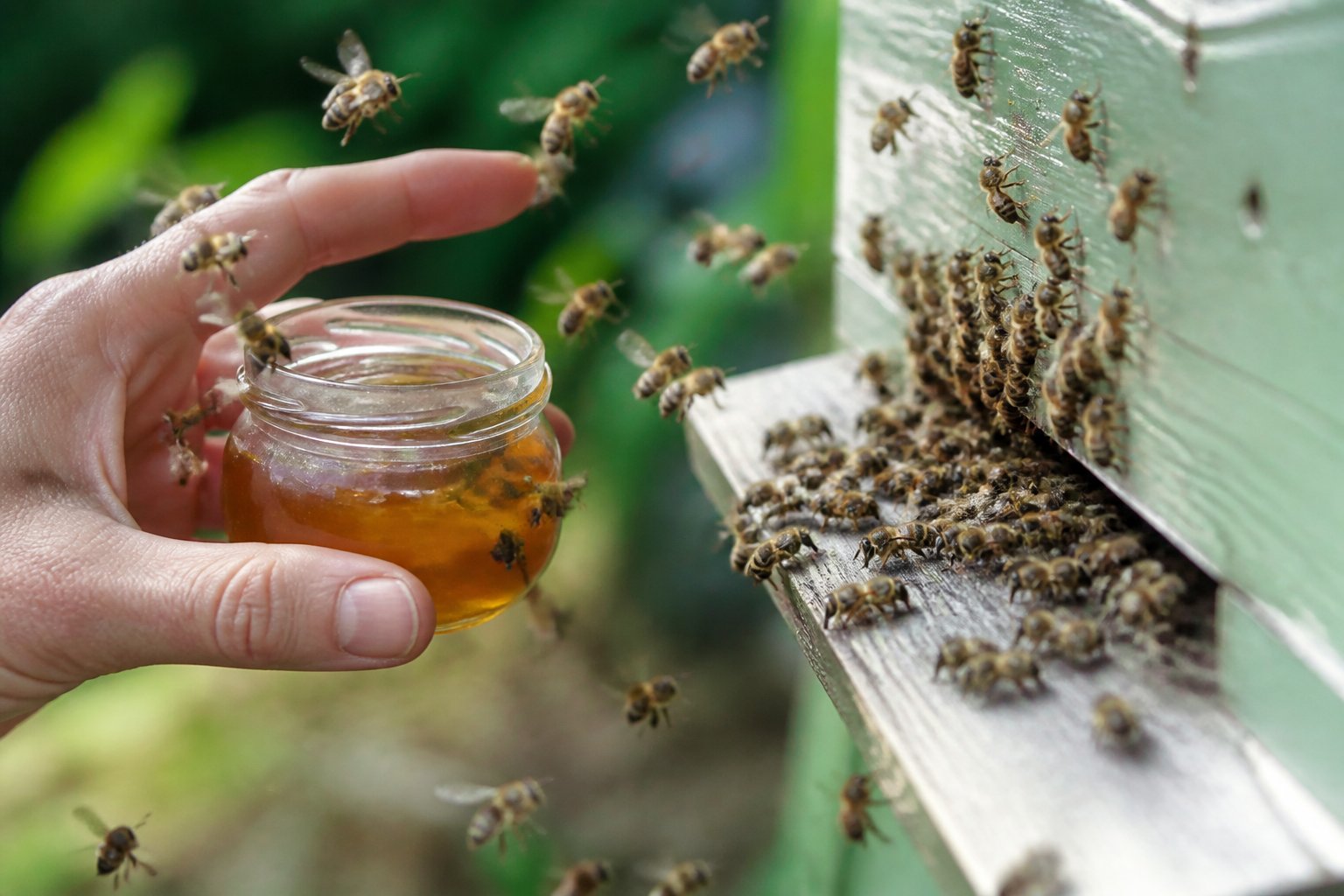
Honey can carry pathogens from one colony to another, and that is the risk you cannot see by looking at the jar. The most serious concern is disease transfer, especially when the honey comes from an unknown source or a hive with an unclear health history.
How Honey Can Spread Disease Between Colonies
Honey can move spores, bacteria, and residues straight into the gut and comb area of a healthy hive. That is why beekeepers are cautious about feeding honey from supermarkets or unknown hives, as noted by Carolina Honeybees.
Why American Foulbrood Is The Biggest Concern
American foulbrood is the disease most beekeepers worry about first, because it can spread through contaminated honey and devastate colonies. The organism linked to it, Paenibacillus larvae, forms hardy spores that can survive for a long time and create serious hive biosecurity problems.
What Paenibacillus larvae Means For Hive Biosecurity
If Paenibacillus larvae gets into your feeding setup, you are no longer dealing with a nutrition issue, you are dealing with a containment issue. One contaminated frame, feeder, or jar can turn into repeated exposure, so using unverified honey is rarely worth the gamble.
When Honey Becomes Riskier Than It Seems
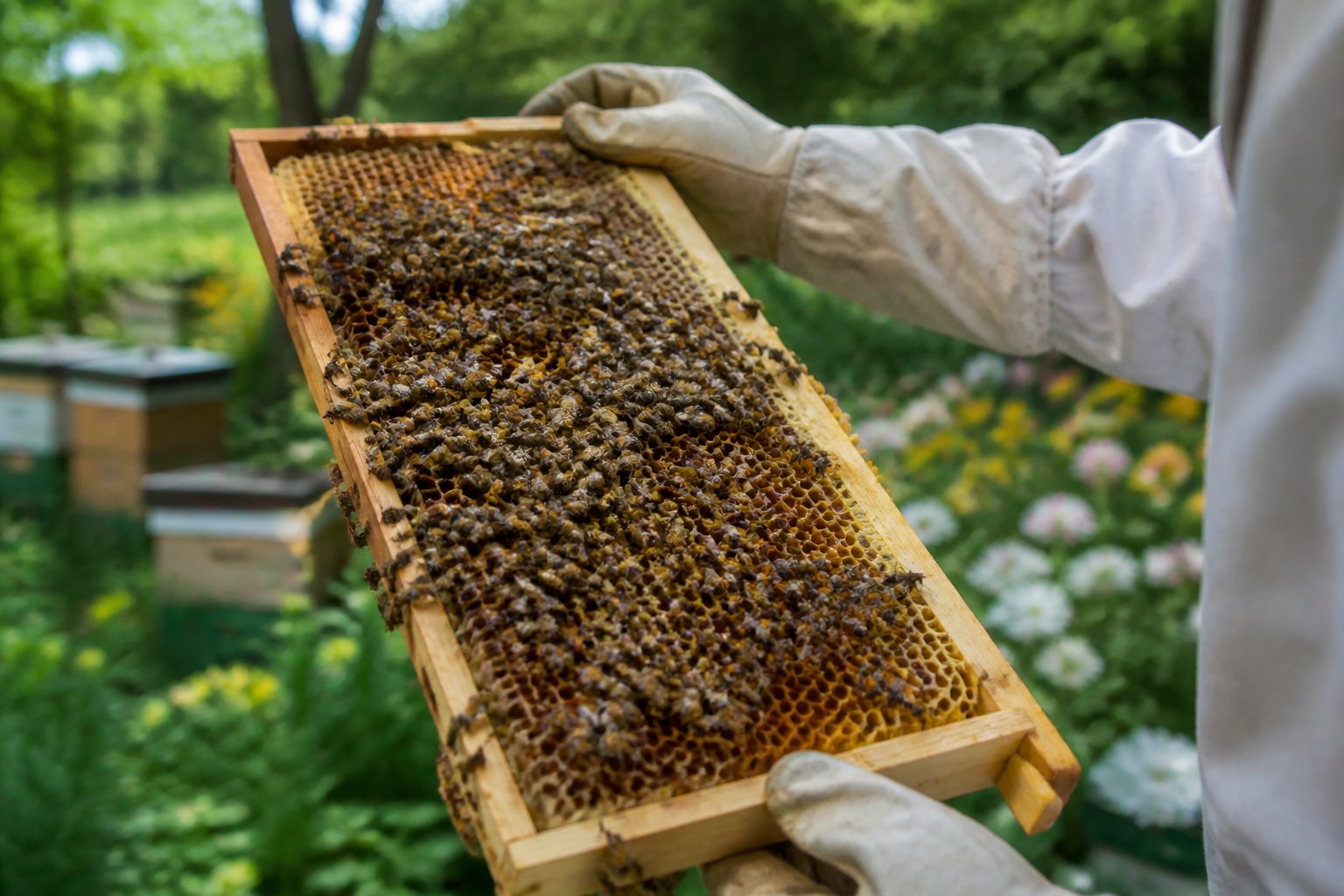
The danger rises when the honey’s origin is unclear, the storage conditions were poor, or the feeding method puts bees in contact with open food. In those situations, the problem is not just what is in the honey, it is also how the bees will react to it.
Why Store-Bought Honey Is A Problem
Store-bought honey may be blended from many sources, and you usually cannot trace its handling, heating, or contamination history. As Carolina Honeybees notes, you cannot tell whether disease spores or additives are present just by looking at it.
Why Unknown Honey Sources Are Not Worth The Gamble
Honey from an unknown beekeeper, a roadside jar, or a random surplus frame carries uncertainty you do not need. If you cannot verify the colony health, treatment history, and storage quality, you are taking a risk with the whole hive.
How Outside Feeding Can Trigger Robbing And Contamination
Open feeding can draw bees from nearby colonies and spark robbing, which spreads stress and disease pressure through the apiary. I have seen even a small spill turn into a busy, chaotic feeding area within minutes, so any exposed honey needs careful control or a better feeding plan.
What To Feed Instead
You want a feed that is predictable, easy for bees to take, and less likely to spread pathogens. In most routine situations, that means sugar syrup, while a beekeeper’s own clean honey can be used with care when the colony history is known.
When Sugar Syrup Is The Safer Option
Sugar syrup gives you a controlled food source without the same disease-transfer concern as outside honey. It is the option many beekeepers reach for during nectar gaps, especially when they need to reduce uncertainty.
When A Beekeeper Can Use Their Own Honey
Using your own honey makes more sense when you know the hive health, the extraction process, and the storage conditions. As Carolina Honeybees explains, honey from your own healthy hives is safer than honey from unknown sources.
How To Use A Hive Top Feeder Safely
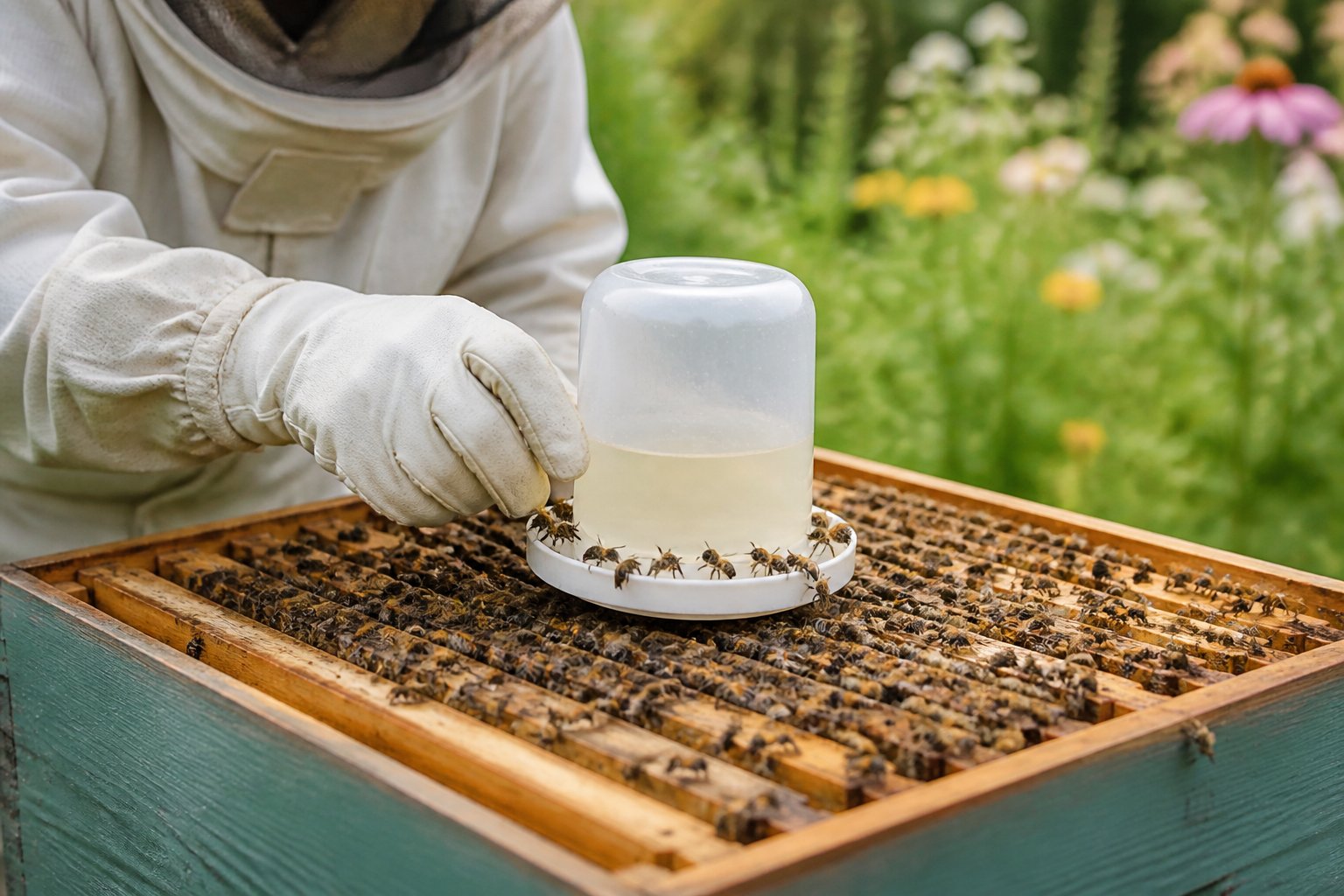
A hive top feeder can reduce robbing if it stays inside the colony structure and is managed cleanly. Keep the feeder sealed, avoid spills, and check it often so you do not create a sticky mess that attracts robbers or ants.
Common Situations That Confuse Beginners
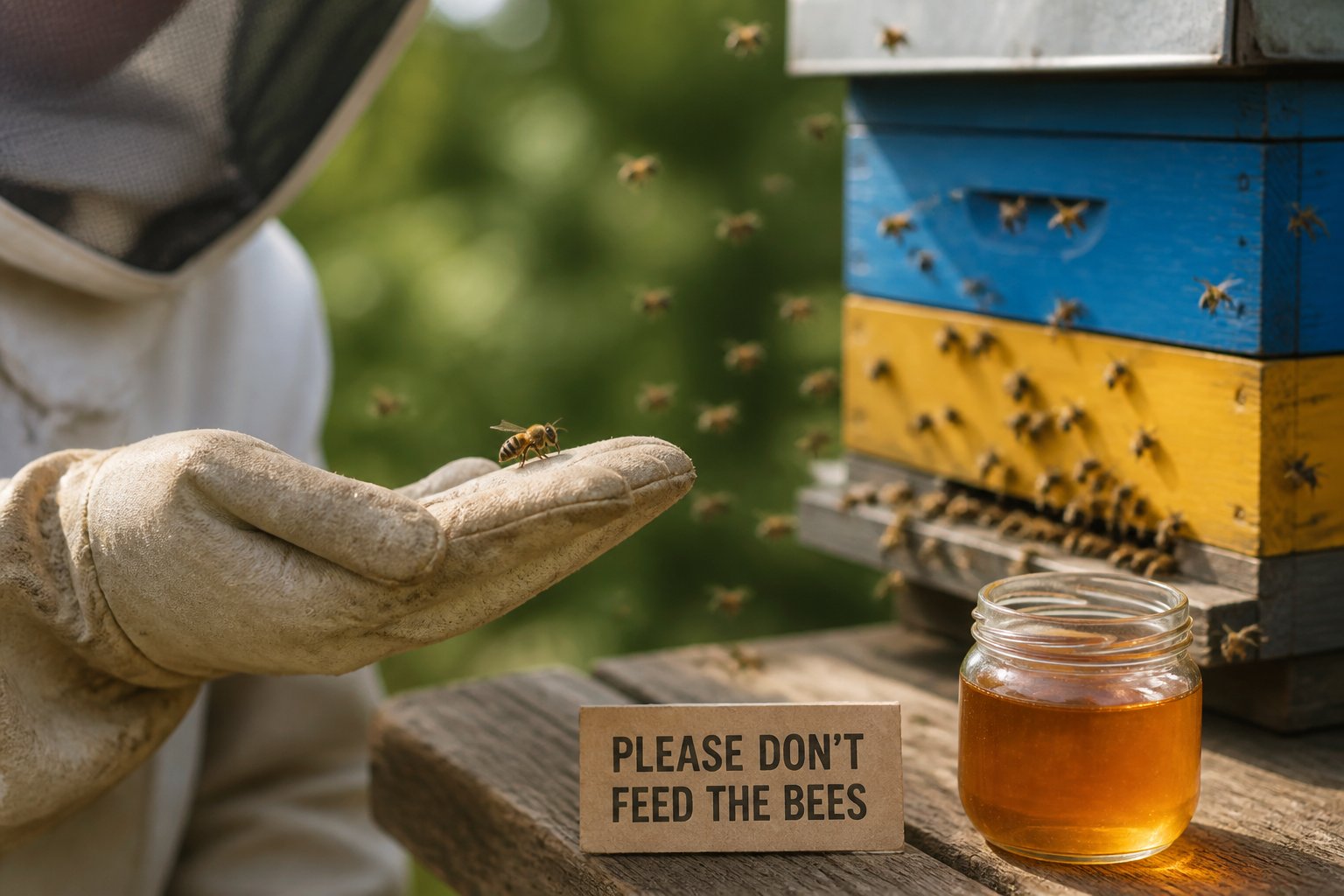
Beginners often want to help every struggling bee, yet the best response is not always to feed. The right choice depends on whether you are helping an individual insect, supporting a weak colony, or deciding when the hive should manage on its own.
Helping A Tired Bee Without Using Honey
If you find a tired bee, a drop of honey is not the answer. A safer move is to place it near flowers, give it a quiet resting spot, and leave feeding to the colony’s normal foraging or a beekeeper’s managed feed.
Feeding A Weak Hive Versus Leaving Bees Alone
A weak hive may need supplemental food if stores are low or nectar is scarce, but unnecessary feeding can cause more stress than benefit. I usually look first at brood pattern, stores, and weather before I decide whether the hive actually needs help.
Knowing When To Stop Supplemental Feeding
Stop once the colony has enough stores to manage on its own and is no longer drawing the feed quickly. If you keep feeding after the need passes, you can encourage mess, robbing, and extra disturbance without adding real value.


