
Ever notice how seahorses almost never stop eating? They don’t have a stomach and digest food super quickly, so they need to eat tiny meals nearly all day just to keep their energy up.
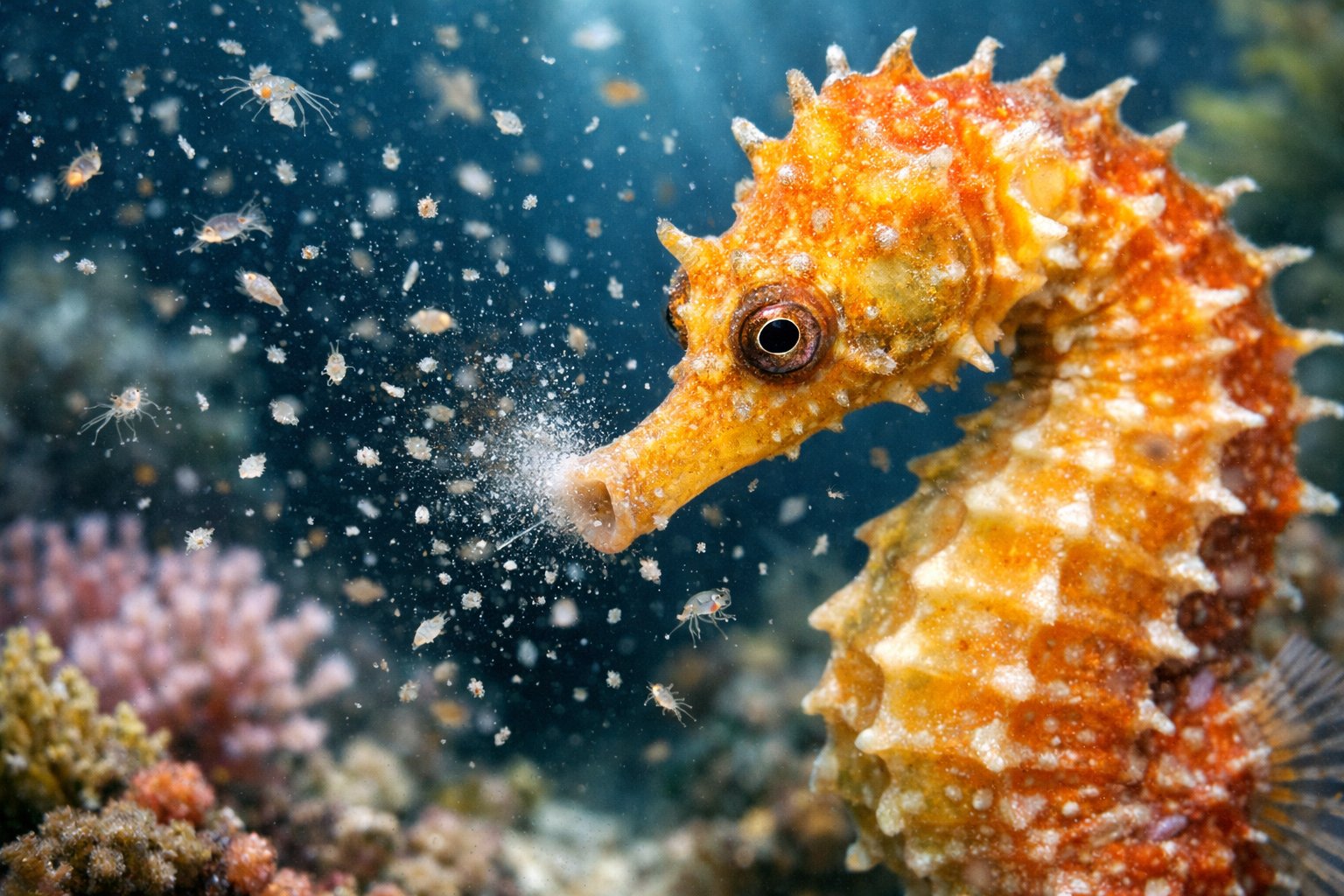
Because seahorses have no stomach and pass food rapidly through their gut, you’ll see them feed many times a day to meet their energy needs.
Their odd body shape and slow swimming make ambush feeding work best. Diet and feeding frequency really matter, both in the wild and in aquariums.
The Unique Digestive System of Seahorses
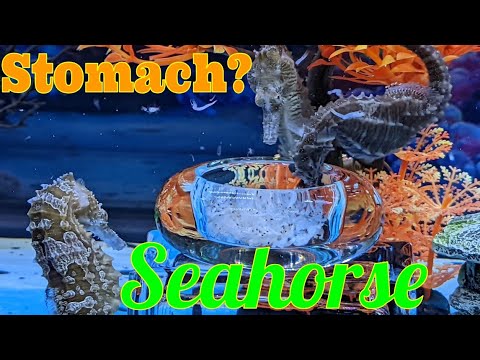
Seahorses have a simple gut, no teeth, and a feeding style that keeps them eating all the time. Their bodies skip storage and chewing in favor of speed and precision, so they end up catching lots of tiny prey to get by.
Absence of a Stomach and Its Impact
Seahorses (genus Hippocampus) don’t have a real stomach. Food goes straight from the mouth, through the esophagus, and into the intestine.
They can’t store or slowly break down big meals like other fish do. Digestion just depends on enzymes in the intestine and a steady flow of food.
Most Syngnathidae, including seahorses, have bony plates that protect them, but those don’t help with digestion at all. Since there’s no acidic stomach chamber, each meal has to be small and eaten often to keep up with energy needs.
If prey gets scarce, a seahorse can starve pretty fast. In captivity, you have to give them regular feedings of tiny crustaceans like copepods or brine shrimp to match what they’d eat in the wild.
Rapid Digestion and High Metabolism
Seahorses digest food really quickly. Their intestines process tiny crustaceans and plankton fast, so nutrients are available almost right after eating.
This rapid digestion supports their active energy use, even though they swim slowly. Seahorses burn through energy at a high rate, so they eat over and over all day.
Some species feed dozens of times daily, eating hundreds or thousands of tiny prey each day. Their small, stomachless gut and quick nutrient uptake make this necessary.
Dorsal and pectoral fins help them move and position themselves while feeding. But those fins don’t store energy. The bony plates and compact body keep them light, though none of that reduces their need to eat constantly.
How Suction Feeding Works
To feed your seahorse, you need to offer small, moving prey it can suck up with its snout. When seahorses open their mouths fast, they create suction that pulls prey right in.
They swallow prey whole since they don’t have teeth. Their snout works like a tiny vacuum, and its shape lets them target copepods and mysid shrimp with precision.
A quick flick of the dorsal fin keeps the body stable. Pectoral fins steer the head into place.
This teamwork makes each suction strike work well. Since suction feeding only works on small prey, you have to provide lots of them instead of a few big ones.
That’s why Hippocampus and other syngnathids must eat all the time to stay alive.
Feeding Habits and Diet in Natural and Captive Environments

Seahorses eat tiny, soft prey many times each day. Their mouths and digestive system force you to feed them often, and both habitat and prey type shape what they eat.
Constant Grazing and Food Choices
Seahorses feed almost nonstop because they don’t have a stomach and food passes through them quickly. In the wild, you’ll see them anchor with their prehensile tail in seagrass beds, coral reefs, or mangroves, just waiting for tiny prey to drift by.
They eat lots of small items—zooplankton, rotifers, and microcrustaceans—instead of big meals. Young or small species like dwarf and pygmy seahorses need even tinier prey, such as copepods and rotifers.
Larger seahorses, like longsnout species, go for mysis shrimp and amphipods. In captivity, you’ll want to mimic this by giving frequent small feedings, not just one big meal.
Favorite Prey: Copepods, Mysis Shrimp, and Brine Shrimp
Copepods are a staple for many seahorse species because they’re common and just the right size. You’ll find them in seagrass or plankton-rich waters, and they’re perfect for juveniles.
Mysis shrimp—live or frozen—offer lots of protein and adults seem to love them. Aquarium keepers use them all the time.
Brine shrimp are handy for feeding fry and tiny seahorses, though they’re not as nutritious as mysis. Try to mix it up: offer live copepods and mysis when you can, supplement with frozen mysis, and use hatchery-raised brine shrimp for the smallest ones.
This variety helps cover vitamin and fatty-acid needs and keeps their feeding behavior natural.
Ambush Predator Strategies and Energy Needs
Seahorses act as ambush predators, relying on camouflage and patience. They anchor to holdfasts and strike by creating suction with their snout.
This method saves energy, but they need sharp eyesight and have to strike many times a day since each catch only gives a tiny bit of energy.
They eat often because digestion is so fast and each prey item is small. When males carry young in their brood pouch, their energy needs go up, so breeding pairs need more frequent feedings.
Even pipefish and seadragons—relatives of seahorses—show the same need to eat often to keep up with their metabolism.
Challenges of Meeting Nutritional Demands
In captivity, you’ll run into a few annoying challenges. Getting wild-caught seahorses to eat frozen mysis isn’t easy, and keeping up with live copepods can be a hassle.
Frequent feedings make it tough to maintain good water quality. You might need to set up a feeding station or use a pipette to target-feed, especially if you’ve got shy seahorses that miss out during meals.
Out in the wild, things aren’t much easier for them. Habitat loss and fewer crustacean prey really cut down on food options, which adds to conservation worries for some Hippocampus species.
If you’re caring for seahorses, keep an eye on their body condition. Mix up their diet with amphipods, mysis, and copepods.
Try to stick to a feeding schedule that lines up with how they’d eat in the wild. It’s not always simple, but it makes a difference.


