
When a seahorse loses its mate, it doesn’t just move on right away—or die of a broken heart, despite what some people imagine. Usually, the surviving seahorse gets stressed, eats less, and might spend days or even weeks alone before looking for a new partner. That’s the short version, but it already hints at why these bonds matter so much for their breeding and survival.
Let’s dig into how seahorse pair bonds actually work. You’ll see what changes in their behavior and hormones after a loss, and how some seahorses eventually find new mates while others just stay on their own.
This background helps you notice the signs of grief and understand the real risks tied to losing a partner out in the wild.
Seahorse Pair Bonds and Mating Behavior
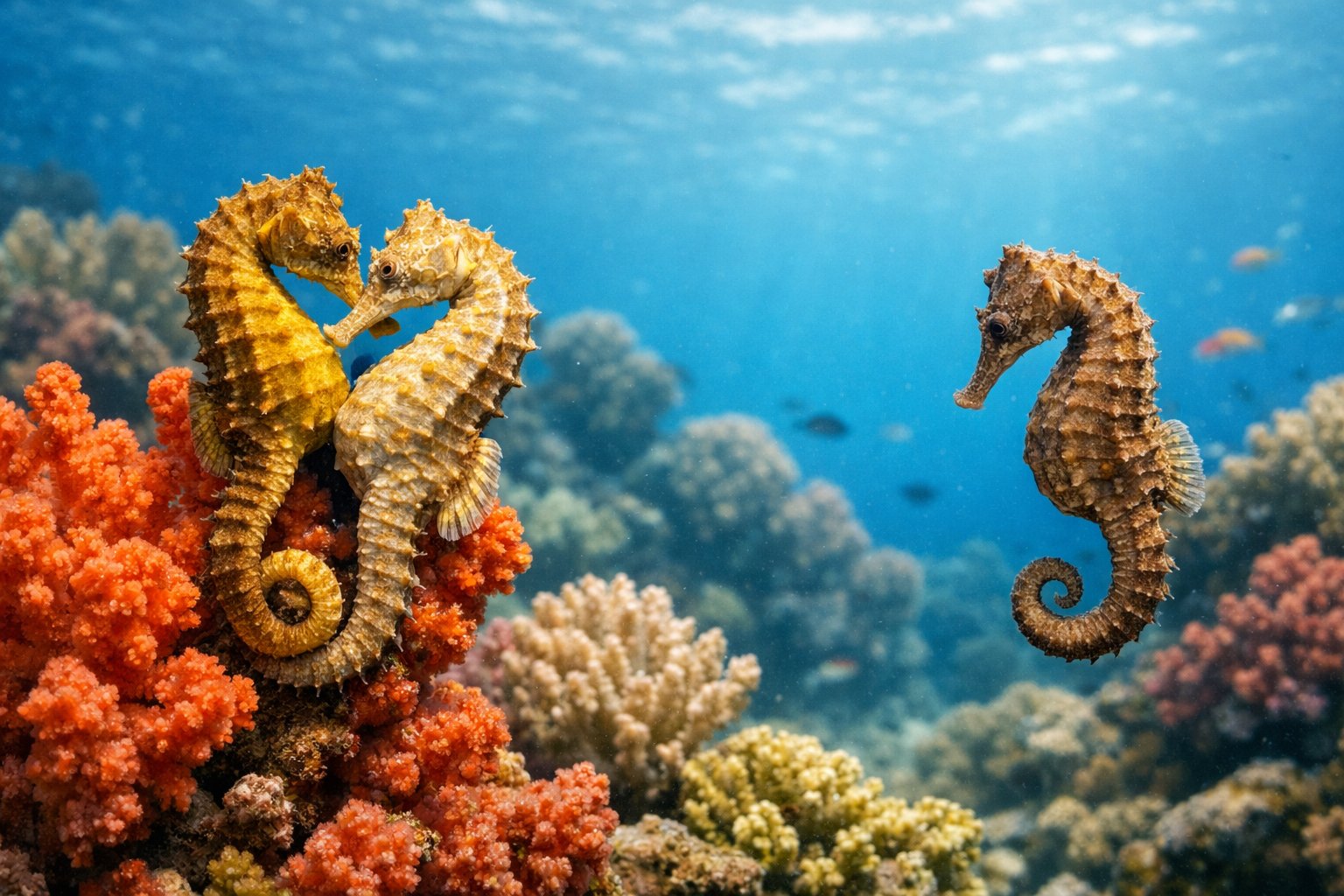
Seahorse pairs often form close, repeated mating relationships. In many species, you’ll notice regular displays, shared space, and perfectly timed broods.
What Makes Seahorse Pair Bonds Unique
Seahorse pair bonds usually involve the same two individuals mating throughout a breeding season. Partners perform synchronized swims and change colors to reinforce their bond.
Some species even defend a tiny territory together, protecting their eggs and food. That’s pretty unusual for fish.
The male carries the eggs in a pouch, which flips the usual fish parenting script. Females time the egg transfer, and males control how long they incubate.
This coordination leads to strong, daily interactions you can actually watch if you’re lucky.
The Role of Courtship and Daily Greetings
Courtship isn’t just a one-time event for seahorses—it’s a daily ritual. Each morning, partners greet each other with a little dance, mirroring movements, changing color, and sometimes entwining tails.
These routines sync up their reproductive cycles and help make sure both are ready at the same time.
Before egg transfer, they go through a precise display: the female lines up her ovipositor to the male’s pouch, they thrust together, and eggs move into the pouch. It’s a sort of choreography that has to match up for a successful brood.
Variation Among Seahorse Species
Not all seahorses act the same way. Some stay together for several breeding seasons, while others only pair up for a single cycle.
If you want to know exactly how a species behaves, you’ll need to check studies on that particular hippocampus species.
Environmental factors play a big role, too. In stable habitats with lots of food, pairs stick together longer.
But in crowded or disturbed spots, seahorses might switch partners more often. Things like size, local population density, and predation risk all influence whether a pair stays together.
Benefits of Strong Pair Bonds
Strong pair bonds offer real reproductive advantages. Pairs that greet daily and court reliably tend to mate faster and produce more broods in a season.
Egg transfers synchronize better, and there’s less risk of failed mating.
Beyond breeding, partners who defend a territory together can lower their chances of getting eaten and make feeding more efficient. That stability is especially important where good holdfasts or seagrass are hard to find.
Life After Loss: How Widowed Seahorses Respond
When a seahorse loses its mate, you’ll notice changes in how it acts, eats, and interacts with others. The widowed seahorse might stop breeding, show stress, and either look for a new partner or just stay alone for a while.
Immediate Reactions to Mate Loss
Right after losing a partner, the seahorse often moves less and eats less. Researchers and caretakers see less feeding, duller colors, and more time spent alone anchored to seagrass or holdfasts.
These changes can last for days or even weeks.
Look for slow swimming, low interest in prey, and no more daily greeting dances. Males that carried eggs may stop reproducing for a bit until they recover.
If you’re caring for seahorses, keep an eye on water quality and make sure they’re getting enough food during this rough patch.
Seeking a New Partner
Some widowed seahorses eventually start courting again once they regain their appetite and energy. You might spot the greeting dance, color changes, and daily visits to other seahorses.
In crowded areas, they might find a new mate within days. In sparser places, it could take weeks or months.
If you keep seahorses, introducing a compatible individual can help. Compatibility usually means similar species, size, and breeding readiness.
Both partners need to perform the right courtship rituals before mating starts up again. When the male gets new eggs, you’ll see his belly swell once more.
Behavioral and Health Changes in Widowed Seahorses
Stress from losing a mate can hurt a seahorse’s immune system and overall health. Eating less often means they lose weight and get weaker, making them more vulnerable to parasites or disease.
You might notice color changes or lethargy. If so, improve their diet and reduce stress in the tank.
Keep an eye on the male’s brood pouch and belly size. If he just had a brood, losing his partner might delay the next cycle.
Watch for signs of illness like frayed fins, heavy breathing, or white spots. Acting quickly with better nutrition, stable water, and less handling can really help them bounce back.
Challenges of Finding a New Mate
Habitat and population density really shape how easily a seahorse finds a new partner. Out in the wild, sparse populations and habitat loss make those chance encounters pretty rare.
In captivity, things like mismatched species, size differences, or just bad tank conditions can get in the way of pairing up. It’s not always easy to get it right.
Competition plays a big role too. Sometimes, dominant seahorses will monopolize all the available mates.
This can leave some widowed seahorses out of luck. If you’re managing seahorses, try giving them plenty of holdfasts and visual cover.
Also, think about how the population is structured to help boost pairing chances. Still, some individuals just seem to prefer being alone, and that does lower their breeding output over time.


