
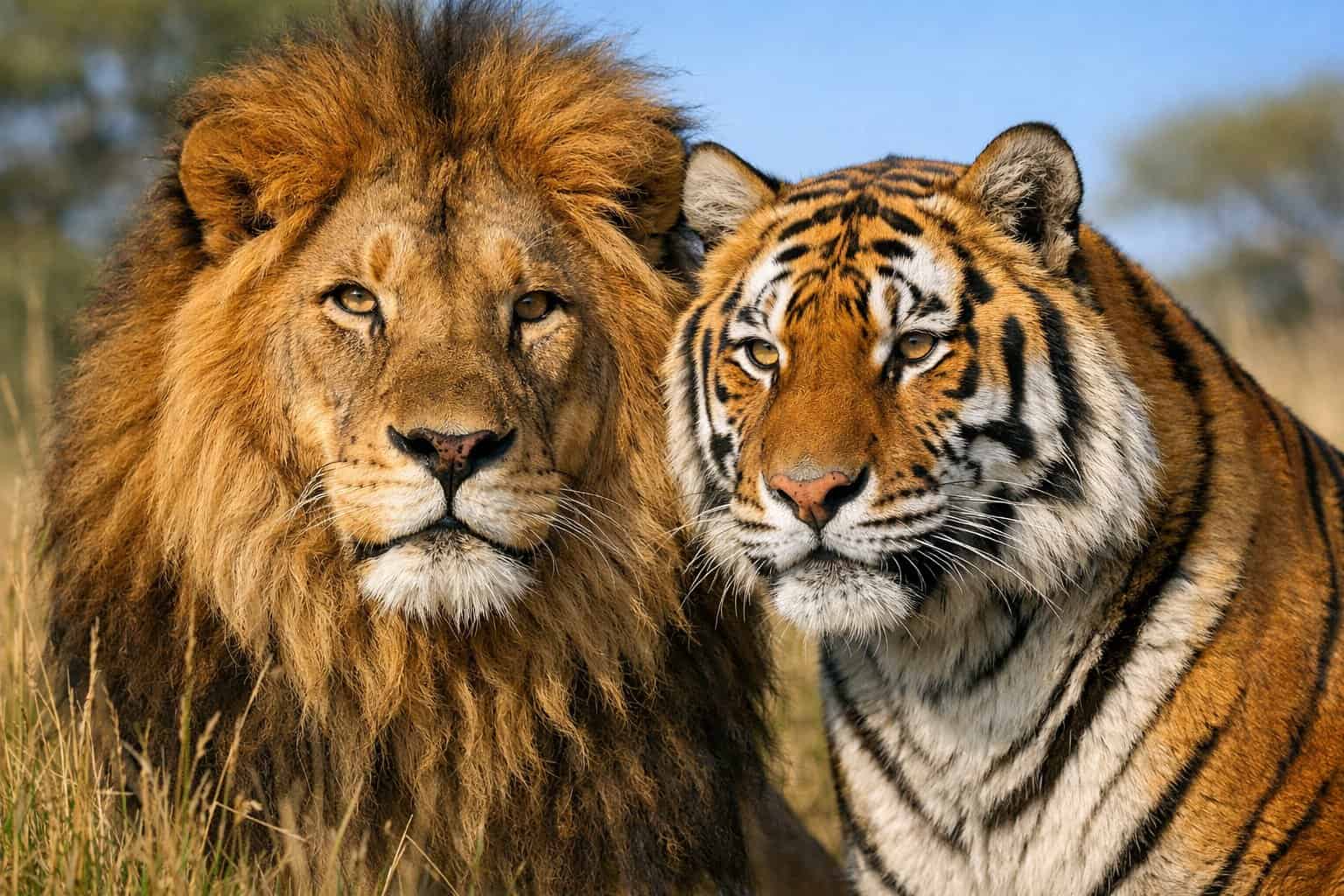
When you imagine a lion’s closest cousin, a tiger probably pops into your head. And you’d be right—the tiger is actually the lion’s closest living relative in the big-cat family. Both cats sit in the Panthera group and share a pretty recent ancestor, which really shapes how they look, hunt, and move across continents.

But lions have other relatives and lookalikes, too. Some big cats, a few wildcats, and even some non-feline animals show off lion-like traits. Why does that matter? Well, those similarities tell us a lot about behavior and conservation. Genetics, fossils, and behavior all help map out the lion’s family tree and show which animals most resemble the king of the savanna.
The Closest Relatives to Lions
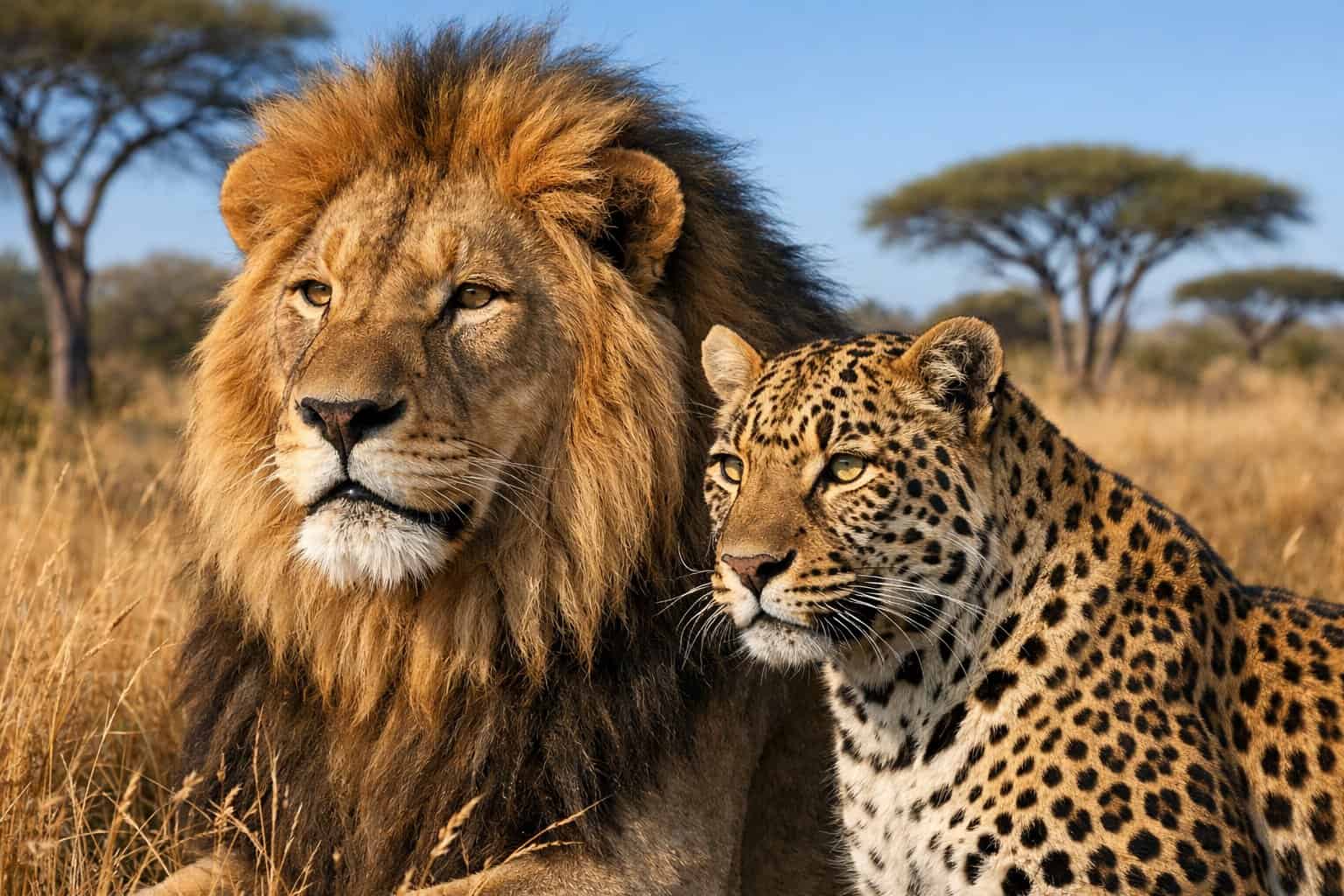
Lions (Panthera leo) have tight connections with other big cats in the Panthera group. Their genetic links to tigers, leopards, and jaguars run deep, and you’ll spot plenty of shared traits if you look closely.
Genetic and Evolutionary Relationships
Genetic studies place lions squarely inside the Panthera genus. Tigers (Panthera tigris), leopards (Panthera pardus), and jaguars (Panthera onca) all share that label. DNA research shows lions are closer to leopards and jaguars than to smaller cats.
When scientists compare genes across these species, they track mutations and shared markers that reveal when the lineages split. Fossils like Panthera atrox (American lion) and Panthera fossilis (cave lion) help fill in the timeline.
Comparison With Other Big Cats
Lions, tigers, leopards, and jaguars share a lot of DNA, but their behavior and habitats set them apart. Tigers top the size charts and hunt alone in forests. Leopards are smaller, super adaptable, and stash prey in trees. Jaguars have a crazy-strong bite for their size and stick to the Americas.
Lions stand out because they’re social—males grow manes, and prides raise cubs together. Even with these differences, lions, leopards, and jaguars sit close together on the family tree. Tigers are nearby, but their genes show a longer, more separate history.
Shared Physical Features
You can spot Panthera traits in their skulls, jaws, and the hyoid bone that lets most of them roar. All four—lions, tigers, leopards, and jaguars—have big, tough skulls and strong canine teeth for taking down large prey.
Some features are unique. The lion’s mane, for example, is a social and sexual signal you won’t see on tigers or jaguars. Leopards and jaguars have spotted coats for camouflage, while tigers wear stripes. But underneath, their bones and muscles show off their Panthera heritage.
Other Animals Resembling Lions
You’ll find other big cats that look or act like lions, plus some wildcats and even a few non-feline animals that get compared to lions. These animals might share a hunting style, a body shape, or just a certain vibe.
Pumas and Cougars
Pumas (Puma concolor)—also called cougars, mountain lions, or catamounts—show off a lean, powerful build like lions. Their long tails, slim faces, and plain tawny coats help them blend into the Americas’ mountains and forests.
Unlike lions, pumas go it alone. They sneak up and ambush prey from above or behind. Pumas move well in tight spaces and leap or climb with ease. They’re lighter than African male lions—usually just 60–150 pounds—so they look much more slender. If you spot one at dawn or dusk, expect a quick burst of speed, not a group hunt.
Cheetahs and Lynx
Cheetahs belong to the cat family too and share some hunting traits, but their style is different. Cheetahs run faster than any land animal, chasing down gazelles in open savannas. Their slim bodies, small heads, and dark facial lines are built for speed, not for wrestling big prey like lions do.
Lynx and bobcats are smaller and chunkier, and they’re made for cold, forested places. You’ll notice their tufted ears, stubby tails, and giant paws that work like snowshoes. These cats hunt solo and rely on stealth and ambush. They have a carnivore’s build, but on a much smaller scale and with different prey.
Domestic Cat and Other Lookalikes
Your house cat (Felis catus) actually shares a lot with lions—retractable claws, a similar skull, and those classic stalking and pouncing moves. Domestic cats are tiny, but if you watch them play or hunt, you’ll see the same instincts.
Other lookalikes? The bobcat can look like a small mountain lion if you catch a glimpse from far away. The clouded leopard has big paws and a long tail. Some dogs, like the Chow Chow and Tibetan Mastiff, get compared to lions because of their thick neck ruffs and stocky build, although they’re not related and act completely differently.
Non-Feline Comparisons
People love to compare hyenas to lions. Both roam Africa, hunt some of the same animals, and even fight over kills now and then.
Hyenas have these ridiculously strong jaws and stick together in social clans. Sometimes, they’ll even take on a whole lion pride.
Bears get thrown into the mix too, mostly because of their size and raw strength. Still, bears are omnivores and honestly, their bodies and habits aren’t much like lions at all.
Crocodiles? They’re another favorite for comparisons. In rivers, crocs rule as top predators and ambush prey, kind of like how lions stalk on land.
It’s worth pointing out, though, that these comparisons are really about the animals’ roles or looks. Genetically, they’re not close at all.
Hyenas, bears, and crocodiles don’t share close family trees with lions. Even so, they shape the same ecosystems and, sometimes, cross paths with lions out in the wild.


