
If you’re curious about the Celtic goddess of bees, let’s talk about Gobnait. She stands as the Irish patron saint and goddess, deeply tied to bees and beekeeping.
In Celtic culture, bees meant a lot. People viewed Gobnait as a protector, both for the bees and those who cared for them.
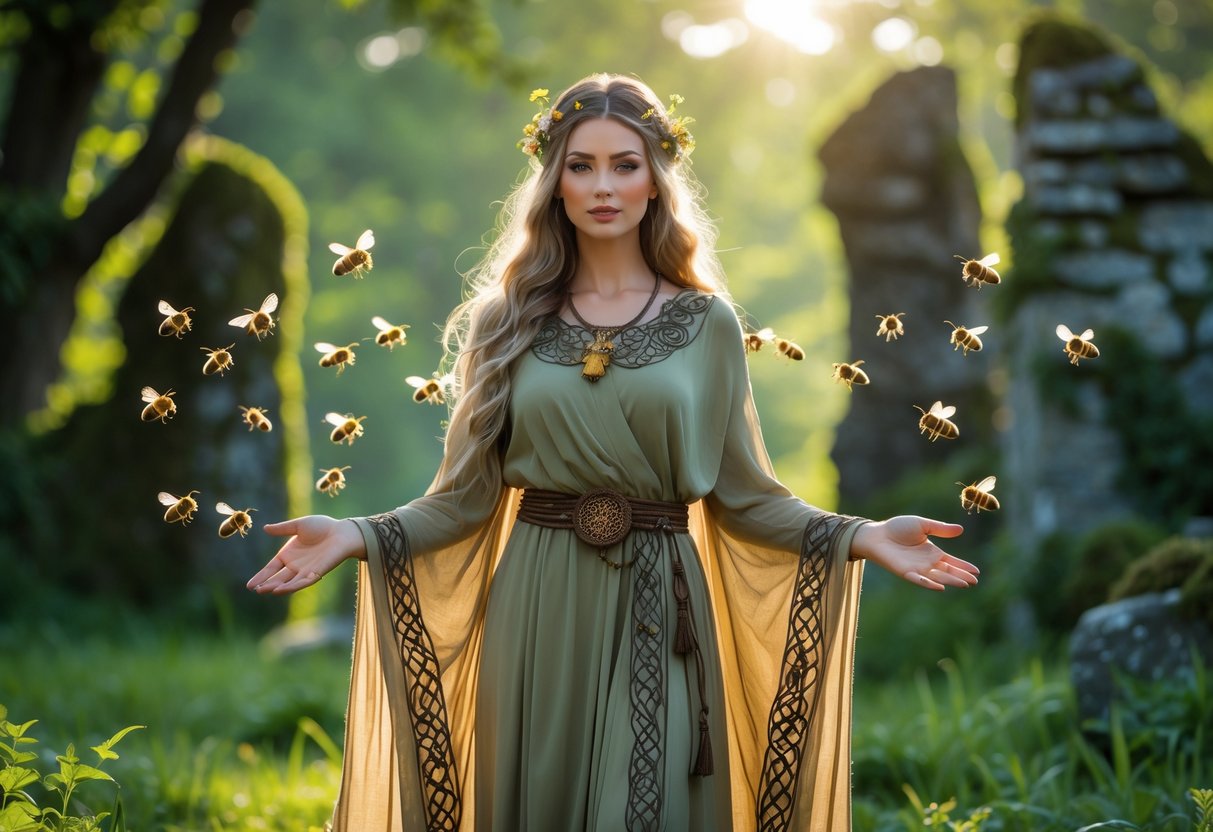
Bees always had a special place in Celtic stories. They stood for hard work, community, and the sweet side of life.
You’ll run across tales of Gobnait and other bee myths, showing how bees connected people with nature and the divine. Learning about her gives you a peek into how the Celts respected these tiny creatures and their big role in the world.
If you want to dig deeper into Gobnait’s story and how bees shaped ancient Celtic life, you’re in for a treat. It’s a mix of history, myth, and nature that’s honestly pretty fascinating.
For more, see the role of Gobnait as the Irish patron saint of bees and beekeepers.
Who Is the Celtic Goddess of Bees?

You’ll spot plenty of links between bees and some of the most important goddesses in Celtic myth. Bees show up in stories about healing, fertility, and magic.
The Tuatha Dé Danann, those old supernatural beings from Irish legends, often get tied to bee symbolism. Stories highlight Brigid and other goddesses who guide life and nature through bees.
Brigid’s Connection to Bees
Brigid—or Brigit, depending who you ask—is probably the most famous Celtic goddess with ties to bees.
She’s a goddess of healing, fertility, and poetry. People connect her to bees, since they stand for sweetness, hard work, and energy that gives life.
Brigid supposedly brings magical nectar, sometimes from apple orchards in the Otherworld. Bees work tirelessly to make honey, and that matches Brigid’s nurturing and inspiring powers.
Her sacred tree, the birch, even plays into her symbolism.
She became so important that, later on, people celebrated her as Saint Brigid in Ireland. Her link to bees shows how ancient folks saw bees as helpers in both daily life and magic.
Other Celtic Goddesses Linked to Bees
Brigid isn’t the only one with bee connections. Rhiannon, a Welsh goddess, gets linked to horses but also to magical animals like bees.
Some stories say bees followed her, blending the natural world with the divine.
Nantosuelta and Sirona, both goddesses of fertility and healing, sometimes show up with bees or bee symbols. They bring life and renewal, just like bees help plants grow.
Anu and Banba, mother figures for Ireland, represent the land’s fertility. They might not get called “bee goddesses,” but their roles in nurturing the earth fit with what bees stand for.
Bee Symbolism in Celtic Myths
Bees in Celtic myths usually stand for work, fertility, and mystery. They act as messengers between nature and the gods.
Stories describe bees following goddesses’ footsteps, linking them to the Otherworld.
The Tuatha Dé Danann honored bees as sacred. People valued beeswax and honey for rituals, sweetening food, and magic.
Bee symbolism stretches beyond Ireland too. Other goddesses, like Flidais or Macha, connect to nature and animals, showing just how important bees were in Celtic culture.
| Symbol | Meaning |
|---|---|
| Honey | Sweetness, magic, life |
| Beeswax | Purity, ritual use |
| Bees | Hard work, fertility |
If you pay attention to these symbols, you’ll see why bees held such a beloved spot in Celtic stories. Goddesses like Brigid really do carry their magic.
You can learn more about this in the Celtic lore of the honey bee at owlcation.com.
The Bee’s Role in Celtic Folklore and Spirituality

Bees held a special spot in Celtic life. People used them for practical things, but they also saw deep spiritual meaning in their work.
They helped folks feel connected to the world around them and the cycles of life. Bees became symbols of care and balance.
Bees in Ritual and Everyday Life
Celtic rituals often included bees. People made a habit of telling their bees about major family events—births, deaths, weddings.
They believed this kept the hive connected to human life and stopped the bees from leaving.
Bees acted as messengers between worlds. If a bee flew into your house, you might take it as good luck or a sign that a visitor was coming.
Their presence brought blessings and reminded everyone to respect nature’s small helpers.
Honey and Beeswax in Celtic Traditions
For the Celts, honey was more than just a sweet treat. They used it in healing and sacred ceremonies.
You might find honey in offerings to gods or in rituals for health and protection.
Beeswax mattered too. People needed it for making candles, which played a big part in religious ceremonies and festivals.
That connection to light turned beeswax into a symbol of guidance and the sacred flame in the community.
Bees, Fertility, and Abundance
Bees have always stood for fertility and the earth’s abundance. They bring nature’s blessings by pollinating plants.
In Celtic stories, goddesses who protected crops and brought growth to the land often connected with bees. If you wanted a good harvest or hoped for a healthy family, you had to care for your bees.
The Gaels saw bees as carrying the energy of life itself. By watching over them, people believed they kept harmony with nature.
Curious? Learn more about bees in Celtic spirituality and their sacred role.


