
When you spot a big, tawny cat—or even a house cat with that proud, confident stride—it’s hard not to think of a tiny lion. Among domestic breeds, the Chausie and Abyssinian stand out as the most lion-like, while wild relatives such as the African lion share ancestry and some striking traits. Let’s dig into how looks, behavior, and lineage tie small cats to their majestic cousins.

Curious about which breeds really resemble lions? Or how wild species stack up? Genetics and history play a surprising role here.
Follow along—maybe you’ll start spotting little lions everywhere.
Which Cat Is Closest to a Lion?
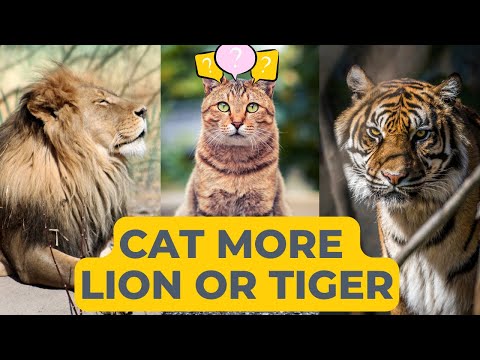
Let’s see where house cats fit in the big cat family, what their genes reveal, and which behaviors they share with lions. Expect a few surprises about ancestry, DNA, and habits like hunting or socializing.
Domestic Cats vs. Wild Big Cats
You and lions actually share a family tree through Felidae, the cat family. People domesticated cats (Felis catus) from wildcats like the African wildcat about 10,000 years ago, right around when farming started.
Lions belong to the Panthera genus, which also includes tigers, leopards, and jaguars. That group branched off from smaller cats millions of years earlier.
Lions and tigers are closer to each other than either is to your house cat, at least genetically. Still, domestic cats hang onto the essentials: retractable claws, sharp teeth, and night vision. Lions, though, evolved for open savannas, teamwork hunting, and taking down big prey. Your cat? They’re built for stealth, small prey, and living close to humans.
Genetic Similarities and Differences
It’s wild how much DNA you share with big cats. Studies say domestic cats and tigers share over 90% of their DNA; some reports put it at about 95.6%. Still, molecular studies place domestic cats on a separate branch from Panthera.
Lions and tigers share a more recent ancestor with each other than with Felis catus. Scientists use mitochondrial DNA and whole-genome analysis to map out the feline family tree.
Major splits in the cat family happened millions of years ago—long before anyone thought about domesticating cats. So, while you and your cat are related to lions, lions are even closer to other big cats like tigers.
Behavioral Parallels Between House Cats and Lions
Your cat and lions definitely share some behaviors. Both stalk, pounce, and use short bursts of speed to hunt. Both use similar sounds—purrs, mews, chuffs—but only lions can roar.
They both have sharp night vision, great hearing, and lightning-fast reflexes for catching prey. Socially, though, there’s a big gap.
Lions form prides and hunt big prey together. Most house cats stick to solo hunting or form loose colonies if there’s enough food around.
Still, you’ll spot social bonding, scent marking, and playful wrestling in your cat—echoes of pride life, just on a smaller scale.
Cat Breeds and Wild Species That Resemble Lions

Let’s look at domestic breeds and wild relatives that really give off lion vibes. You’ll notice similarities in coat, size, mane, and even ancestry.
Chausie: The Little Lion-Like Hunter
Breeders created the Chausie by crossing domestic cats with the wild jungle cat (Felis chaus). You’ll spot long legs, a lean and muscular body, and a blunt, wedge-shaped head—almost like a mini mountain lion.
Many Chausies have short, tawny coats with faint markings that look pretty wild.
Chausies love to stay active, explore, and hunt. They need space, toys that mimic stalking, and a confident owner.
Honestly, having a Chausie feels a bit like managing a wild cat, not just a lap cat. The breed’s wild roots still show up in their energy and prey drive.
If you’re after a cat that looks wild and keeps you on your toes, the Chausie is tough to beat.
Abyssinian and Egyptian Mau: Regal, Ancient Lineages
The Abyssinian and Egyptian Mau both carry a wild, elegant look. Abyssinians sport ticked coats with bands of color on each hair, giving them that warm, golden, lion-like glow.
Egyptian Maus come with spotted coats and a sleek, athletic build, linking back to ancient Mediterranean and North African cats.
These breeds reflect early domestication and selective breeding that kept wild traits alive—alert eyes, lean muscles, and a strong hunting instinct.
Abyssinians tend to be social and playful. Maus are fast, vocal, and always on the move.
Both breeds bond closely with people but never lose that urge to chase.
Their looks definitely connect them to the Felidae family and the idea of a “mini lion,” but they’re still very much domestic.
Maine Coon and Breeds With Lion-Like Appearance
Maine Coons get huge and often grow a mane-like ruff around the neck—hard not to think of a lion when you see one lounging around.
Their thick fur, broad chest, and tufted ears only add to the effect. Other breeds with a similar vibe include the Somali (a long-haired Abyssinian), Norwegian Forest cat, and some hybrids bred for that mane.
These cats handle cold weather thanks to their dense coats and underfur. They’re sturdy, friendly, and fit right into family life.
If you want lion-like looks without the wild temperament, a Maine Coon or similar big breed hits the mark.
Breeders focused on size and coat to get that mane—not wildcat genes—so their behavior stays sweet and domestic.
Mountain Lion, Puma, and Wild Feline Relatives
Mountain lions—people also call them pumas or cougars—are some of the wildest feline relatives out there. They’ve got those sleek bodies, long tails, and that solid tawny coat you just can’t miss.
You probably won’t see anyone keeping a mountain lion as a pet, at least not legally in most places. These cats are big apex predators who like to roam alone, covering huge territories.
Their lives look pretty different from those of domestic cats, which can be social or solitary depending on their mood. And honestly, it’s nothing like the whole lion pride scene.
Wildcats like mountain lions sit in the Felidae family tree right next to lynx, bobcats, and even smaller wildcats that eventually led to domesticated cats. Conservation folks work hard to protect their habitats and try to reduce conflict between humans and these wild cats.
There are puma conservation programs out there that keep tabs on populations, preserve wildlife corridors, and fight against poaching. All that effort helps keep the ecosystem from tipping out of balance.
If you take the time to understand mountain lions, you’ll start to notice which traits in domestic cats come from their wild ancestors. Some features are inherited, while others are just the result of selective breeding or only belong to their wild cousins.


