
Here’s the quick answer right away: most seahorses move painfully slow. The tiniest species can reach about 1.5 meters (5 feet) per hour at their fastest. That’s not a typo. It’s shockingly slow compared to most fish, and it really shapes how they live and why their bodies look the way they do.
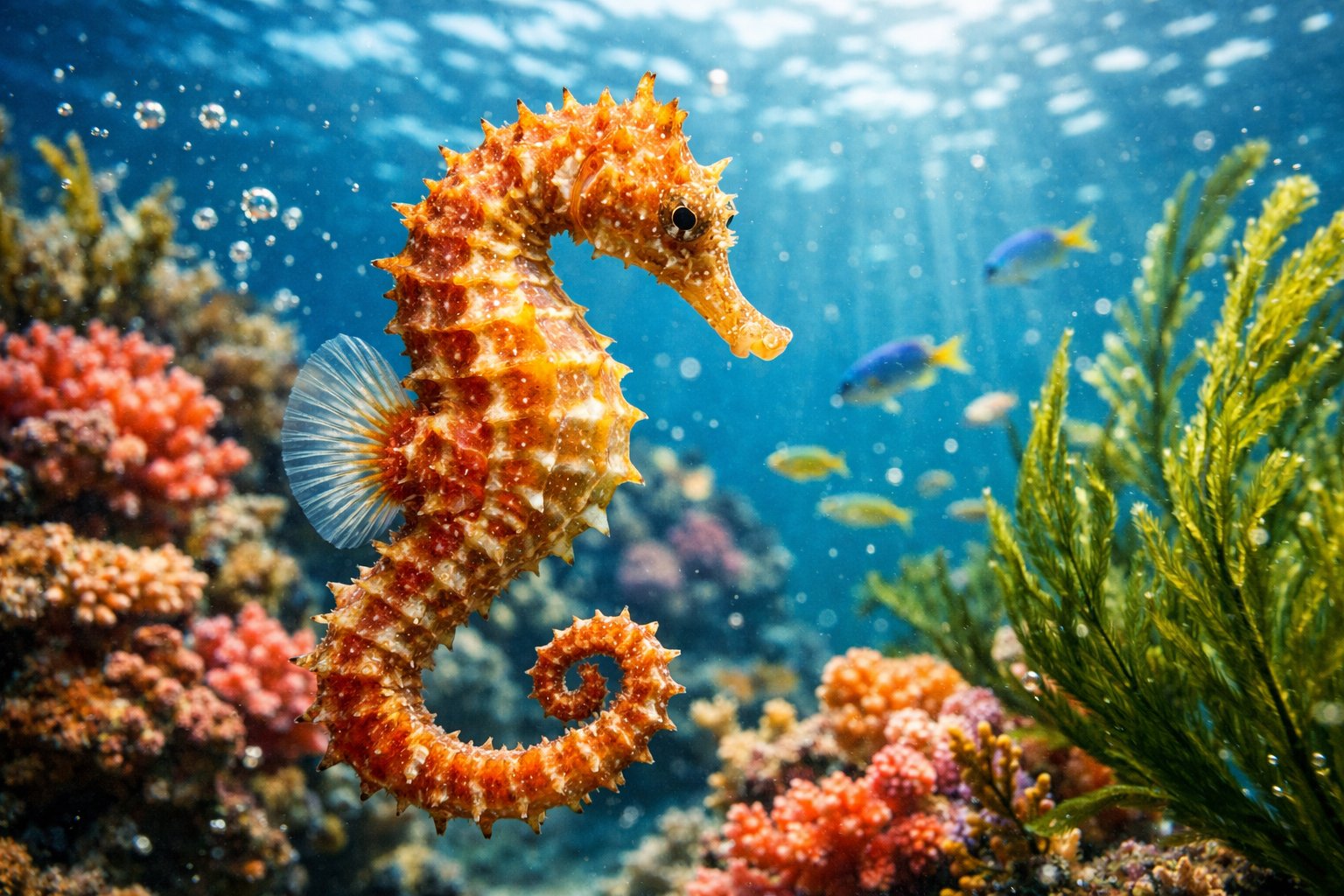
If you take a closer look, you’ll notice how their body shape, fin action, and habitat all play into their movement. Seahorses in the genus Hippocampus, along with their Syngnathidae cousins, have upright bodies and tiny dorsal fins that flutter constantly. You won’t see them racing, but you will see this odd, steady motion.
Let’s dig into how their anatomy and habits let them survive, even though they absolutely don’t win any races.
Seahorse Swimming Speed and What Affects It
Seahorses swim slowly. They use tiny fins and mostly rely on hiding and grabbing onto things to get by.
Their upright bodies and small dorsal fins really limit how far or fast they can go.
How Fast Can a Seahorse Swim?
Most seahorses barely top a few feet per hour. The dwarf seahorse, Hippocampus zosterae, manages about 1.5 meters (5 feet) per hour—maybe the slowest fish out there.
You’ll often see them just hovering or drifting in seagrass or coral, not zipping around.
Their dorsal fin beats like crazy, sometimes dozens of times each second. But since the fin’s so tiny, each beat only pushes a little bit of water.
That means you get these short, steady moves instead of long, fast sprints. They’ll dart a little to grab food or switch perches, but you’ll never see a seahorse in a chase.
Comparison With Other Fish Species
If you compare seahorses to typical reef fish, it’s honestly not even close. Reef fish can shoot across the reef at kilometers per hour. Seahorses just inch along at meters per hour.
That’s a huge gap. No wonder seahorses stick to sheltered spots like seagrass beds and coral reefs, instead of venturing into open water.
Hippocampus zosterae often gets called the slowest fish ever recorded. Predators that chase fast prey hardly bother with seahorses. Their camouflage and that curling tail keep them hidden and out of danger.
You’ll really notice the difference if you ever watch a seahorse alongside a darting reef fish. It’s almost comical.
Factors That Influence Swimming Speed
Body shape makes a big difference. Seahorses have upright, armored bodies that create drag and slow them down.
Their dorsal fin gives them thrust, but it’s really more about lift and control than speed. Bigger seahorse species can move a bit faster than the dwarf ones, but not by much.
What they’re doing and where they live also matter. When hunting tiny crustaceans, they move in short little lunges and hover in place.
If there’s a strong current, they’ll just grab onto coral or seagrass with their tails and hang on. Warmer water can speed up their fin beats a bit, but you’re still not getting a fast fish.
How Seahorses Move: Anatomy and Adaptations

Let’s talk about how a seahorse actually moves. Each body part does its own job—whether it’s for swimming, steering, anchoring, or just floating around.
Dorsal Fin Propulsion
The dorsal fin does most of the work for moving forward. It sits right on the back and beats super fast—sometimes dozens of times every second.
Each beat gives a tiny push, so seahorses never go very fast. That’s just how it is.
This fin-driven movement is all about control, not speed. If the seahorse needs to change direction or adjust its pace, it just changes how fast the dorsal fin beats.
Researchers have noticed short bursts of faster movement when a seahorse gets startled, but those moments don’t last.
- Main propulsor: dorsal fin
- Typical action: rapid, tiny beats
- Result: slow movement, but really good steering
Pectoral Fins and Steering
Seahorses use their pectoral fins to steer and stay balanced. These fins sit near the head and move separately from each other.
Small, careful strokes let the seahorse rotate, tilt, or hold still without much effort.
During feeding, the pectoral fins keep the seahorse steady so it can aim at its prey. They don’t really help with moving forward, but they’re essential for turning and holding position.
Role of the Prehensile Tail and Bony Plates
The prehensile tail acts like a little anchor. Seahorses wrap their tails around seagrass, coral, or anything sturdy to keep from drifting away.
You’ll see them hanging on tight when there’s a current. It saves them a lot of energy since they don’t have to swim.
Bony plates cover the seahorse’s body, making it tough and armored. This armor slows them down, sure, but it also keeps them safe from predators.
The tail and plates work together: the tail grabs on, the plates protect, and the seahorse gives up speed for safety and a bit of stealth.
Swim Bladder and Buoyancy
The swim bladder lets you control your vertical position in the water. You just change the amount of gas inside the bladder, and suddenly you’re floating up or dropping down—no need to flap your fins all the time.
This ability means you can hover quietly, either while stalking prey or just hanging out and resting. It’s honestly pretty clever.
By using the swim bladder, you don’t have to keep beating your dorsal fin just to stay at one depth. When the current shifts, you tweak the swim bladder, grab on with your tail, and steer a bit with your pectoral fins.
That combo helps you save energy and makes hunting a lot easier. It’s a simple system, but it works really well.
If you’re curious about the details, there’s more in this guide on seahorse movement and propulsion.


