
Most people probably think giraffes are almost unbeatable because of their height and that wild, powerful kick. But when lions work together in a pride, they can take down a healthy adult giraffe. Lone hunters usually go after calves or sick and injured adults. Let’s get into what actually threatens these giants and how they fight back.

You’ll see how a giraffe’s height, sharp eyesight, and quick kick help it survive. I’ll also get into the hunting tricks lions, hyenas, wild dogs, leopards, and crocodiles use—and when those predators actually succeed.
Giraffe Defenses and Strength

Giraffes count on their height, speed, and some pretty serious body parts to stay alive. Their size and anatomy help them spot danger early, run fast, and fight back if they have to.
How Strong Is a Giraffe?
A big male giraffe can weigh up to 3,000 pounds and reach almost 18 feet tall. That’s a ton of defensive power. When a giraffe runs, its long legs and heavy body turn it into a moving wall most predators don’t want to mess with.
They can hit speeds up to about 35 miles per hour, but only for short bursts. That’s usually enough to get away. Their necks are super muscular—just the neck can weigh several hundred pounds. That helps them in fights and keeps them balanced while running.
Their leg bones are thick and dense. When a giraffe plants a kick, all that force travels through those bones. You can actually see this power in kicks that break bones or even kill big predators.
Giraffe Weapons: Powerful Legs and Ossicones
Giraffes mainly use their legs and ossicones as weapons. Each front leg kick can deliver over a thousand pounds of force—some say a single kick could kill a lion. You really don’t want to be on the receiving end of that.
Ossicones are those horn-like knobs on top of their heads. They’re made of hardened cartilage and covered in skin. Giraffes use them as battering tools when males fight. During those “necking” battles, they swing their heads and smack each other with the ossicones. That can break bones or cause serious injury.
Leg kicks usually target predators at close range. Ossicone blows are more for fighting other giraffes. Together, these weapons give them both reach and serious striking power.
Predators and Animals Capable of Defeating a Giraffe
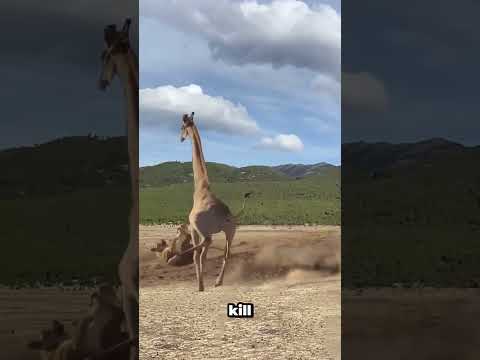
So, which animals can actually kill a giraffe? It’s usually group hunters or sneaky ambush predators that target calves, sick adults, or giraffes caught off guard at water holes.
Lion vs Giraffe
Lions can kill giraffes, but it’s risky and takes teamwork. Prides usually go after calves or adults that are already weak. Lions attack the legs or belly to knock the giraffe down, then finish it by biting the throat or muzzle.
A single lion almost never takes on a healthy adult alone. The pride depends on coordination, surprise, and numbers. Lions often work from the windward side to stay hidden and strike when the giraffe is alone or distracted at a water source.
- Typical tactic: stalk, surround, pull down by the legs, finish with a throat bite.
- Big risk: a giraffe’s kick can break a lion’s skull or spine.
- Most vulnerable: calves, injured, old, or lone giraffes.
Want more details? Check out this account of predators that kill giraffes (https://a-z-animals.com/blog/giraffe-predators-these-animals-kill-and-eat-giraffes/).
Hyenas as Giraffe Predators
Hyenas almost never take down a healthy adult giraffe by themselves. Usually, they scavenge carcasses or attack in big groups to overwhelm weak or young giraffes. A clan will harass and bite, aiming for the belly or legs until the giraffe gets tired or falls.
Hyenas rely on teamwork and persistence, not brute strength. They take advantage if a calf gets separated or if there’s poor visibility. At waterholes, hyenas sometimes wait until a giraffe is distracted while drinking.
- Strengths: stamina, teamwork, and jaws strong enough to tear flesh.
- Typical victims: newborns, elderly, sick, or injured giraffes.
- Bonus fact: hyenas often follow lions and might steal their kills.
Can Elephants Defeat Giraffes?
Elephants don’t hunt giraffes, but they can kill one if things get heated. Think of elephants as a dangerous wild card—definitely not a predator, but still a threat. If a giraffe gets too close to elephant calves, food, or territory, an elephant might attack.
With their massive weight and tusks, elephants can crush or impale a giraffe. A stomp can break legs. These fights are rare, though, and usually happen by accident or in territorial disputes—not because elephants want giraffe meat.
- Most likely: territorial clash or fighting over water or trees.
- Result: giraffes are at real risk if an adult elephant decides to throw its weight around.
Other Predators: Crocodiles, Leopards, and Wild Dogs
Crocodiles lurk at the water’s edge, waiting for the right moment. If a giraffe bends down to drink, they might snap at its lower leg or even its neck—pretty terrifying, honestly.
They really prefer to go after calves, but sometimes, if they see a chance, they’ll go for an adult too.
Leopards almost never mess with adult giraffes. The size difference is just too much.
Instead, they’ll stalk calves or lone juveniles, sneaking up quietly and aiming for the throat or nose. Then, they slip away into the brush before anyone notices.
Wild dogs, on the other hand, work together in packs. They can chase down calves or even a weak adult, wearing it out with those long, relentless pursuits.
- Crocodile tactic: wait in hiding → lunge for limb or neck → drag under.
- Leopard tactic: sneak close → quick, targeted bite → disappear.
- Wild dog tactic: chase nonstop → single out prey → attack the sides.
Honestly, it all comes down to how vulnerable the giraffe is, what the land looks like, and how well the predators coordinate.


