
Let’s jump into five quick, surprising facts about giraffes you can pull out at your next trivia night. Giraffes have the tallest necks of any land animal, barely sleep, use spot patterns like fingerprints, rely on powerful hearts to pump blood up their long necks, and—get this—their calves can stand and run just hours after birth.

Their bodies seem almost custom-built for survival in the African savannah. I find it wild how their spots, the way they drink, and even how they sleep all tie back to their survival.
You’ll see why their spots matter, how they use those long necks, and what makes their behaviors so unusual.
Let’s break down each fact, one by one, and see what makes giraffes so unique in the wild.
Fascinating Giraffe Features

Let’s talk about their height, necks, skin patterns, and even their tongues. Each of these traits helps giraffes survive—whether it’s eating, staying cool, fighting, or recognizing each other.
Tallest Mammals on Earth
Giraffes stand as the tallest mammals alive today. Some adult males, like those from the reticulated or Masai groups, can reach 5.5 to 6 meters (18–20 feet).
Females don’t get quite as tall, usually around 4.3 to 5 meters (14–16 feet).
Their long legs make up a lot of that height. Just one front leg can be over 1.8 meters (6 feet) long.
That height lets them reach leaves on trees like acacias—food other grazers can only dream of.
Taller males often win in “necking” fights, swinging their heads and necks to knock rivals. I mean, could you imagine fighting with your neck?
It’s also a handy way to tell species apart, like the southern giraffe versus the west African giraffe.
Unique Long Necks and Neck Vertebrae
A giraffe’s neck only has seven vertebrae—same as us, oddly enough. But each vertebra is stretched out and can be over 25 cm (10 inches) long.
Strong muscles and special blood vessels support the head and control blood flow when they move their necks up or down.
That long neck isn’t just for show. Males use it in battles, swinging with surprising force.
Females rely on it to reach leaves for their calves. The vertebrae have extra joints and thick ligaments to handle all that stress.
Evolution tweaked this design across the Giraffidae family, including the okapi.
Neck length changes a bit among subspecies like the Kordofan and Nubian giraffe, fitting their habitats and feeding habits.
Remarkable Spot Patterns
Giraffe coats show off unique patches and patterns, kind of like fingerprints—no two giraffes match.
You can spot subspecies by their pattern shape and color. For instance, the reticulated giraffe has big, polygonal patches with thin white lines, while the Masai giraffe’s patches look more like lace.
Those spots aren’t just for looks. Dark patches cover dense blood vessels and might help with cooling.
Calves use their patterns as camouflage in tall grass. Researchers even track individual giraffes by photographing their spots, which helps with conservation efforts for groups like the northern and Angolan giraffe.
Extraordinary Giraffe Tongue
Giraffes have a tongue that’s honestly impressive—about 45–50 cm (18–20 inches) long. It’s thick, muscular, and usually dark purple or black.
That color probably helps protect it from sunburn, since they spend hours feeding each day.
You can actually watch a giraffe use its tongue to strip leaves and move thorns aside. Their lips and tough palate help them handle prickly acacia branches.
That long, nimble tongue lets them reach high-quality leaves that other animals just can’t get to. It’s a big part of how they manage their tall, lanky lifestyle.
Unusual Giraffe Behaviors and Survival
Let’s get into how giraffes fight, how their calves grow up so fast, and what they eat, drink, and how they sleep. These details really show how giraffes manage life on the savannah—and avoid predators.
Necking: How Male Giraffes Compete
Male giraffes fight for mates and rank using a behavior called necking. They stand side by side, swinging their necks so their heads and ossicones (those horn-like bumps) slam into their opponent.
Hits usually land on the chest or shoulders. Fights can last a few minutes or drag on for hours. The stronger male usually wins by landing heavier blows or making the other walk away.
Necking looks intense, but it rarely turns deadly. Older, bigger males tend to hit harder.
The winner gets to mate with nearby females. Females watch these matches and often choose the strongest male as a mate.
Baby Giraffes’ Dramatic Birth and Growth
When a giraffe calf is born, the mother stands and the newborn drops about 1.5 meters (5 feet) to the ground—what a way to enter the world.
That fall breaks the umbilical cord and helps the calf breathe. Within half an hour, the calf can stand, and in just a few hours, it can run.
This quick start helps calves avoid lions, hyenas, and leopards.
A calf nurses for 6–12 months but starts munching leaves pretty early. Mothers often hide calves in tall grass or keep them in small nursery groups (called creches) while they feed.
Males grow up fast, reaching their full height in just a few years. That rapid growth gives them a better shot at surviving predators and joining the adult herd.
Giraffe Diet and Eating Habits
Giraffes eat plants—they’re herbivores and ruminants. They mostly browse tall trees like acacia, stripping leaves and buds with their long, nimble tongues.
Their tongues are dark and tough, which helps with all those thorny branches.
You’ll notice giraffes don’t bother with ground plants much; their height gives them access to leaves other animals can’t reach.
Like other ruminants, they chew cud: swallow, regurgitate, and re-chew plant matter to get every bit of nutrition.
One giraffe can eat up to 45 kg (100 lb) of foliage a day during dry seasons. Their browsing helps shape the savannah, pruning trees and opening up space for other animals.
Sleeping and Water Needs
Giraffes barely sleep. In the wild, most giraffes just take quick naps that only add up to 10–30 minutes a day.
They usually sleep standing up, always ready to bolt if something spooks them. When they do lie down, they curl their necks back onto their hips—kind of an odd sight, honestly.
Giraffes don’t drink water all that often. They get most of their moisture from leaves, which is pretty convenient.
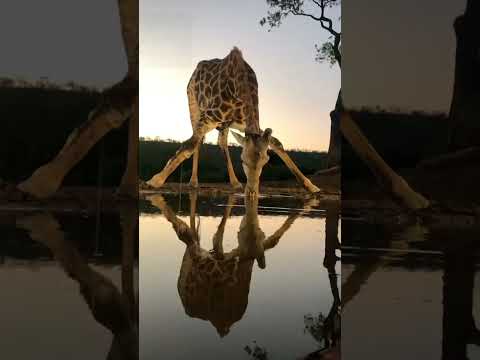
When they need to drink, they have to awkwardly spread their legs and bend down. That’s risky—lions or hyenas could attack while they’re in that position.
Because of that, giraffes only head to water every few days, and they seem to pick spots where they can escape fast if needed.
If you catch a herd at a waterhole, you’ll notice adults usually take turns drinking while the others keep watch.


