
You might guess a giraffe would win just because it’s taller, or a rhino would win because it’s heavier. But if we’re talking about a real one-on-one fight, the rhino probably takes it, thanks to its sheer mass, thick hide, and that intimidating horn. The giraffe’s best shot? Landing a powerful, well-aimed kick.

Let’s dig into how size, speed, and their natural weapons actually matter. Fights between these two don’t really happen in the wild, but it’s fun to imagine. We’ll look at their strengths, weaknesses, and try to picture how a clash could go down.
Giraffe vs. Rhino: Strengths and Weaknesses

There’s a clear trade-off here: giraffes use their height and those wild kicks, while rhinos count on their mass and that horn. Each animal’s got tools that work best in different situations.
Physical Size and Weight Comparison
Giraffes are just massive—adult males stretch up to 16 or even 18 feet tall. That height gives them a big reach and lets them spot trouble from far away.
Most adult giraffes weigh in at about 4,200 pounds, but their bodies are long and lean.
Rhinos look shorter, but they pack way more weight. A big male white rhino can tip the scales at over 7,000 pounds. With a low, muscular build, it’s tough to knock one over, and they can push through almost anything.
If these two actually faced off, the giraffe’s height lets it strike downward with a back-leg kick. That kick could hit a rhino’s head or body with serious force.
But the rhino’s thick skin and heavy weight help absorb glancing blows. Its horn sits low, and if the giraffe gets too close, that’s where things get dangerous for the taller animal.
Speed and Agility Differences
Giraffes can sprint at around 35 miles per hour in short bursts. Those long legs give them a huge stride and let them pivot fast, which helps them aim a kick right where they want it.
Rhinos aren’t slow, either—they can hit about 31 miles per hour. They get up to speed quickly in a short space, but they don’t turn as sharply as a giraffe.
The rhino’s size makes it less nimble, but it keeps momentum during a charge. If the fight happens at a distance, the giraffe’s agility helps. When things get close, though, the rhino’s strength and horn make it a real threat.
If the giraffe gets caught in the rhino’s horn range, its kicks and movement don’t matter as much as the rhino’s raw power.
Here’s a quick visual:
- Giraffe: tall, long stride, dangerous rear kick.
- Rhino: heavy, low to the ground, sharp horn for up-close attacks.
Battle Abilities: How Would a Fight Unfold?
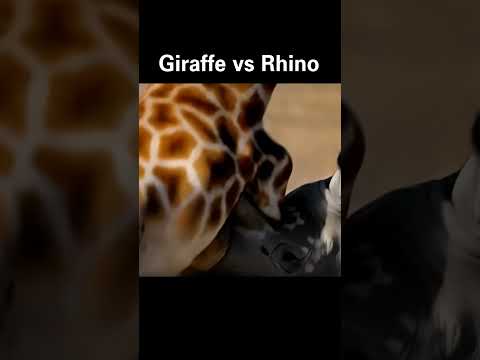
The main threats? The giraffe’s long, crushing kick and the rhino’s heavy, pointed horn. They fight in totally different ways, with different strengths.
Giraffe Kick Power and Reach
Imagine a giraffe swinging a leg like a battering ram. An adult’s hind leg can deliver a kick that packs a ridiculous amount of force into a small spot.
That kick can break bones and even stop a big predator. Standing up to 18 feet tall, the giraffe can strike from farther away than most animals would ever expect.
The giraffe’s best move is to use those long legs to keep any opponent at bay. With dense hooves and big muscles, a single well-placed kick to a rhino’s head or side could do some real damage.
But here’s the catch: the giraffe has to plant its feet and time the kick just right. If it misses, it leaves itself wide open to a charging rhino.
Rhino Horn Attack and Defense
A rhino’s horn isn’t just for show—it’s a forward weapon, perfect for punching and hooking. Rhinos charge with their heads low, using momentum and that sharp horn tip to pierce or stun whatever’s in the way.
The shape of the horn focuses all that force right into a point. That makes it surprisingly effective against thick hide, legs, or even the skull. Rhinos also have incredibly thick skin, and their skulls pack heavy bone, so they can take a hit and keep moving.
If you ever face a rhino, you’ll notice its sheer mass and speed matter just as much as its horn. A direct horn strike? That can break bones or even knock a giraffe off its feet.
The rhino’s bulk lets it power through contact and, if its opponent falls, it can follow up with trampling. Honestly, your best hope is to use reach and mobility—try to avoid that frontal charge and maybe land a kick or two before the rhino gets too close.


