
Ever spot a chipmunk zipping across your yard and wonder where it disappears at night? You’re definitely not the only one. These little guys spend most of their lives tucked away in underground homes they dig themselves, called burrows.
Chipmunks sleep in these burrows. They dig out safe tunnels with little rooms just for nesting and storing food.
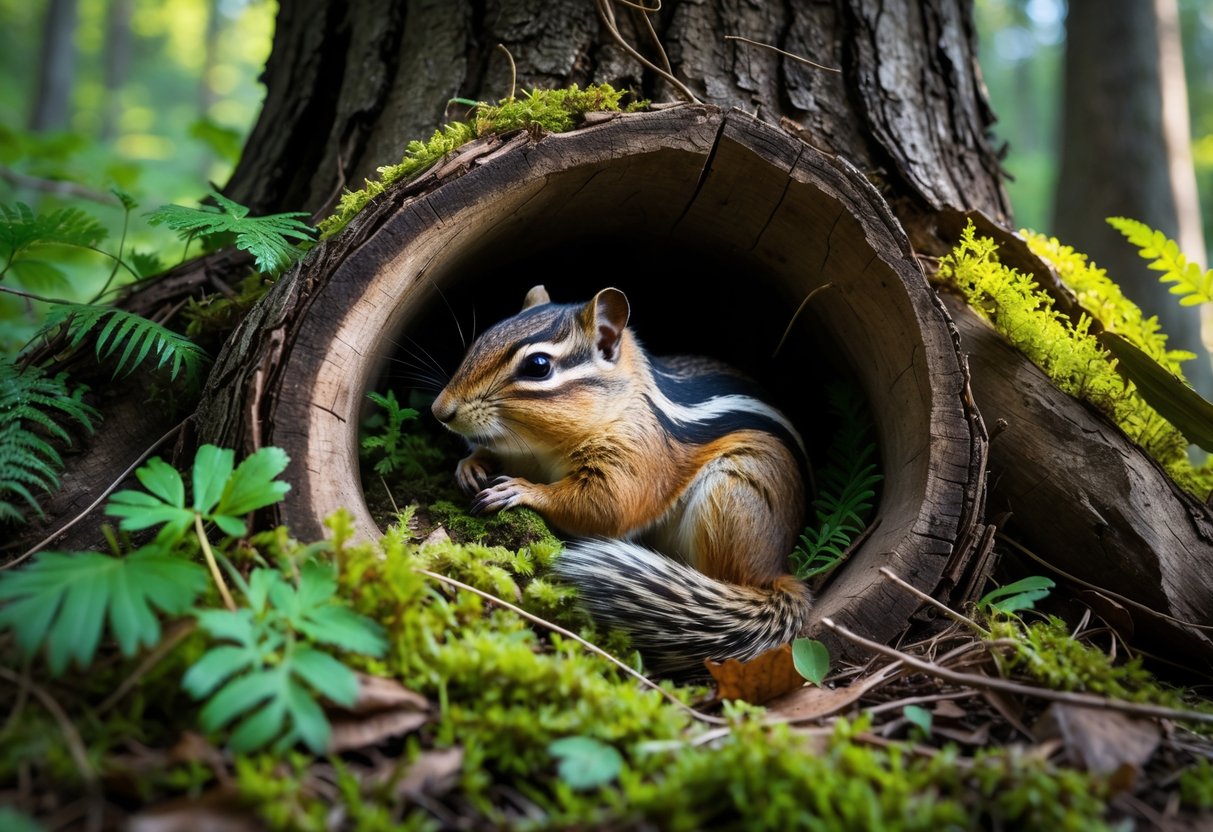
When the weather turns cold, chipmunks mostly hunker down inside their burrows. They rest deeply but sometimes wake up if a warm day rolls around to grab a bite.
You probably won’t see much of them in winter since they avoid the cold by staying underground.
If you know where chipmunks sleep, you might better understand their habits—or even figure out how to keep them out of your garden. Want more details? There’s a handy chipmunk behavior guide out there if you’re curious.
Chipmunk Sleeping Habits and Burrow Life
Chipmunks spend loads of time in their burrows. They sleep, rest, and stash food down there.
Their sleeping spots keep them safe from weather and predators. Chipmunks build these burrows to fit their needs all year, especially when winter hits.
Where Chipmunks Sleep in Nature
You’ll usually find chipmunks sleeping in underground burrows. These little dens feel cozy and warm, with soft grass and leaves lining the inside.
Chipmunks stay hidden in their burrows at night and pop out during the day. Eastern chipmunks especially like quiet places—forests, brushy edges, or even garden borders.
They sometimes settle near people, making dens under buildings or logs. Their sleeping spots sit close to food and away from danger.
Since they’re daytime critters, chipmunks rest at night inside their burrows.
Structure and Features of Chipmunk Burrows
A chipmunk burrow is like a small house, full of tunnels and rooms. Usually, there are two main levels.
The top level is for sleeping. Chipmunks line it with soft leaves and grass to make it comfy.
Down below, they keep their food—nuts, seeds, berries, whatever they can find. Chipmunks work hard to keep their pantry full.
Some burrows go as deep as three feet and stretch over thirty feet long. This tunnel system keeps them safe and lets them manage food all year.
Seasonal Changes: Winter Torpor and Activity Patterns
When winter comes, chipmunks go into a state called torpor. It’s kind of like a light hibernation.
You won’t see them running around much in the cold months. They sleep underground most of the time.
But they don’t stay asleep all winter. Chipmunks wake up on warmer days, raid their food stores, and then go back to sleep.
Late fall and early spring keep them mostly hidden, though a sunny day might lure them out. This routine helps them survive until spring finally shows up.
If you want to dig deeper, check out the Vermont Fish & Wildlife Department or Critter Control for more on chipmunk burrows and winter habits.
Species Differences and Habitat Preferences
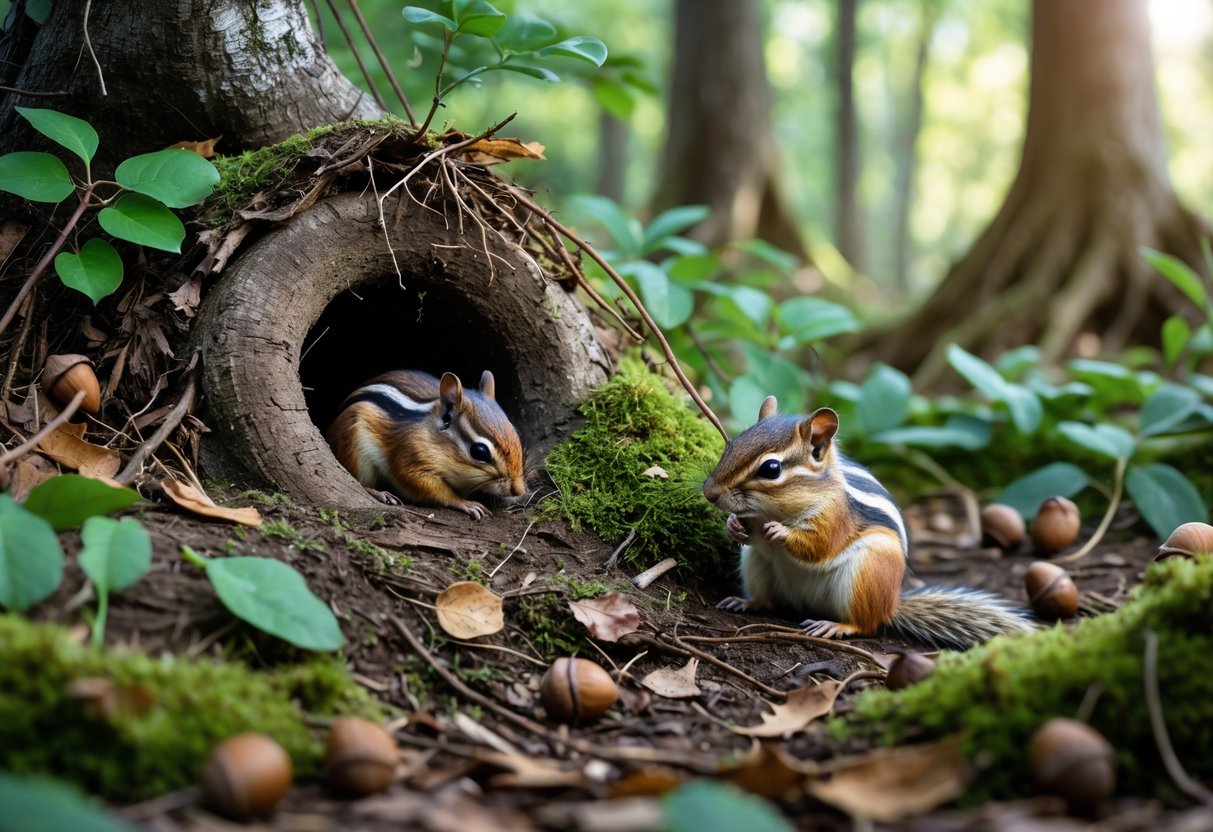
Chipmunks live in all sorts of places and have their own ways of sleeping, depending on their species and surroundings.
Some chipmunks dig deep burrows. Others use whatever shelter they can find, even adapting to spots near people.
Their choices help them stay safe and well-fed, especially when it gets cold.
Eastern Chipmunks: Burrow Behavior
Eastern chipmunks dig underground burrows, sometimes about two feet deep. Inside, you’ll find one main chamber that doubles as a bedroom and a pantry.
They store nuts and seeds for winter in there. Before it gets too cold, they block the entrance with soil and plants to keep out predators and chilly air.
During winter, eastern chipmunks go into torpor. Their heart rate and body temperature drop to save energy.
But they don’t sleep the whole season—they wake up every few days to eat, then drift back to sleep. You’ll spot these chipmunks in forests, suburban yards, and places with lots of stone walls.
They like to hide their burrows in spots like that. For more about their burrow habits, check out York County Conservation District.
Western Chipmunks and Their Environments
Western chipmunks stick mostly to the western parts of North America. Some of these species skip torpor altogether.
They still stockpile food in their burrows but stay more alert through winter. Their homes include mountain forests, woodlands, and brushy spots.
You’ll see them using rocks, logs, or fallen trees for cover and nests. Western chipmunks don’t go into deep sleep, so they stay flexible and can pop out on warmer winter days to find food.
Their burrows usually aren’t as complicated as those of eastern chipmunks.
Siberian Chipmunks: Unique Sleeping Adaptations
Siberian chipmunks mostly live in parts of Asia, and honestly, they stand out from their North American cousins.
Unlike eastern chipmunks, Siberian chipmunks go all-in on hibernation during winter. They don’t just dip into torpor; they fully hibernate.
Their body temperature drops really close to the ground temperature. You won’t catch them waking up much—they sleep for long stretches.
This deep hibernation lets them get through rough, cold winters. They usually dig nests underground or hide out under thick bushes.
If you spot one in your area, you’ll probably see it gathering a bunch of food in the fall. After that, it just disappears for a long, cozy winter nap.
Want to dig deeper? There’s more about chipmunk hibernation habits at A-Z Animals.


