
Ever spotted tiny holes near your house or in the yard and wondered how chipmunks manage to squeeze in? You’re definitely not alone. These little guys are surprisingly skilled at slipping through ridiculously small spaces.
If you know how much room chipmunks need to fit through a hole, you can actually do a lot to protect your home and garden from unwanted visitors.
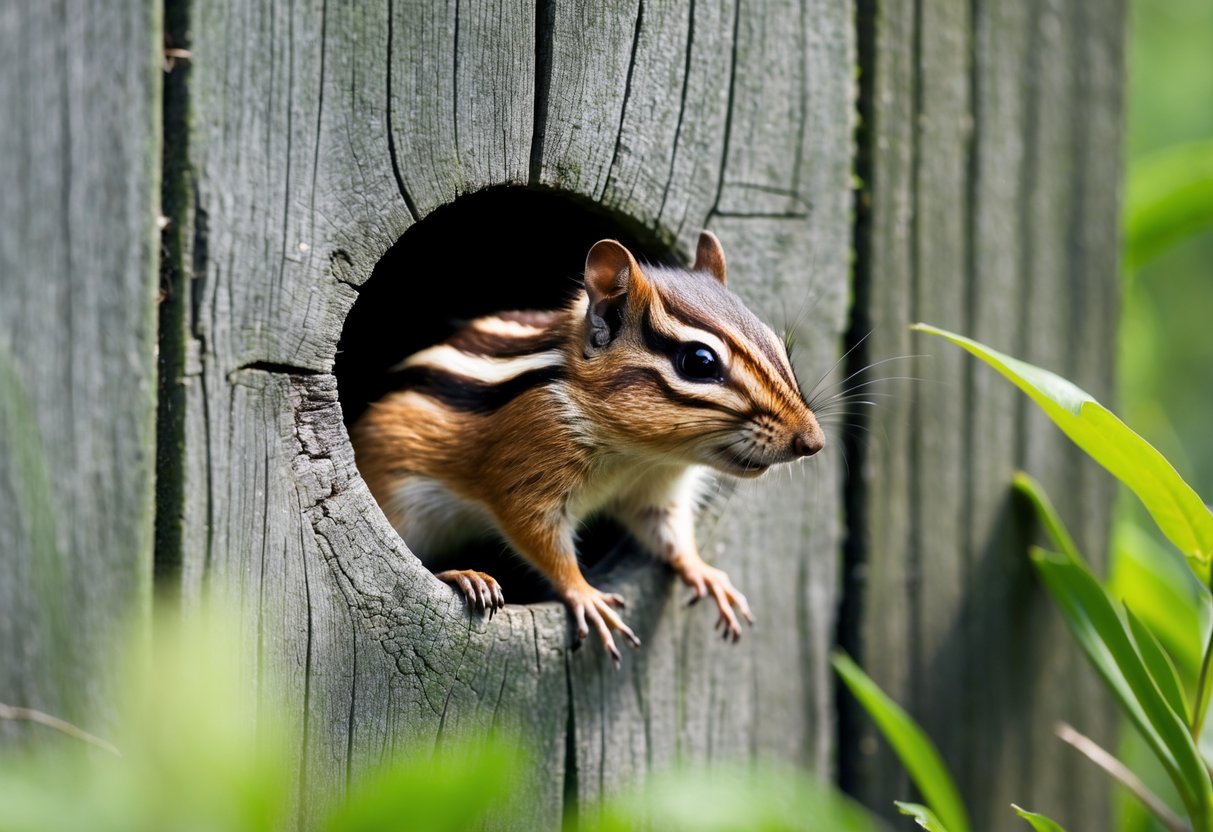
A chipmunk can fit through an opening about the size of a quarter—roughly 1 inch in diameter. That’s pretty tiny, so even little cracks or holes might be wide open doors for them to your attic, crawlspace, or garden.
If you understand this, you’ll know where to look and what to seal up to keep chipmunks out. It also explains those mysterious holes just a few inches wide around your yard—yep, probably chipmunks at work.
Want more info on how chipmunks sneak in? Here’s a handy guide on chipmunk holes.
Chipmunk Hole Size and Burrow Structure

Chipmunk holes might look small but they’re just the start of a much bigger, hidden home underground. Inside, you’ll find tunnels for sleeping, storing food, and even a bathroom.
If you know how big their holes are, you can spot them more easily and figure out how chipmunks move around below the surface.
Actual Hole Dimensions
Most chipmunk holes are 2 to 3 inches across. That’s just the right size for them to squeeze through.
This size keeps out bigger predators, but chipmunks can zip in and out with no trouble.
You won’t see raised dirt mounds like you do with mole holes. The ground near chipmunk holes usually stays flat, so it’s easy to miss them unless you’re really looking.
How Chipmunks Fit Through Small Spaces
Chipmunks have flexible bodies that let them squeeze through holes barely bigger than they are. They dig straight down at first, then branch out sideways.
Their narrow bodies help them slip through tight, twisty tunnels without much effort.
When they dig, chipmunks carry dirt away in their cheek pouches. This keeps the entrance neat and clear.
If you watch closely, you might see chipmunks darting in and out of their holes. They move quickly, thanks to their slim build and agility.
Identifying Chipmunk Holes
If you spot a small hole about 2-3 inches wide with no dirt mound, you could be looking at a chipmunk entrance.
Chipmunks don’t leave piles of dirt next to their burrows, unlike some other animals.
You might see several entrances close together. Occasionally, you’ll notice plugged-up holes that aren’t being used.
Tiny tracks or scattered seeds near the holes are a pretty good sign that chipmunks are living below.
Chipmunk Burrow Networks
Underneath, chipmunk burrows can get pretty complicated. Tunnels might stretch as far as 30 feet and go as deep as 3 feet down.
Inside, chipmunks set up different rooms—one for sleeping, another for food, and even a bathroom area.
Multiple entrances give them quick escape routes. The tunnels often have paths for drainage, so things stay dry inside.
Some burrows are simple, but chipmunks sometimes keep adding to them, making the network bigger and more connected.
Want to dive deeper? Here’s a chipmunk burrow guide.
Protecting Your Home and Garden From Chipmunks
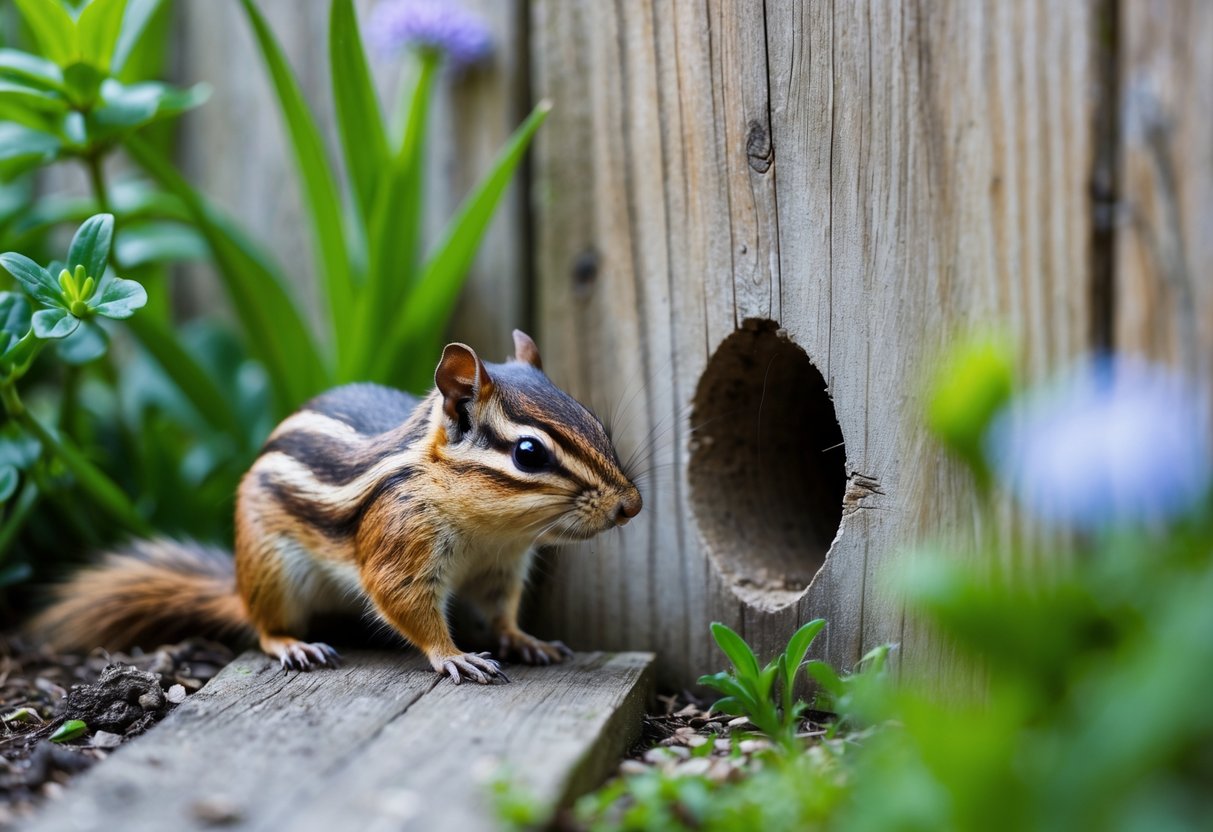
You’ve got a few good options for keeping chipmunks out of your home and garden. Try blocking their holes, setting up safe traps, or following some basic prevention steps.
None of these have to harm the chipmunks or your property, which is nice.
Methods to Block or Fill Holes
Chipmunks can slip through holes as small as 2 inches wide. To block them out, use wire mesh with a 1/4-inch grid.
That mesh keeps chipmunks away but still lets air flow through.
If you need to fill a hole, skip anything harmful like cat litter. Instead, use gravel or packed dirt—gravel’s loose texture makes it tough for chipmunks to dig back in.
Look over your home’s foundation and garden for holes in that 2-3 inch range. Seal up openings with wire mesh or patch them with something sturdy.
That should help keep your space chipmunk-free.
Using Chipmunk Traps
If chipmunks won’t quit, you can use live traps to catch them safely. Look for traps about 3 x 3 x 10 inches with fine mesh.
Bait the trap with peanut butter or nuts. Cover half of it with a cloth so the chipmunk feels safe inside.
When you catch one, wear gloves and release it far from your home. That way, you solve the problem humanely and avoid damage around your yard.
Tips to Stop and Prevent Chipmunks
Try planting bulbs like daffodils or allium if you want to keep chipmunks away. Their scent tends to drive chipmunks off, and honestly, they look nice too.
Clear away piles of wood, rocks, or thick bushes. Chipmunks love hiding, so if you open up your yard, they’ll probably look elsewhere.
You might want to put in a fence with a deep footer—just bury it 6-12 inches down. Keep those gaps under 2 inches, or chipmunks will squeeze right through.
If you’re curious about blocking holes or want more tips, check out this chipmunk burrow guide.


