
If you hear small chirping sounds or spot tiny scratches along your walls or attic, there’s a chance a chipmunk has snuck inside. You’ll usually notice noises like scurrying or chirping, see little droppings, or find small holes where chipmunks might be slipping in or nesting.
Catching these signs early can save you a headache later.
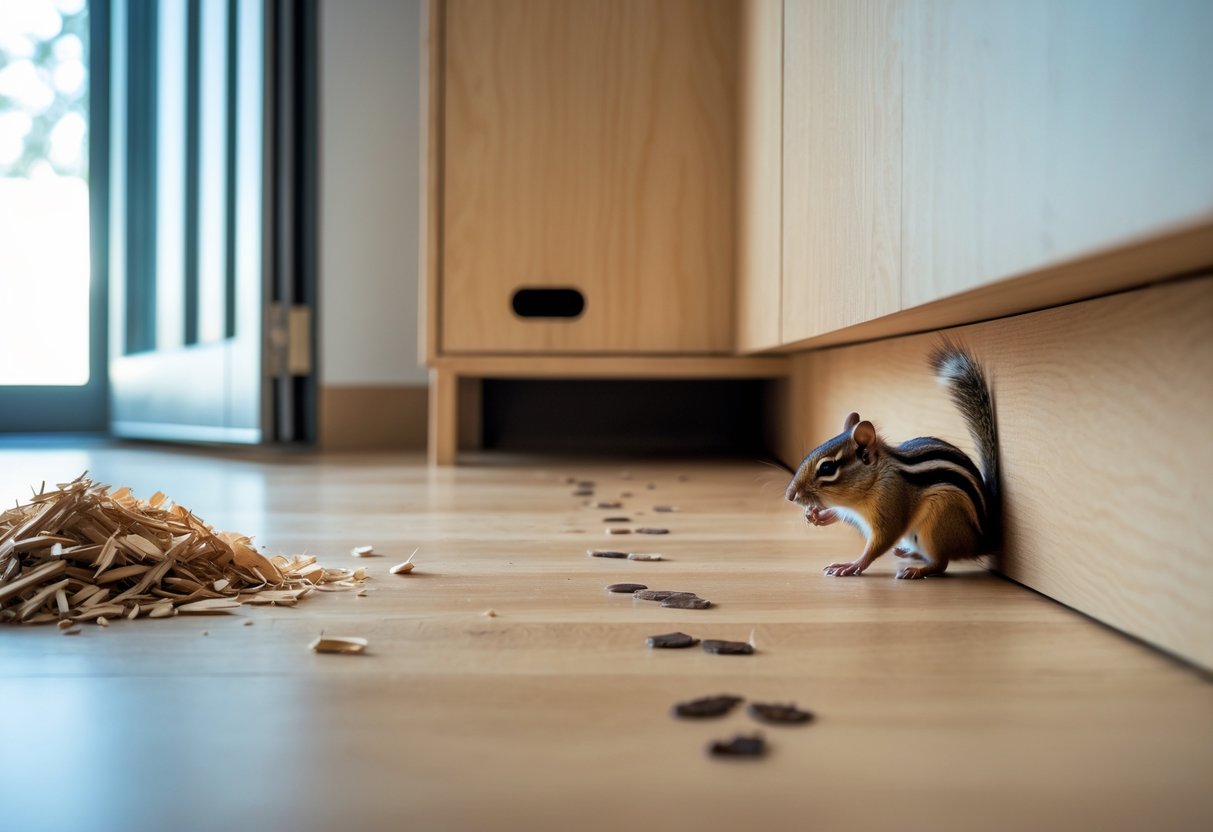
Maybe you’ve found chewed wires, gnawed wood, or food mysteriously missing from odd places. Chipmunks are sneaky, so you might only notice these little clues, not the animal itself.
If you know what to look for, you can act fast and keep your place chipmunk-free. For more tips, you can check expert advice on identifying chipmunk infestations.
Identifying a Chipmunk in Your House

You might spot odd signs that mean a chipmunk has moved in. Look for chewed-up spots, weird noises, and tiny droppings.
Catching these early makes it way easier to handle the problem.
Common Chipmunk Signs Indoors
If a chipmunk is inside, you’ll probably see holes or gnaw marks on wood, drywall, or insulation. They chew to keep their teeth sharp, so entry points can get bigger fast.
You might also notice shredded stuff or nesting material tucked in corners or hidden away. Tiny footprints or tracks could show up nearby.
Damaged wires or vents are another clue, since chipmunks like to explore and make their own little paths. If your heating or cooling bills suddenly spike, maybe they’ve messed with your insulation.
Chipmunk Noises and Sounds
Chipmunks make soft chirping or chattering noises, mostly during the day. You might hear scratching or quick scampering in the walls or attic.
These sounds get louder at dawn and dusk. If you hear a sudden burst of scurrying, the chipmunk probably got startled or is hustling through a tight spot.
Try listening during quiet times to figure out where the animal is hiding. That can make removal or prevention a lot easier.
Chipmunk Droppings and Health Concerns
Chipmunk droppings look small, dark, and kind of cylindrical—easy to mistake for mouse droppings. They usually keep their poop in one spot inside their nest or burrow.
If you find droppings inside, the chipmunk has settled in. Be careful when cleaning, because droppings can spread diseases like hantavirus and salmonella.
Wear gloves and a mask if you’re handling droppings. Chipmunks sometimes bring fleas or ticks, which could spread to your pets or even you. That’s another reason to take infestations seriously.
For more on chipmunk signs, see chipmunk identification and removal tips.
Locating Entry Points and Damage

You’ll want to track down where chipmunks sneak in and spot any damage they’ve caused. Take a good look at small openings around your house.
Check both outside and inside for clues. Once you know what to look for, you can stop them before things get worse.
Typical Chipmunk Entryways
Chipmunks can squeeze through tiny gaps. Check your foundation for cracks or holes as small as half an inch.
Look around pipes, vents, and spots where utility lines come in. Doors and windows that don’t close all the way can let them slip through.
Pay extra attention to gaps under garage doors and screens with holes. Even small holes in siding or worn-out weather stripping can let chipmunks inside.
Seal up these entryways with steel wool or caulk. Chipmunks can’t chew through those materials easily.
Recognizing Chipmunk Holes Inside and Out
Outside, chipmunk holes usually look like small, round entrances about 2 to 3 inches wide. You’ll often see them at the base of trees, in garden beds, or near your house foundation.
Inside, you might spot similar holes in walls, especially around the attic, basement, or crawlspaces. Watch for darker dirt or scattered wood chips near these holes.
Loose debris or weird dirt piles indoors can also mean chipmunks have made their way inside. Keep an eye out for these signs around your home’s edges and in quiet corners.
Spotting Chewed Wires and Household Damage
Chipmunks chew things to keep their teeth sharp. You might notice bite marks on electrical wires, insulation, or even your wooden baseboards.
If the chewing gets out of hand, flickering lights or weird electrical issues can pop up. That’s always a hassle, isn’t it?
Check your pantry or anywhere you store food. You’ll probably spot gnaw marks or random bits of food scattered around.
Chipmunks don’t stop there—they’ll mess with your garden too. Sometimes they dig tiny holes or munch on bulbs and seeds.
Watch for greasy smudges or little footprints near the spots where you see damage. These small clues might help you catch a chipmunk before things get out of control.
For more tips on sealing entry points, check this guide on how chipmunks get inside a house.


