
If a chipmunk darts into your house out of nowhere, you’ll probably feel startled—or honestly, a little frazzled. Try to stay calm and gently guide the chipmunk toward an exit without hurting it. Freaking out usually just scares the little guy, and then it’ll hide somewhere you can’t reach.
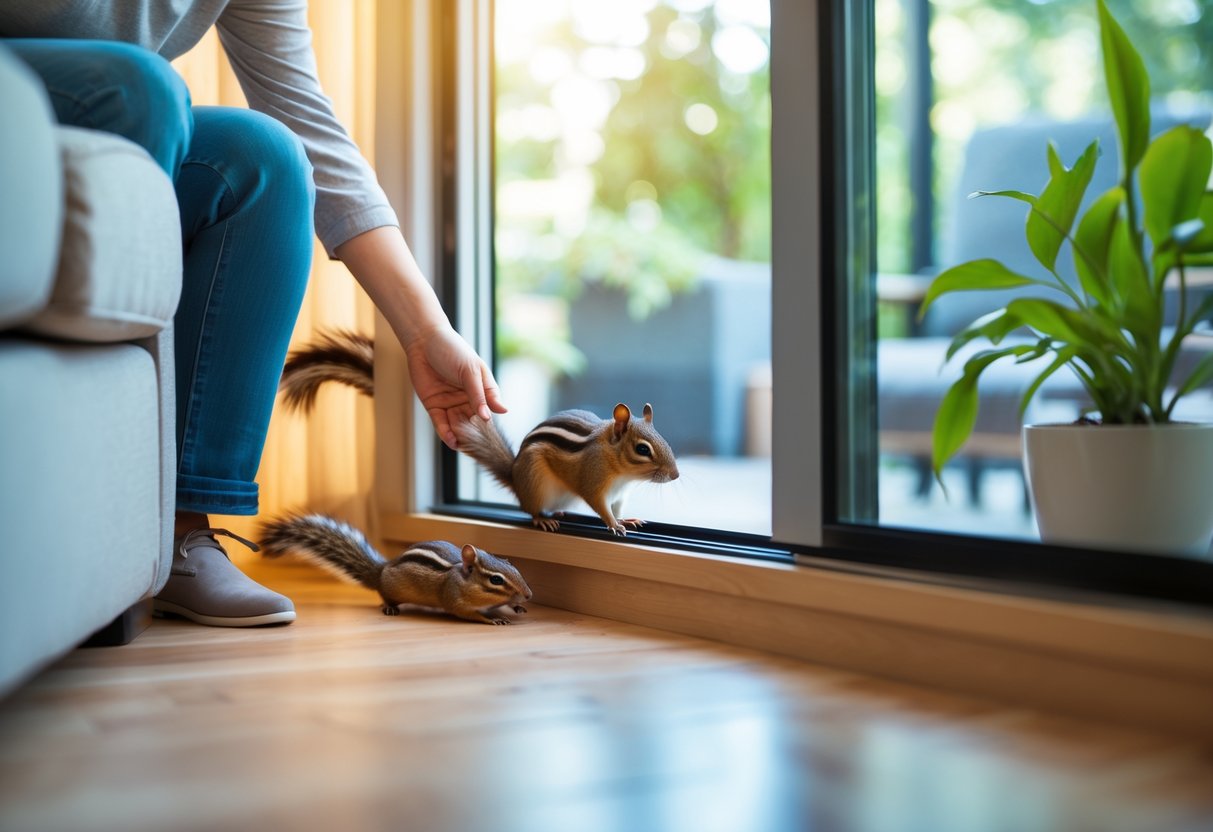
Look around for any gaps or holes where the chipmunk slipped in, and seal them up to keep it from coming back. If you can’t guide it out, you might want to try a humane trap so you can release it safely outside.
Simple steps like these protect your home and keep both you and the chipmunk safe.
Wondering how to handle this without stressing out your pets? Let’s get into some practical tips for what to do if a chipmunk gets inside.
Immediate Actions When a Chipmunk Is Inside

Spotting a chipmunk in your house can throw you off, but your first moves matter. Keep the chipmunk contained and try to guide it outside without getting too close.
Think about your safety, your pets, and the chipmunk as you try to remove it.
Stay Calm and Contain the Chipmunk
Try not to panic or rush at it. Chipmunks move fast and spook easily.
Shut doors to rooms where you don’t want the chipmunk to go. Use towels to block cracks under doors, so it can’t slip away unnoticed.
This keeps it in one spot and makes the whole thing way more manageable.
Don’t chase it or make loud noises. Just stay calm and give it some space.
The chipmunk will usually find its way out if it doesn’t feel trapped.
Open Escape Routes Safely
Open up any windows or doors that lead outside in the room where the chipmunk is stuck. If you can, take out the screens so there’s a clear exit.
Use a broom or a long stick to gently nudge the chipmunk toward the open exit. Don’t poke or scare it—just guide it carefully.
Close off other rooms so it doesn’t wander deeper into your house. You want to set up one obvious way out.
Avoid Direct Contact and Pet Exposure
Don’t grab the chipmunk with your hands. If it feels cornered, it could bite.
Keep your pets, like cats and dogs, away from the chipmunk. Pets can stress it out or get bitten themselves.
If you decide to use a live trap, bait it with peanut butter and leave it in a quiet spot. The chipmunk will probably go in on its own if you leave it alone for a bit.
Chipmunk Removal and Prevention Tips

Dealing with a chipmunk indoors means you’ll need to catch it safely and stop it from coming back. Use gentle removal methods, and know when it’s time to call for help.
Don’t forget to block off any spots where another chipmunk might get in.
Humane Trapping and Relocation Methods
If you want to catch the chipmunk, pick a humane trap made for small animals. Set the trap near where you last saw the chipmunk.
Bait it with seeds, nuts, or peanut butter—chipmunks love that stuff.
Check the trap often so the chipmunk doesn’t stay stuck too long. Once you catch it, take it at least a mile away from your house and release it somewhere wooded.
Skip the poison—it’s dangerous for pets and other wildlife. Humane traps keep the chipmunk safe and your home critter-free.
Always wear gloves when handling traps, just in case.
When to Call Wildlife Control Experts
If you just can’t catch the chipmunk or it disappears somewhere you can’t reach, consider calling wildlife control experts. They have the right tools and know-how to get the chipmunk out safely.
They’ll also check for nests or any hidden problems you might not notice. If a chipmunk chewed on your wiring or insulation, a professional should handle repairs.
Wildlife control pros can help if you’re dealing with more than one chipmunk, or if the animal is in a spot that’s tough to access. They’ll also give tips on keeping your pets safe around chipmunks.
How to Seal Entry Points to Prevent Return
Take a good look for tiny holes or cracks where chipmunks might sneak inside. You’ll usually spot trouble around doors, vents, the foundation, or even up by the roofline.
Use wire mesh, steel wool, or just some caulk to block these spots. Don’t leave even the smallest space open—chipmunks have a knack for slipping through places you’d never expect.
Jot down every opening you notice. It’s easy to miss one if you don’t keep track.
Keep your yard tidy. Store food in solid containers and get rid of any piles of debris or wood lying around.
These habits make your place less appealing and way tougher for chipmunks to get back in. I mean, who wants uninvited guests?
Check your home regularly, especially in spring and fall. That’s when chipmunks seem to go house-hunting.
If you want more tips, here’s a link with extra details: how to seal entry points.


