
Ever wondered if chipmunks just snooze away the whole winter? You’re definitely not alone. These busy little creatures dart around all day, but what about when the cold settles in?
Chipmunks don’t sleep all winter like bears do. Instead, they slip into a light hibernation, waking up every few days for a snack.
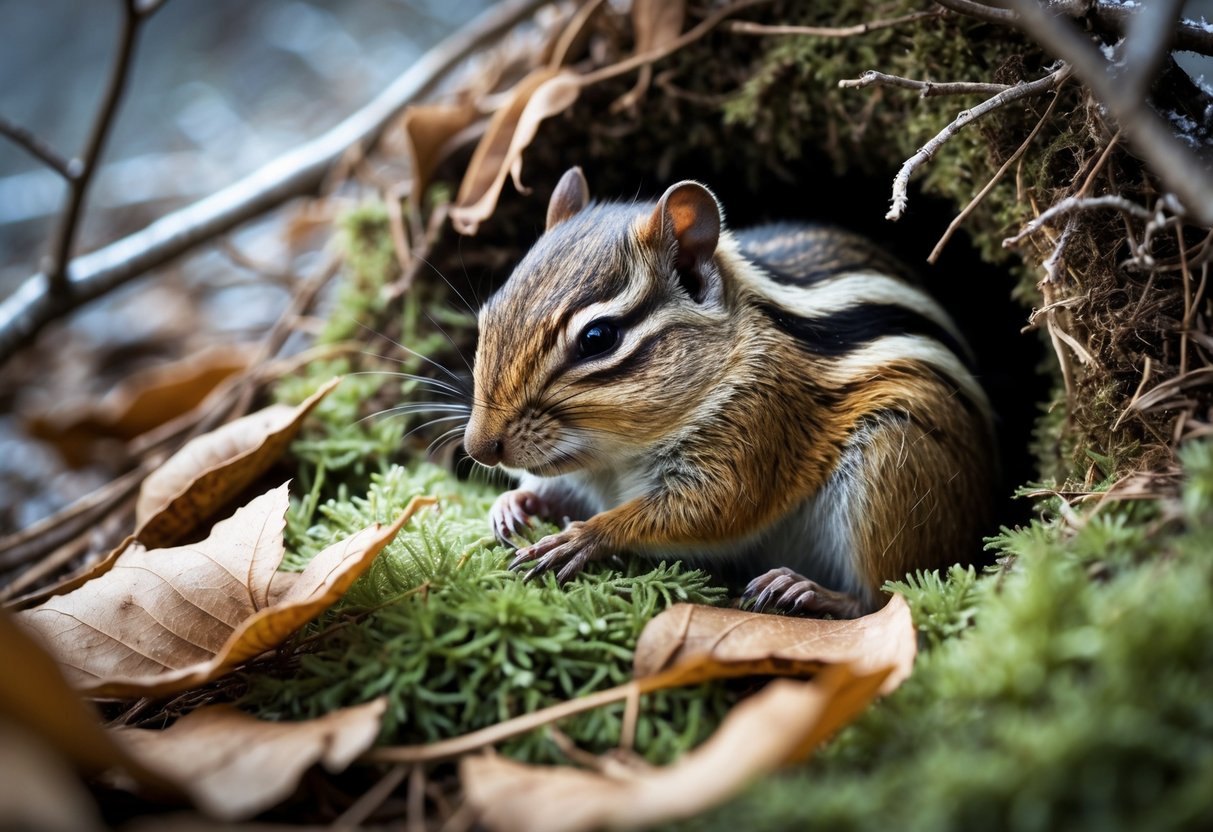
When winter hits, chipmunks mostly stay underground in their burrows. They sleep for long stretches but still wake up to nibble on their stashed food.
This way of resting lets them survive the cold without going totally inactive. Curious how chipmunks get ready for winter and what their sleeping habits are like? Let’s dig in.
Do Chipmunks Sleep All Winter?

Chipmunks don’t snooze straight through the winter like some animals. Their bodies slow way down to save energy, but they still pop awake now and then to eat what they stored up.
Chipmunks’ Winter Behaviors
In winter, chipmunks mostly hang out inside their burrows. They curl up in little nests made of leaves and grass.
But they aren’t asleep the whole time. Every few days, chipmunks wake up to munch on their hidden snacks.
Sometimes, they’ll leave the burrow for a quick bathroom break or to check another food stash. They need to keep their energy up, especially since food outside is pretty much impossible to find.
Spotting a chipmunk outside in winter doesn’t happen often. They really prefer to stay warm and safe underground.
Hibernation Versus Torpor in Chipmunks
Chipmunks don’t go into true hibernation like some critters do. Instead, they enter something called torpor.
In torpor, their heartbeat and body temperature drop a lot, but only for a short while. True hibernators sleep deeply for months, but chipmunks just nap for a few days at a time.
Then they wake up, grab a bite, and warm up before heading back to bed. Their heart rate can plummet from about 350 beats per minute all the way down to just 4.
This nap-like state helps them make it through winter without burning too much energy or food.
How Chipmunks Survive Cold Temperatures
Chipmunks get ready for winter by working hard in the fall. They gather nuts, seeds, and other food, usually stashing away way more than you’d expect.
One chipmunk can collect enough food in just a few days to last all winter. Their dens go deep underground, sometimes 45 to 85 centimeters down.
They pack their tunnels with leaves, grass, and soft stuff to keep things cozy. Since their body temperature drops during torpor, chipmunks have to wake up to warm themselves and their little homes.
That routine keeps them from freezing or starving until things thaw out in spring. If you want to know more, check out how the Eastern Chipmunk adapts in winter.
Winter Adaptations and Survival Strategies

Chipmunks make it through winter by resting in their burrows and waking up often to eat from their stash. They’ve got some clever tricks for staying safe from hungry animals like owls and coyotes.
Their habits aren’t quite like those of flying squirrels or other relatives.
Burrow Design and Food Storage
A chipmunk’s burrow is a surprisingly smart little hideout. It usually goes about two feet underground, which keeps the temperature just above freezing.
That depth protects them from frost and biting cold. Inside, there’s one main chamber that serves as both bedroom and pantry.
Chipmunks spend autumn gathering nuts—acorns, beechnuts, hazelnuts—and store them carefully in their burrows. Their stretchy cheek pouches let them haul food back home pretty quickly.
When winter comes, they seal the burrow entrance with soil and plants. This blocks the wind and keeps out unwanted guests.
Predators and Dangers in Winter
Even in winter, chipmunks have to watch out for predators like owls, coyotes, and foxes. These hunters are always on the lookout for a meal.
Chipmunks avoid danger by staying put in their burrows when the weather’s bad. If they do venture out, they move fast and stay alert.
Bird feeders sometimes attract chipmunks, but those spots can be risky since predators know to hang around too.
Their quick moves and small size help them dodge trouble. Plus, they often hide their burrow entrances under rocks or leaves for extra safety.
Chipmunks Compared to Other Squirrels
So, here’s something interesting—unlike flying squirrels, eastern chipmunks spend winter in long stretches of deep sleep called torpor. It’s not quite real hibernation, though.
Every few days, chipmunks wake up, grab a snack from their stash, and then drift back to sleep. Flying squirrels, on the other hand, stay up and active through the winter nights.
These flying squirrels leap between trees in the dark and gather food in their own way. Chipmunks mostly hang out underground, counting on their hidden supplies.
Instead of building up fat like some of their squirrel cousins, chipmunks depend on the warmth of their burrows and the nuts they’ve tucked away. This quirky routine—half asleep, half awake—really makes chipmunks stand out from the other squirrels you might see wandering around your yard.


