
Bed bugs are small, flat, reddish-brown pests that resemble apple seeds when unfed. Adults are visible to the naked eye, while eggs and young bed bugs are much harder to spot.
The fastest way to identify bed bugs is to check for a mix of live bugs, tiny white eggs, shed skins, and dark fecal spots in mattress seams and nearby furniture. You want to look for the full pattern, not just one insect or one bite.
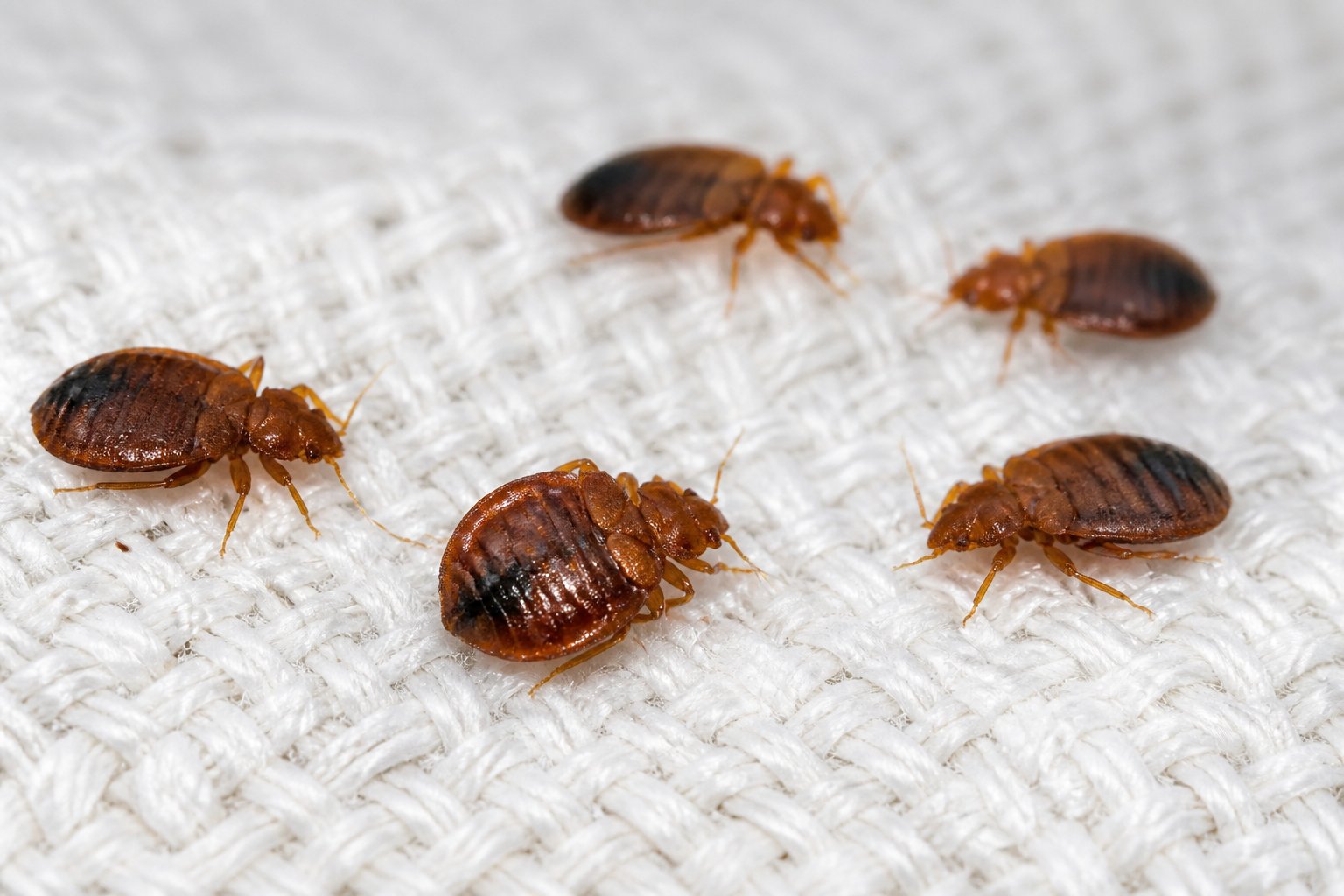
How To Recognize Bed Bugs At A Glance
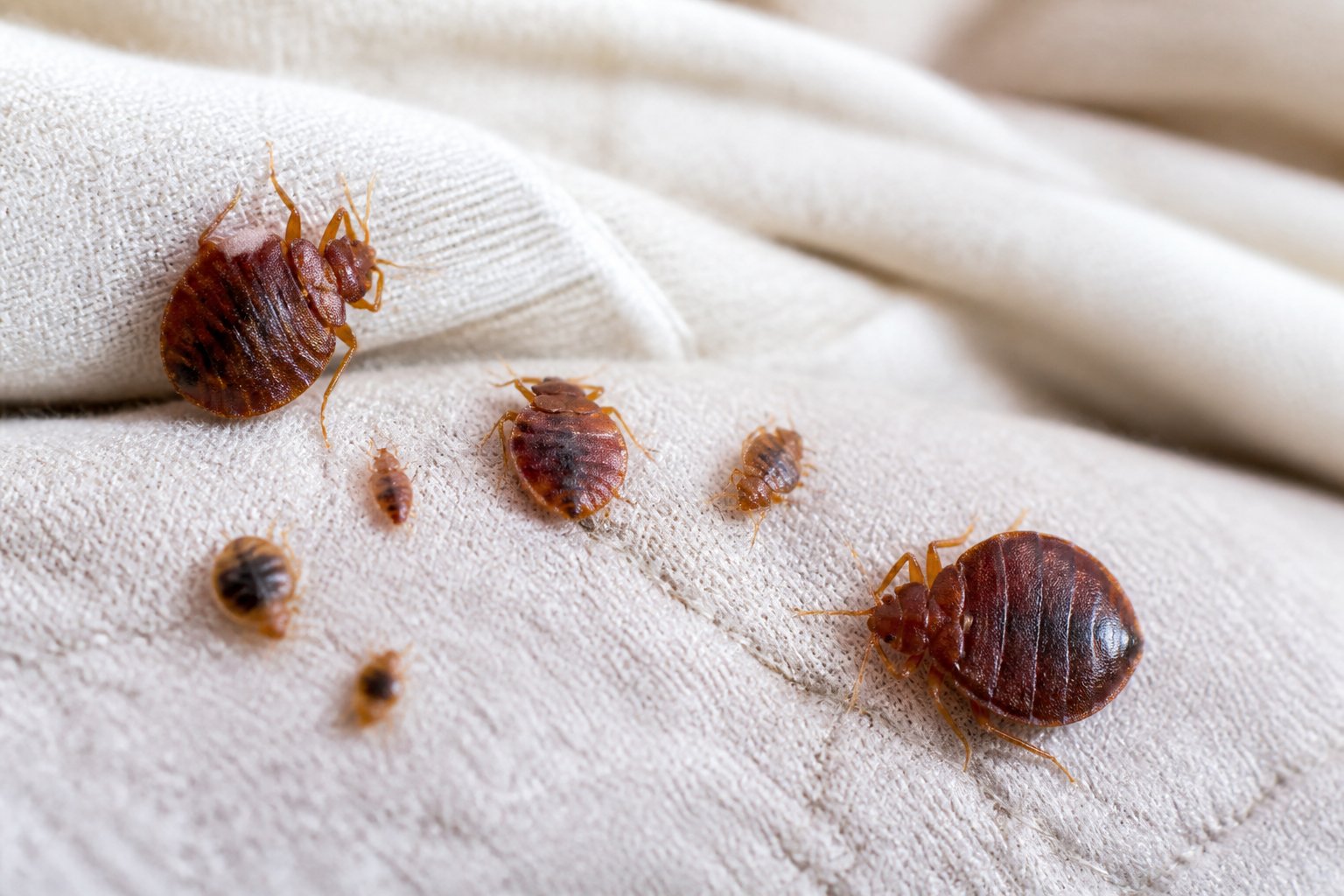
Adult bed bugs are tiny, but their shape and color make them recognizable once you know what to look for. Feeding changes their body shape and color enough to make a big difference.
Male and female adults have subtle differences at the rear end.
Adult Size, Shape, And Color
An adult bed bug, including Cimex lectularius, is about the size of an apple seed, flat, oval, and reddish-brown. Unfed adults look broader and more flattened, while young bed bugs are smaller and paler, often translucent or straw-colored.
Tropical bed bug adults look similar to common bed bugs, so appearance alone may not tell you which species you have. Size, body shape, and color give you the first useful clue when you identify bed bugs.
How Feeding Changes Their Appearance
After feeding, adult bed bugs and young bed bugs swell and become darker, often turning bright red or deep reddish-brown. Their bodies look more elongated and less flat because they fill with blood.
That change can make a bed bug easier to spot on bedding, especially right after a blood meal. An unfed adult is about 3/16 inch long, while a fed bug becomes longer and more swollen.
Male Vs. Female Features
A male bed bug usually looks a little slimmer with a more tapered rear end. A female bed bug tends to look broader and rounder at the back of the abdomen.
The difference is subtle, so you need two adult bed bugs side by side to notice it clearly. Magnification helps when you are trying to identify bed bugs during an inspection.
What Eggs, Nymphs, And Shells Look Like
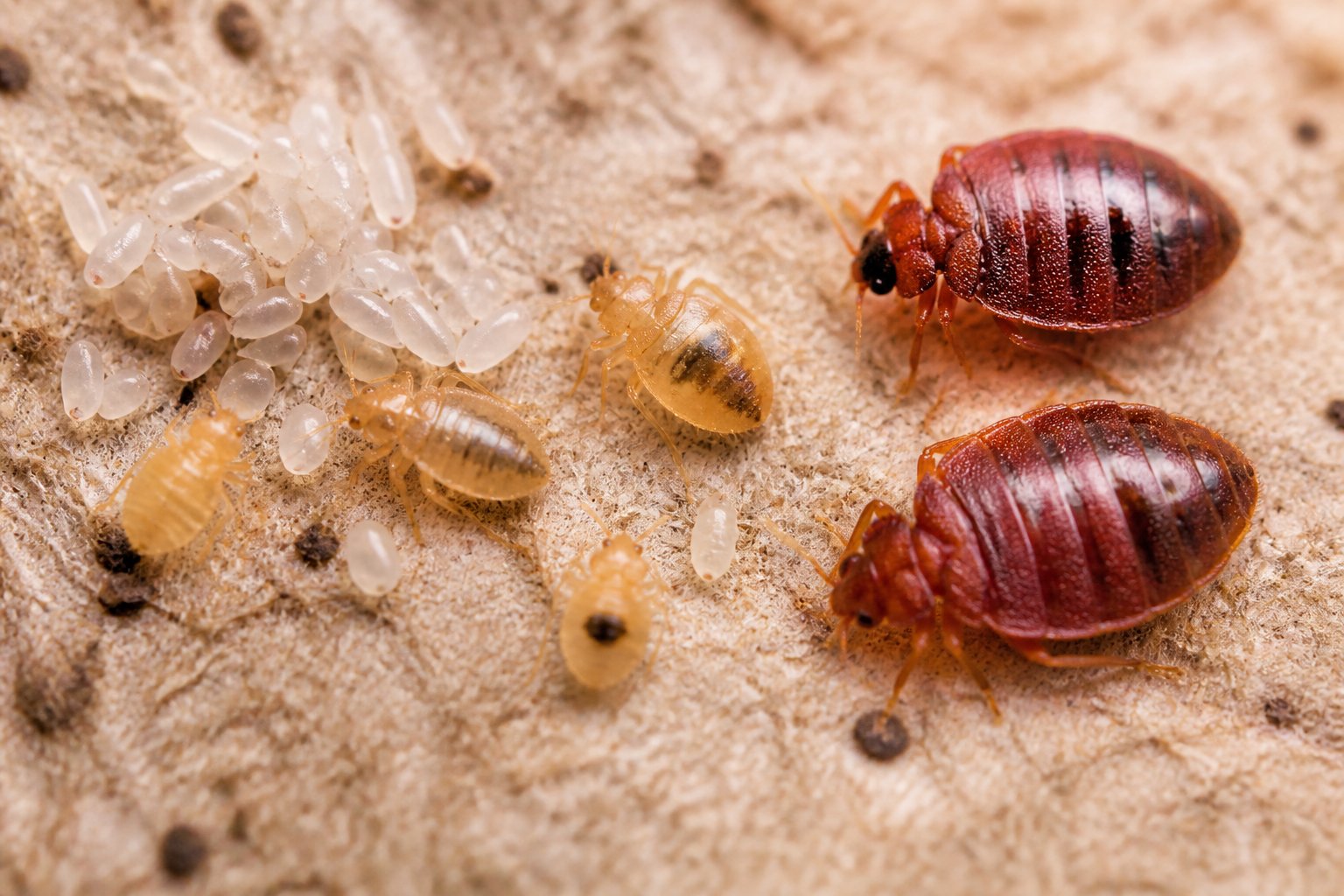
Bed bug eggs, baby bed bugs, and shed skins often show up before a large infestation becomes obvious. These signs are small, so you want to look closely at seams, folds, and hidden edges.
What Do Bed Bug Eggs Look Like
Bed bug eggs are tiny, pearly white, and about 1 mm long, which makes them look like grains of salt or tiny rice-like capsules. They are often glued in clusters, especially in mattress seams and other protected cracks.
The easiest clue is their color and location. The EPA’s bed bug inspection guide notes that eggs and eggshells are a key sign to check for during an inspection.
Baby Bed Bugs By Growth Stage
Bed bug nymphs are tiny and nearly clear at first. As they grow, they become more visible and may look straw-colored, then reddish after feeding.
You can find eggs, nymphs, and adults in the same hiding spot. Baby bed bugs are easiest to miss when they are unfed and very young.
Shed Skins, Casings, And Molting Clues
Bed bugs shed their skins as they grow, leaving behind thin, translucent shells that keep the shape of the bug. These shells signal that bed bugs are growing and molting nearby.
If you find multiple casings, look even more carefully for live bed bugs and fecal stains. Those shells often remain in the same hidden area where bed bugs rest between feedings.
Where You Will Usually Spot Them First
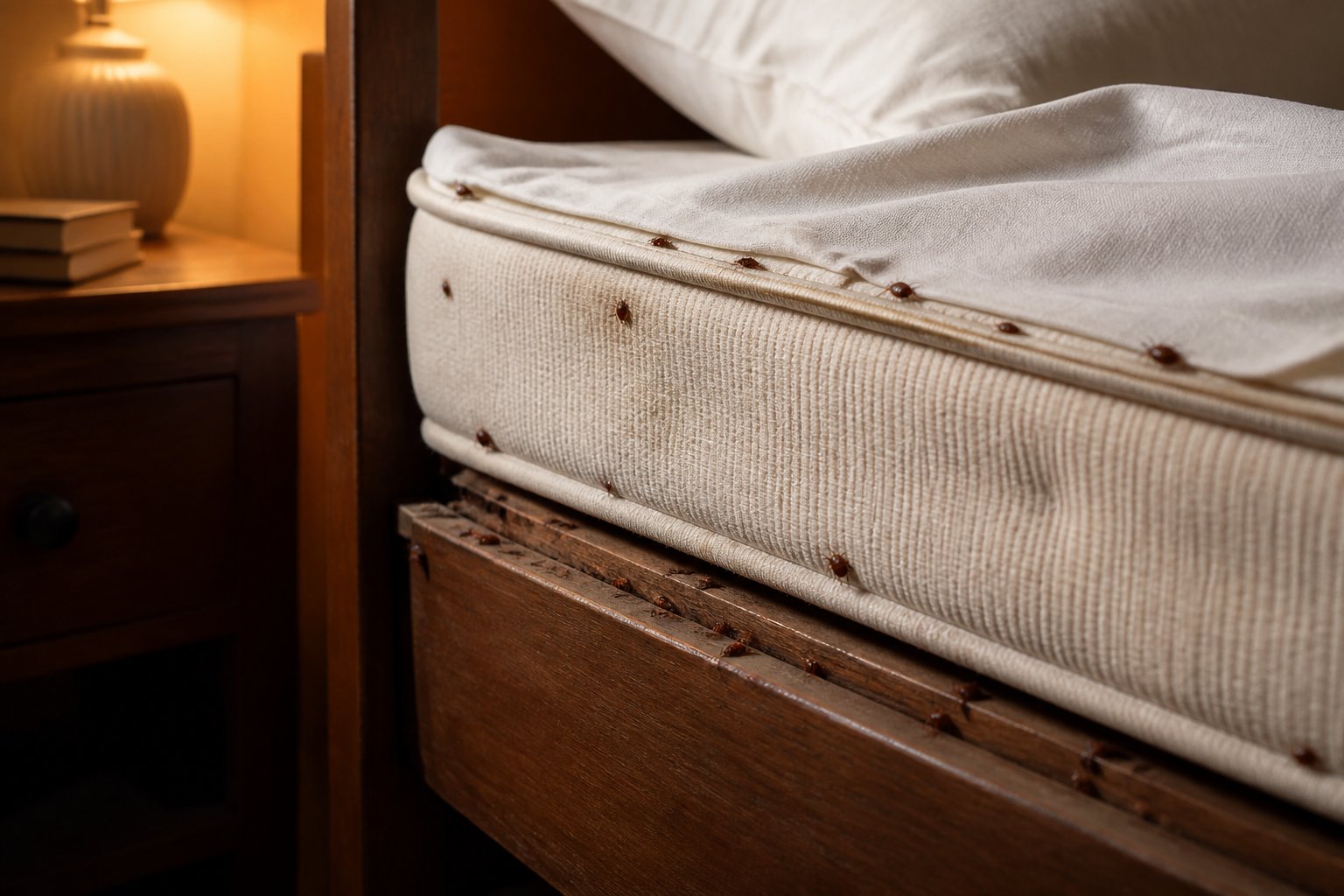
Bed bugs usually stay close to where people sleep, especially when an infestation is still small. The best places to check are the tight seams, fabric edges, and nearby furniture where they can hide during the day.
Mattress Seams, Tags, And Bedding
Start with mattress seams, piping, tags, and the folds of bedding. Bed bugs on mattress surfaces are often easier to find at the edges than in the open center.
Look for live bugs, eggs, shed skins, and tiny black dots that look like ink smears. The EPA points to rusty or reddish stains on sheets and mattresses as a common sign.
Box Springs, Bed Frames, And Nearby Furniture
Box springs, bed frames, headboards, and nearby nightstands can hide bed bug activity too. Cracks, joints, and screw holes give them protected spaces to cluster.
If the infestation grows, you may also find them in couches, chairs, or other furniture close to the bed. That is why a quick glance at the mattress alone is not enough.
Stains, Droppings, And Other Infestation Clues
Bed bugs leave behind fecal stains, dark spots, and droppings that look like tiny black dots and can smear like marker ink when dampened. Blood stains may appear rusty red after a bug is crushed during sleep.
When you see live bugs plus stains plus cast skins, you have much stronger evidence of a bed bug problem.
Common Look-Alikes And Bite Confusion
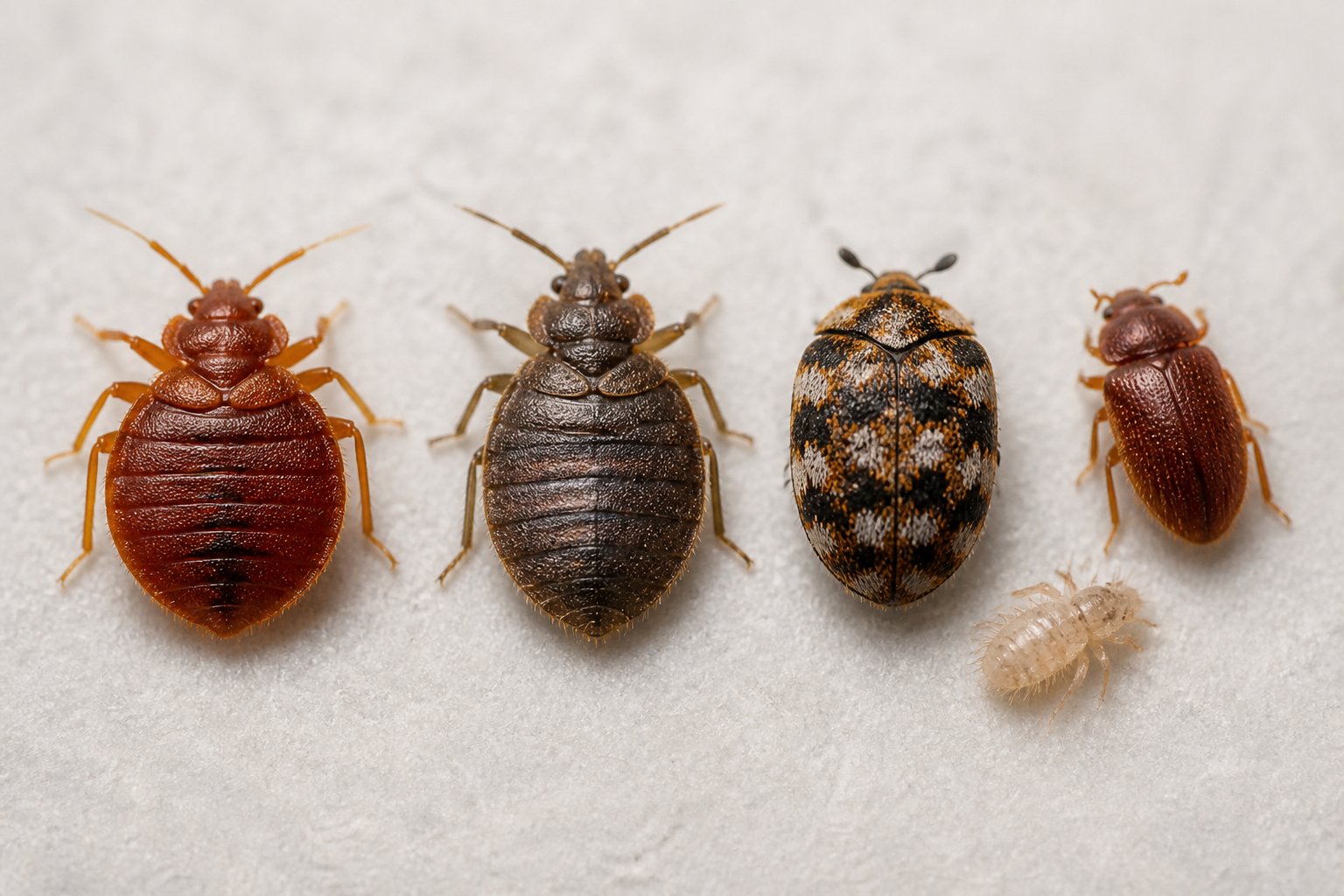
A few insects get mistaken for bed bugs because they share a small brown body or show up in bedrooms. Bites can also cause confusion, since itchy welts may look similar across several pests.
Bat Bugs, Swallow Bugs, And Close Relatives
Bat bugs and swallow bugs can be hard to separate from bed bugs at a glance. Bat bugs usually have longer, more visible body hairs.
If you find these insects near nests, attics, or wall voids, that habitat clue matters. When appearance alone is unclear, a closer inspection is the better move before you try to get rid of bed bugs.
Beetles, Roach Nymphs, And Other Indoor Mix-Ups
Carpet beetles, spider beetles, and cockroach nymphs often get blamed for bed bug trouble. Carpet beetles are rounder, spider beetles look more humpbacked, and cockroach nymphs have a more cylindrical shape.
Booklice, ants, and baby cockroaches can also cause mix-ups, especially when they are tiny. Bed bug look-alikes usually differ in body shape, movement, and where they hide.
Bed Bug Bites Compared With Fleas And Other Pests
Bed bugs often bite in lines or zigzags. Fleas tend to bite in clusters around the ankles and lower legs.
Mosquito bites usually appear as isolated puffy welts. These do not form a line pattern.
A bite alone cannot identify bed bugs. You should look for bugs, eggs, stains, or shed skins where you sleep.


