
So, you’ve spotted bees swarming around your house. That’s pretty unsettling, right? Still, it’s usually not as scary as it seems. Honestly, the best move is to stay calm and let the swarm be. Bees are just looking for a new place to crash, and most of the time, they’ll leave on their own.
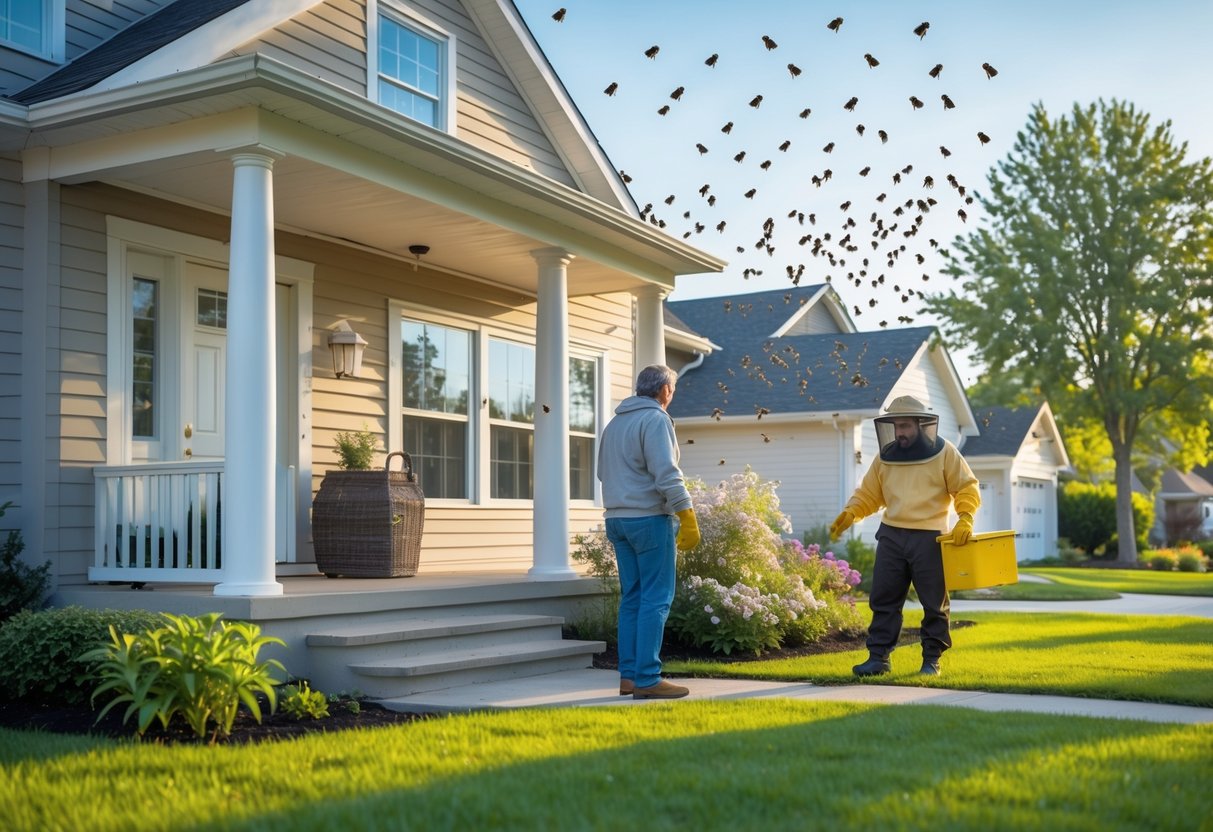
Keep your windows shut and don’t swat at the bees—nobody wants to get stung. If the swarm hangs around or you spot a hive, pick up the phone and call a local beekeeper or pest control pro.
They’ll know how to remove the bees safely and won’t put your family or the bees in danger.
It helps to know what’s going on, so you can keep your cool and respect these little pollinators. There are easy ways to stay safe and keep your home bee-free, so let’s get into it.
Identifying and Responding to Swarming Bees Near Your House

When bees swarm, you’ll see a big crowd of them moving together to find a new home.
It helps to spot the difference between bees and other stinging bugs, figure out why they’re hanging around, and know what to do about it.
How to Recognize a Bee Swarm
A bee swarm looks like a chunky bunch of bees clinging to a tree branch, bush, or even your siding.
They usually move slowly, sticking together in a tight ball.
You’ll probably hear a gentle buzzing, almost like a low hum.
Honey bees are golden brown with black stripes, and a swarm can have thousands of them.
You’ll mostly see this in spring or early summer.
They’re actually pretty chill when swarming, since they don’t have a hive to protect.
Differentiating Bees from Other Stinging Insects
Just because something’s buzzing around doesn’t mean it’s a bee.
Bumble bees are bigger, rounder, and look a bit fuzzier.
Carpenter bees are shiny and black, and you’ll find them near wood.
Africanized honey bees look a lot like regular honey bees but act more aggressive.
Wasps and hornets? They’ve got skinny waists, less fuzz, and fly in a more frantic way.
If you notice insects darting around or coming at you, they’re probably wasps, not bees.
Why Bees Swarm Near Homes
Bees swarm when their hive gets crowded or they need to start fresh somewhere else.
Your house or nearby trees might seem like good pit stops while they’re searching.
They’re drawn to small holes or sheltered spots, so even a tiny gap around your chimney or siding can catch their eye.
Most of the time, they aren’t planning to stick around for long—just resting before moving on.
Immediate Steps for Safety Around Swarms
First thing: keep at least 20 to 30 feet away from the swarm.
Don’t swat at them or wave your arms—sudden moves can make them defensive.
Skip spraying water or insecticides, and don’t try to kill the bees.
If the swarm’s close to your house, shut your windows and doors.
Call a local beekeeper or pest control expert if you need help moving the swarm.
Try to keep things quiet and avoid banging or making loud noises near the bees.
And definitely keep kids and pets out of the area.
Safely Managing Bee Swarms and Removal Procedures

If a swarm shows up near your place, acting fast can make a big difference.
You’ll want to know who to call, what to do if bees get inside, and how to keep them from settling in for good.
Contacting a Local Beekeeper or Bee Removal Specialist
Call a local beekeeper or professional bee removal specialist first.
These folks know how to move honey bees without hurting them or putting anyone in danger.
A lot of beekeepers will relocate swarms for free or a small fee, which helps them and the bees.
When picking a specialist, ask if they use humane methods and if they’ll get the whole hive.
A good removal service will check out the site, take care of the bees, and give tips to keep it from happening again.
It’s way safer than trying to DIY the job.
For more info, you can check out this guide on bee removal services.
What to Do If Bees Enter the House or Form a Hive
If bees get inside or start building a hive, don’t panic.
Close doors to keep them in one room, then open a window or door in that space to let them out.
Try not to wave your arms or make sudden moves, since that can stress them out.
Once you’ve got them contained, call a bee removal pro right away.
Taking out a hive inside is tricky and can get dangerous fast.
Don’t spray or try to kill the bees—it usually makes things worse.
Prevention Tips to Keep Bees from Nesting
It’s way easier to stop bees from nesting than to deal with a swarm later.
Keep windows and doors closed tight, especially at night.
Cover your trash cans so you don’t attract them.
Seal up cracks and gaps around your house.
Get rid of old wood piles and hollow trees near your home.
If you plant flowers, keep them away from entrances.
Check spots like porches, attics, and sheds now and then to catch bee activity early.
Doing these things will make it less likely that bees decide to move in.
Mistakes to Avoid When Bees are Swarming
People often make a few big mistakes when they spot a bee swarm.
First off, don’t try to kill or spray the bees yourself. That’s risky and usually just makes them angrier.
Try not to slam doors or windows, either. You might trap some bees inside, and no one wants that mess.
Ignoring the swarm isn’t a great idea. Swarms can hang around for days while they search for a new spot, so waiting it out could just make things worse.
Don’t mess with the bees by making loud noises or causing vibrations near them. That’s a quick way to get stung.
If you spot a swarm, call a local beekeeper or a bee removal service. Let the pros handle it—they know what they’re doing.


