
So, you spot a bee just sitting on the ground. What now? Honestly, the best thing you can do is help it get out of harm’s way.
If the bee’s moving around and it’s in a risky spot, try gently nudging it onto a leaf or something soft, then move it somewhere safer. You’ll keep the bee safe, and you won’t risk getting stung.
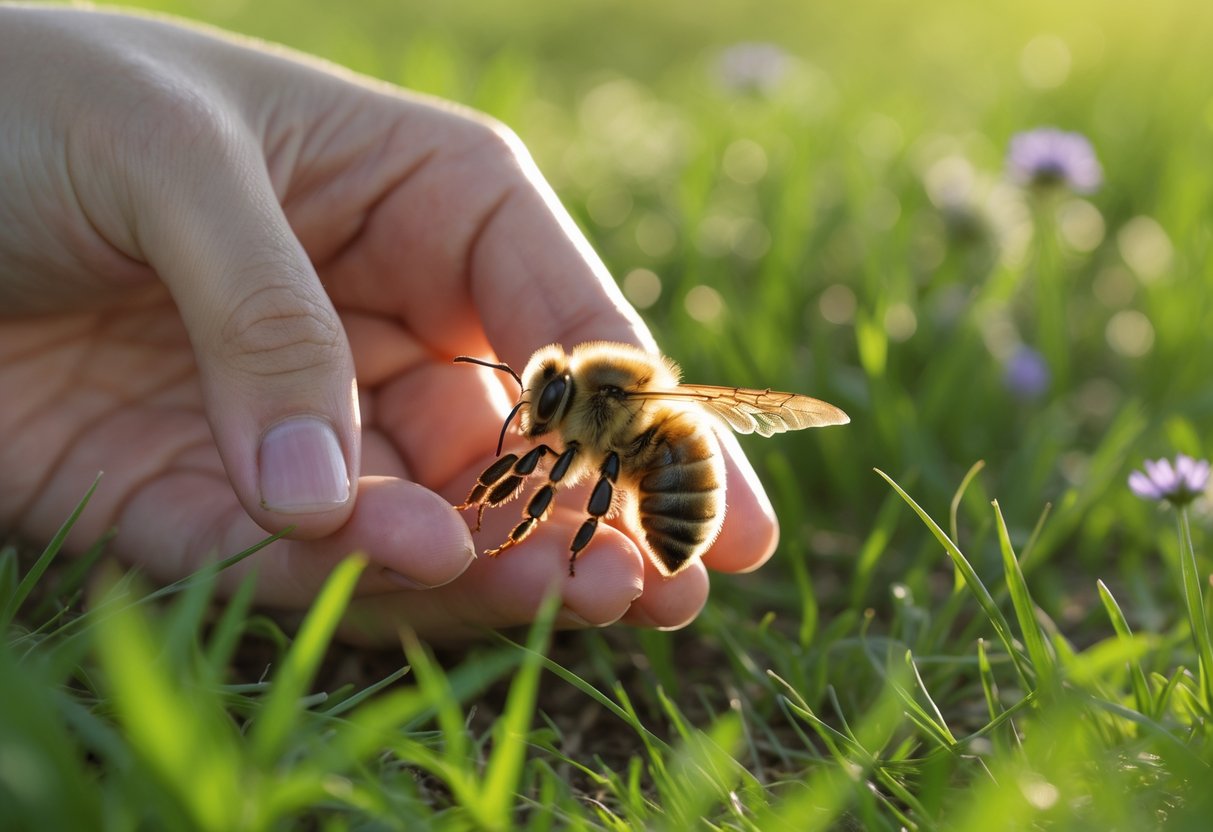
Sometimes bees wind up on the ground because they’re tired, wet, or just plain worn out. You can offer a little sugar water to pep them up, but only if you’re sure they need it.
Learning a few simple ways to help a bee in trouble can really make a difference. Plus, you can do it without putting yourself at risk.
Bees play a huge role as pollinators. If you know what to do when you find one grounded, you’ll actually be helping nature out.
Let’s get into some easy tips and safe steps for helping these busy insects in your yard.
Immediate Steps to Help a Bee on the Ground
When you find a bee on the ground, you’ll want to check if it actually needs help. Figuring out what kind of care it needs is important.
Be gentle and careful, especially with honey bees and bumble bees. That way, you avoid hurting them or getting stung.
If you’re going to feed or move the bee, do it the right way for its safety.
Assess If the Bee Needs Help
Start by watching the bee for a bit. If it’s moving its legs or wings but not flying, it might just be tired, cold, or thirsty.
Bees like honeybees and bumble bees sometimes get grounded after bad weather or just from flying too much.
If the bee sits still for a long time or looks hurt, it probably needs more help. Solitary bees, which live alone and nest in the ground, might just be resting, so don’t worry if you see one hanging out.
If you see a bee on hot pavement or somewhere it could get squished, it’s a good idea to move it.
How to Safely Offer Assistance
To help a bee, use a leaf, a small twig, or a piece of paper to scoop it up gently. Try not to use your bare hands—nobody wants a sting.
Move the bee to a flower patch or a shady spot away from people and cars. Pick somewhere quiet.
Stay calm and move slowly when you’re near the bee. Quick movements can freak it out, or you might get stung.
If the bee crawls onto your hand, just stay still. Don’t swat at it.
When and How to Feed a Bee
If the bee seems super weak or dried out, you can give it a tiny bit of sugar water. Mix one part white sugar with two parts water and stir until it dissolves.
Use a dropper or even just a spoon tip to place a drop near the bee’s mouth. That’s all it needs.
Don’t use honey or other sweet stuff—they can actually hurt the bee. Only feed wild bees if they seem too weak to fly.
Sugar water is just a quick energy boost so they can get back to pollinating.
Handling Bees with Damaged Wings or Limbs
If you notice a bee with a broken wing or missing leg, it probably can’t survive outside. You can put it in a safe container with air holes and a couple drops of sugar water.
Try reaching out to a local beekeeper or wildlife rehabber as soon as you can. Honeybees and bumble bees are really important, and sometimes a damaged bee can recover with help.
Don’t try to fix wings yourself. You’ll probably do more harm than good.
If you’re careful, you can help these valuable insects and avoid getting stung at the same time.
Understanding and Managing Ground Bees

If you find a bee on the ground, it helps to know what kind it is. Sometimes it’s a loner, sometimes it’s part of a bigger nest.
You’ll want to figure that out before you do anything else.
Distinguishing Between Bee Species
Ground bees come in lots of types, like miner bees and solitary bees. They don’t live in big colonies like honey bees.
Usually, they nest underground and keep to themselves. Honestly, they’re not aggressive and rarely sting unless you mess with them.
Here’s how you can spot ground bees:
- They’re usually small and can look fuzzy or even metallic
- You might see a single bee going into a tiny hole in the dirt
- They move calmly and stick close to the ground
If you notice yellow and black stripes and see the bee near a small hole, you’re probably looking at a ground bee. Knowing what you’re dealing with helps you decide if you need to act—or just let them be.
Identifying Ground Nests and Bee Infestation
Ground bee nests look like little holes or tunnels in dry soil. You might catch bees flying in and out or spot small dirt piles near the entrance.
If you see lots of holes close together and bees buzzing around during warm weather, you might have a ground bee party going on.
Check spots like your lawn, flower beds, or under your garden plants. Ground bees like sunny areas with loose dirt.
They usually don’t hurt your plants, but they can be a nuisance if they dig a bunch of holes. If you see nests, make sure you know what kind of bee it is before you try to get rid of them.
Safe and Humane Ways to Remove Ground Bees
If you really need to move ground bees, try gentle methods first. Sprinkle diatomaceous earth near their holes. This natural powder messes with their exoskeleton and encourages them to move on.
Another idea: spray some diluted tea tree oil mixed with water around where they nest. It repels bees but doesn’t kill them.
Skip the strong pesticides—they hurt more than just bees. Covering holes with mulch or soil can help keep bees from coming back.
If you’re working near nests, it’s smart to wear protective clothing. Better safe than sorry, right?
When to Call Professional Bee Removal
If you spot a big bee infestation or you’re allergic, it’s honestly safest to call a pro for bee removal.
Experts figure out what kind of bees you’re dealing with and get rid of nests without hurting your garden or pets.
You’ll want professional help if the nest is dense or tucked away under a deck or patio. Some of these folks even move the bees somewhere else instead of exterminating them, which is great for the environment.
Check out pest control or bee removal services that have solid reviews and use safe techniques. That way, you keep your family and yard protected while treating ground bees with some respect.
For more on handling nests safely, take a look at Mastering Ground Bee Nest Management for Beekeepers.


