
Finding a bat in your house can be unsettling. But remember, these creatures are usually just as frightened as you are. If you encounter a bat, stay calm and avoid trying to catch or handle it directly. Instead, take steps to safely remove it from your living space.
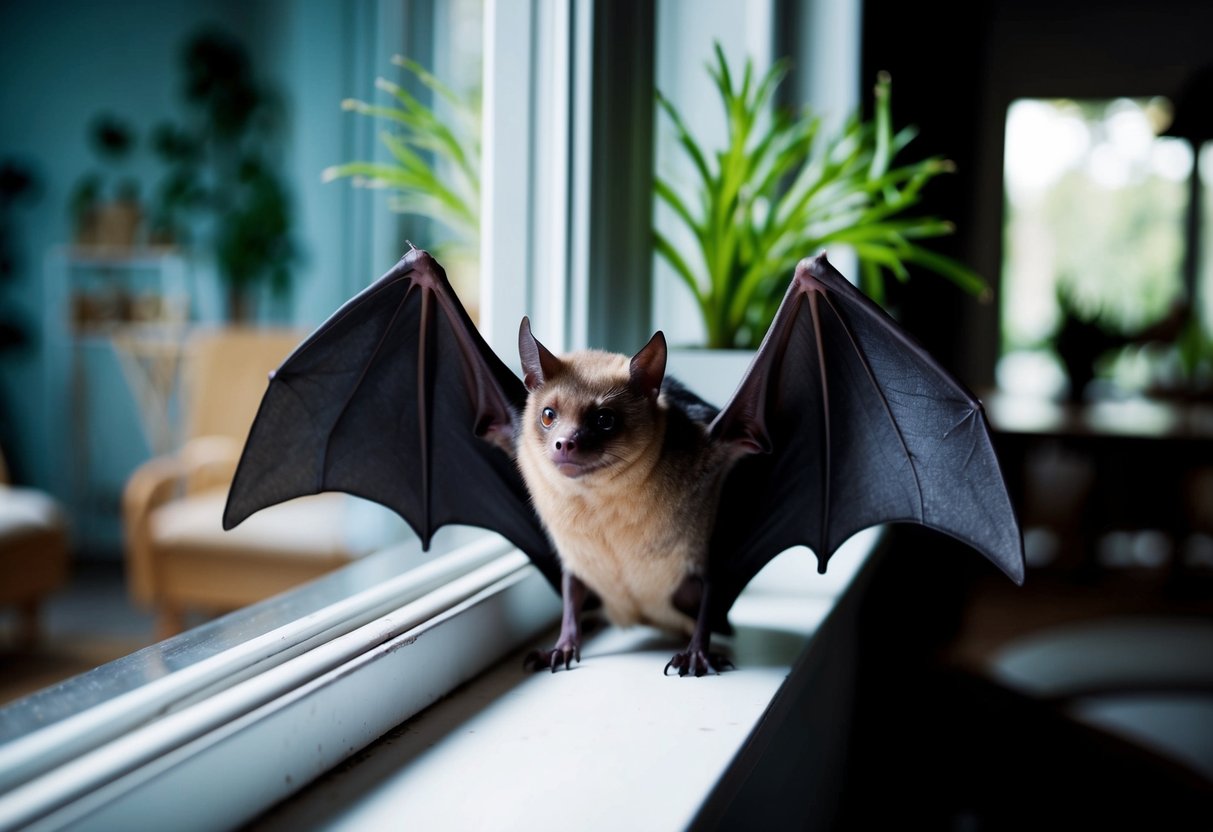
Start by locating where the bat is hiding and giving it some space. Use a flashlight to help spot it without getting too close. Bats often choose high places, like rafters or curtains, so check these areas first. If you can, open windows and doors to encourage the bat to fly outside on its own.
If you can’t safely remove the bat yourself, consider calling a professional for help. They have the right tools and knowledge to handle the situation correctly. Remember, bats are important for the ecosystem, so try to have a peaceful resolution.
Safety Precautions
Finding a bat in your house can be alarming. It’s important to take safety precautions to protect yourself and understand the potential risks involved. Here’s what you need to know to stay safe.
Assessing the Situation
First, stay calm and assess the situation. Make sure you know where the bat is located. Use a flashlight to spot it, and wear thick gloves if you need to move objects around to find it.
Keep in mind that bats can hide in dark places. Check behind curtains, under furniture, and in high areas like shelves. If you’re not sure where the bat is, it may be best to leave the room and close the door.
If the bat is flying around, avoid sudden movements that might scare it further. It’s best to wait until the bat lands and becomes less active.
Avoiding Bat Bites
Bats can carry rabies, which is dangerous for public health. To avoid bat bites, never attempt to handle a bat without proper training. If you need to remove the bat, consider calling animal control or local wildlife experts.
If you must approach the bat, use a bat-catching net or a container. Make sure to keep your body and hands covered with thick clothing and gloves.
If you’re bitten or scratched, it’s critical to wash the wound immediately with soap and water to reduce the risk of infection. Contact a healthcare professional as soon as possible for further advice.
Understanding Rabies Risks
Rabies is a serious disease that can be transmitted through bat bites. While not all bats have rabies, it’s essential to treat every encounter seriously. The virus can be fatal if left untreated.
If you believe the bat may have bitten you or if you have direct contact with it, contact your local health department right away. They may recommend testing the bat for rabies.
Stay aware of the signs of rabies, which can include unusual behavior in bats, such as daytime activity or aggressiveness. Understanding the risks can help you make informed decisions and keep yourself safe.
Bat Removal Strategies

Finding a bat in your home can be alarming, but there are effective ways to handle the situation. You can choose to remove the bat yourself, call in professionals, or take preventive steps by setting up bat houses.
DIY Removal Tips
If you feel comfortable, you can try to remove the bat yourself. First, make sure to wear gloves to protect yourself. Here’s a simple method:
- Close Off the Area: Close doors or windows to contain the bat in one room.
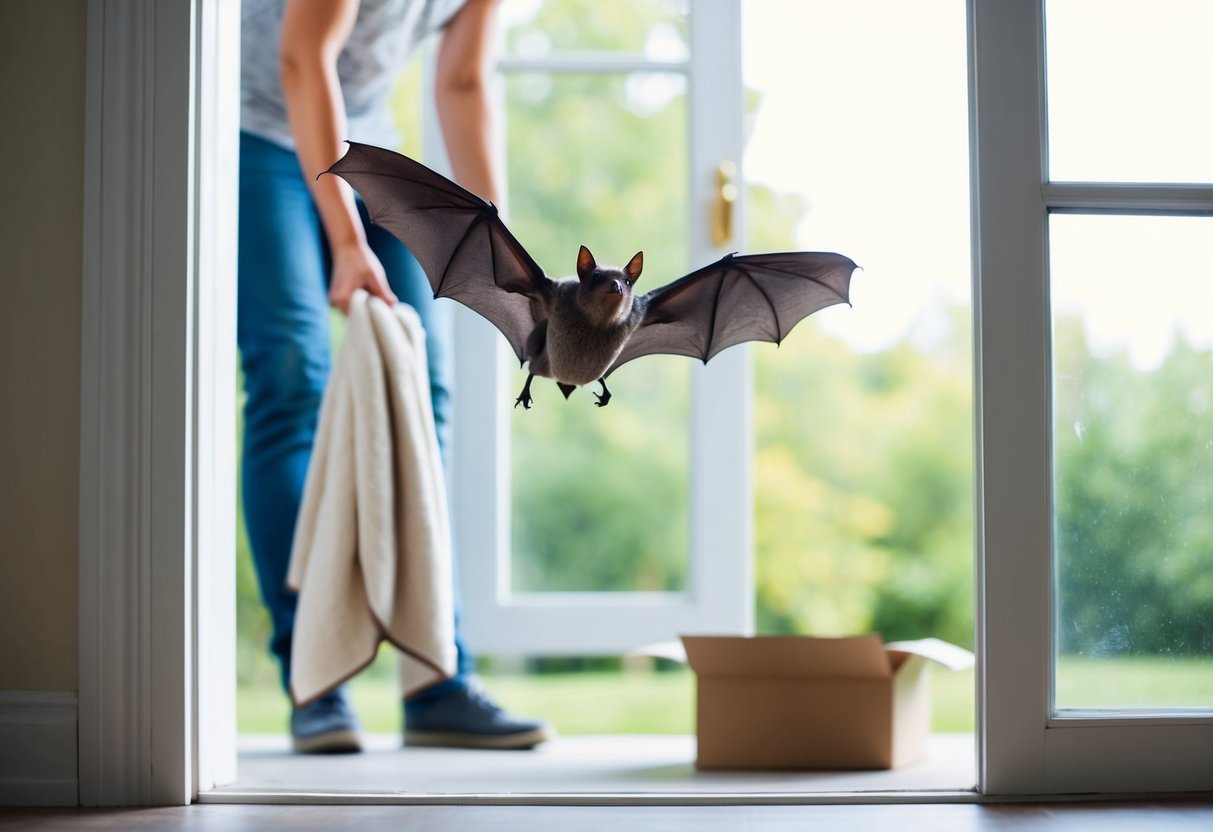
- Use a Box: When the bat lands, gently cover it with a cardboard or plastic box.
- Slide a Lid Under: Carefully slide a piece of cardboard under the box to trap the bat inside.
- Release the Bat: Take the box outside and let the bat fly away at dusk.
Avoid touching the bat directly, as they can carry diseases. If you can’t safely manage this, consider other options.
Calling Pest Control
If DIY removal seems too risky or if the bat is in a difficult spot, calling a pest control service is a wise decision. These professionals have specific training to handle bats safely.
When you contact a pest control service:
- Ask about Experience: Ensure they have experience with bats, as they need specialized techniques.
- Inquire about Relocation: A good service will relocate the bat rather than harming it.
- Discuss Prevention: They can also identify how the bat entered and suggest ways to prevent future visits.
Hiring experts can give you peace of mind and ensures proper handling of the bat.
Using Bat Houses as an Alternative
Instead of just removing bats, you can attract them to a designated area using bat houses. This can provide a safe home for bats while keeping them away from your living space.
Here’s how to get started:
- Choose a Good Location: Mount the bat house in a sunny spot, ideally 10-15 feet high.
- Make it Inviting: Use untreated wood to build the house. Bats prefer dark, cozy spaces.
- Encourage Colonization: Consider placing several bat houses around your property to attract them.
Using bat houses benefits you and the bats. They help control insect populations naturally. Plus, providing a home supports local bat populations, which are crucial for the ecosystem.
After the Encounter
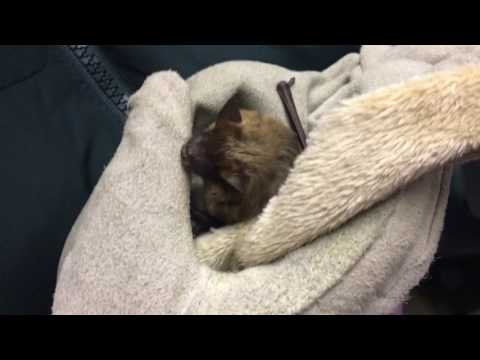
After a bat encounter, it’s important to take specific actions to protect your health and your home. Cleaning and disinfecting the area where the bat was found is crucial. Additionally, seeking medical attention may be necessary, especially if there was a chance of being bitten.
Cleaning and Disinfection
Start by wearing gloves to protect yourself. Use a disinfectant that is suitable for hard surfaces. Focus on areas where the bat contacted surfaces, including floors and walls.
-
Remove Droppings: Bat droppings can carry diseases. Use a scoop or paper towel and place them in a sealed bag.
-
Clean Surfaces: Wipe areas thoroughly with a disinfectant. Make sure to include all surfaces, like ceilings and furniture.
-
Ventilate: Open windows to let fresh air in and help reduce any lingering odors.
-
Dispose Properly: Seal all waste in bags and put them in your outdoor trash. This helps prevent any risk of contamination.
Seeking Medical Attention
If you had any physical contact with the bat, seek medical advice right away. Bats can carry rabies, a serious virus that is fatal if untreated.
-
Talk to a Doctor: Inform your healthcare provider about the encounter. They may recommend getting tested.
-
Consider Vaccination: If a bat bit you, you might need rabies vaccinations. Act quickly; delays can complicate treatment.
-
Report to Health Department: It’s wise to contact your local health department about the bat encounter. They can provide guidance and investigate the situation further.
Taking these steps ensures your safety and helps address any health concerns.
Prevention and Education
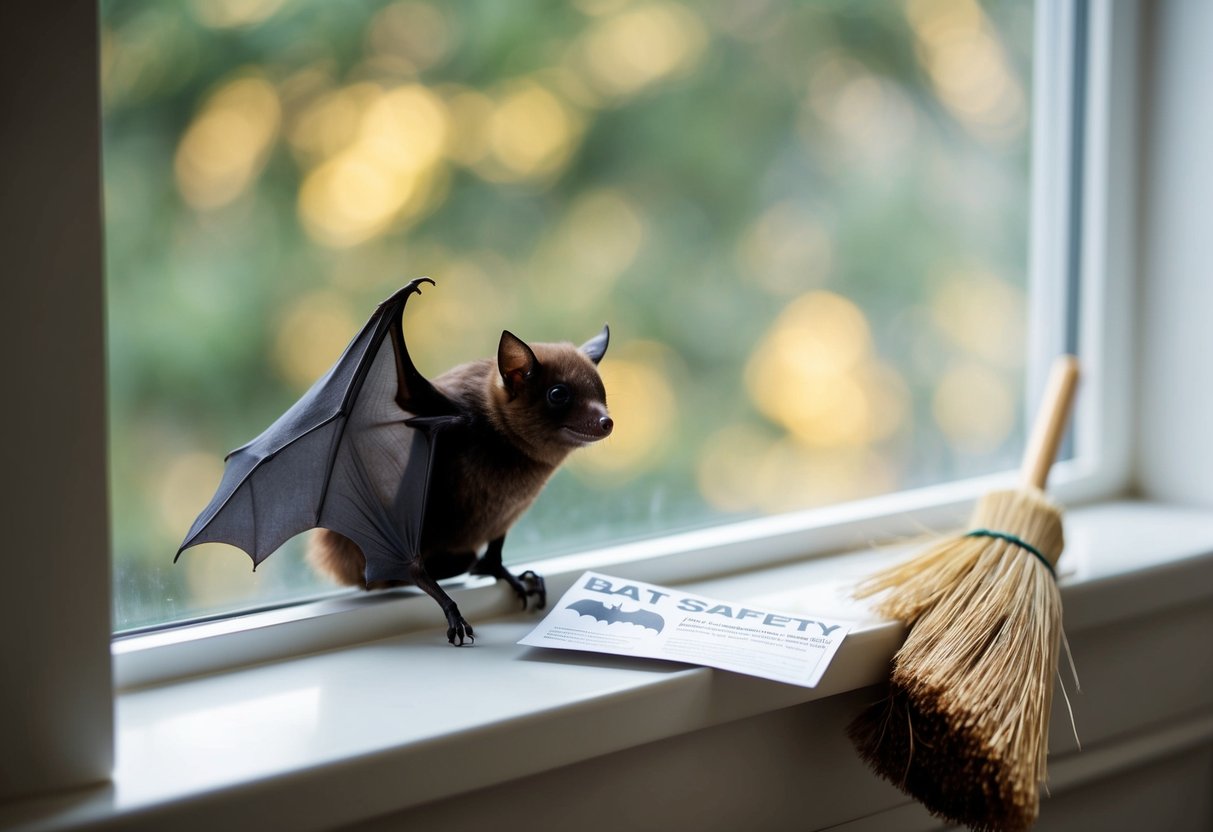
Being proactive can help you keep bats away from your home and educate those around you about these wild animals. You can take steps to secure your house and spread awareness, which can improve public health and reduce bat encounters.
Securing the Home Against Bats
To prevent bats from entering your home, start by sealing off any potential openings. Check for gaps or cracks that are larger than ¼ inch. Pay special attention to areas around windows, doors, and vents.
Install a tight-fitting screen on windows and use caulk on smaller holes. It’s also helpful to keep your doors closed and use door sweeps. Trim back trees and bushes close to your house, as they can provide easy access for bats.
Consider using bat houses placed away from your home. This can encourage bats to roost elsewhere while providing them a safe habitat.
Educating Others About Bats
Educating your friends and family about bats can lead to better understanding and less fear. Share information on their benefits, such as pest control and pollination.
Explain that most bats are harmless and play a crucial role in the ecosystem.
Hold awareness sessions or distribute flyers about what to do during a bat encounter. Discuss the importance of calling professionals if someone finds an injured bat.
Knowing to keep a safe distance is key for both safety and the bat’s well-being.
Encourage your community to participate in local wildlife conservation efforts. This can help create a healthier environment for both people and wildlife.


