
Spotting a bee can make anyone a bit anxious. Still, knowing what not to do is probably the most important part of staying safe.
Don’t swat at a bee or try to kill it—doing that just makes the bee feel threatened and way more likely to sting you. Honestly, staying calm and still works best if you want to avoid any trouble.
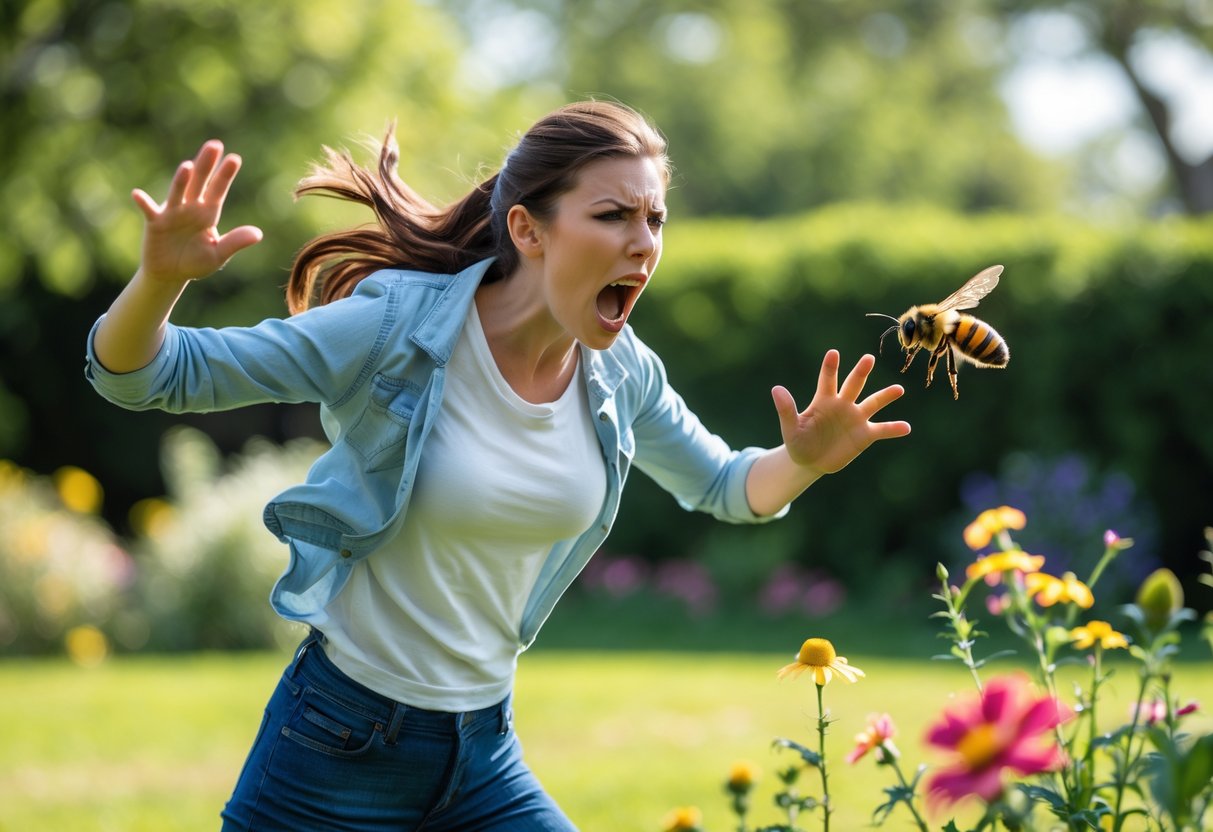
Bees usually just go about their business unless you provoke them with quick movements, loud noises, or by trying to hurt them. If you give them space, they’ll usually leave you alone.
These simple rules really do help you stay safe and calm when you run into a bee.
If you want to keep bees from becoming a problem near your home, act carefully. Don’t spray water or throw things at them.
Knowing what to avoid helps protect both you and the bees. For more tips, check out this guide on what not to do when you see a bee.
Critical Mistakes to Avoid When You See a Bee

When a bee gets close, your reaction really matters. Some things you do can upset the bee and make stings more likely.
Try to stay calm and gentle. That’s honestly the key.
Swatting or Attempting to Kill the Bee
If you swat at a bee or try to kill it, you’re making things worse. Bees see this as a threat and might sting to defend themselves.
Honey bees don’t want to sting you unless they have no other choice. Hitting at a bee just makes it more aggressive.
It’s better if you stay still or slowly move away. Most of the time, bees leave you alone if you ignore them.
Panicking or Running Away Erratically
Panicking when you see a bee? That’s not going to help. Fast, sudden movements scare bees.
Running or flailing your arms makes you look like a threat. The chance of getting stung goes up if you do that.
If you keep calm, the bee usually flies away by itself. Try to breathe slowly and walk away steadily.
That helps you stay safe without stressing out the bee.
Making Sudden Movements or Flailing Arms
Quick, jerky movements or waving your arms around a bee can make it defensive. Bees pick up on motion and get nervous if you move too fast.
Keep your hands low and move slowly. If a bee lands on you, just stand still and let it fly off.
Sudden actions can make things worse. Nobody wants that.
Disturbing or Approaching a Bee Swarm
If you see a bee swarm, don’t get close or try to disturb them. Swarms are just bees protecting their queen, and they might sting if they feel in danger.
Keep your distance and avoid loud noises or quick moves. If a swarm is on your property, call a local bee removal expert who knows what they’re doing.
Getting too close to a swarm is risky. Multiple stings? No thanks.
For more advice, check out What Not to Do When You See a Bee Friendly Tips to Stay Safe and Calm.
Why Avoiding Harmful Actions Matters

When you spot a bee, what you do next really matters. Your actions can change how the bee reacts and even affect people nearby.
Knowing how bees behave and what triggers them helps keep everyone safe.
Understanding Bee Behavior and Triggers
Bees—especially honey bees—are usually focused on their work. They’re not out to sting you.
Sudden movements, loud noises, or swatting can make them feel threatened, though. Bees warn each other by releasing alarm pheromones, and that scent tells other bees to get ready to defend the hive.
Once you trigger that, the chance of getting stung goes up. And nobody wants to deal with that.
You can avoid this by staying calm, moving slowly, and leaving flowers alone if bees are visiting. Patience and respect go a long way with bees.
Risks of Agitating Honey Bees
If you upset honey bees, you could get stung. Their stings can hurt, cause swelling, or even trigger allergic reactions for some folks.
Swatting or crushing a bee releases alarm pheromones, which can call more bees into defense mode. That’s not a situation you want.
Disturbing a hive or swarm can get a large group of bees to attack. Multiple stings are dangerous, especially for kids or anyone with allergies.
Impact on Bee Populations and the Environment
Honey bees play a huge role in pollination. They help plants grow and make the food we rely on.
When people harm or kill bees, it throws off the balance in local ecosystems. That’s a problem nobody really wants.
Using harsh pest control wipes out bees and damages the environment. Why not try bee-friendly pest control instead? You can protect your home and keep bees safe at the same time.
If you avoid harmful chemicals or actions, you’re actually giving bees a fighting chance. Strong bee populations mean more crops and flowers for everyone to enjoy.


