
Coyotes might wander into your yard because they’re curious or spot an easy snack or shelter. If you want coyotes to go away, you’ve got to get rid of what draws them in—food, water, hiding places—and do things that spook them. Keeping your property tidy, putting up fences, or using lights and noise can keep them at a distance.
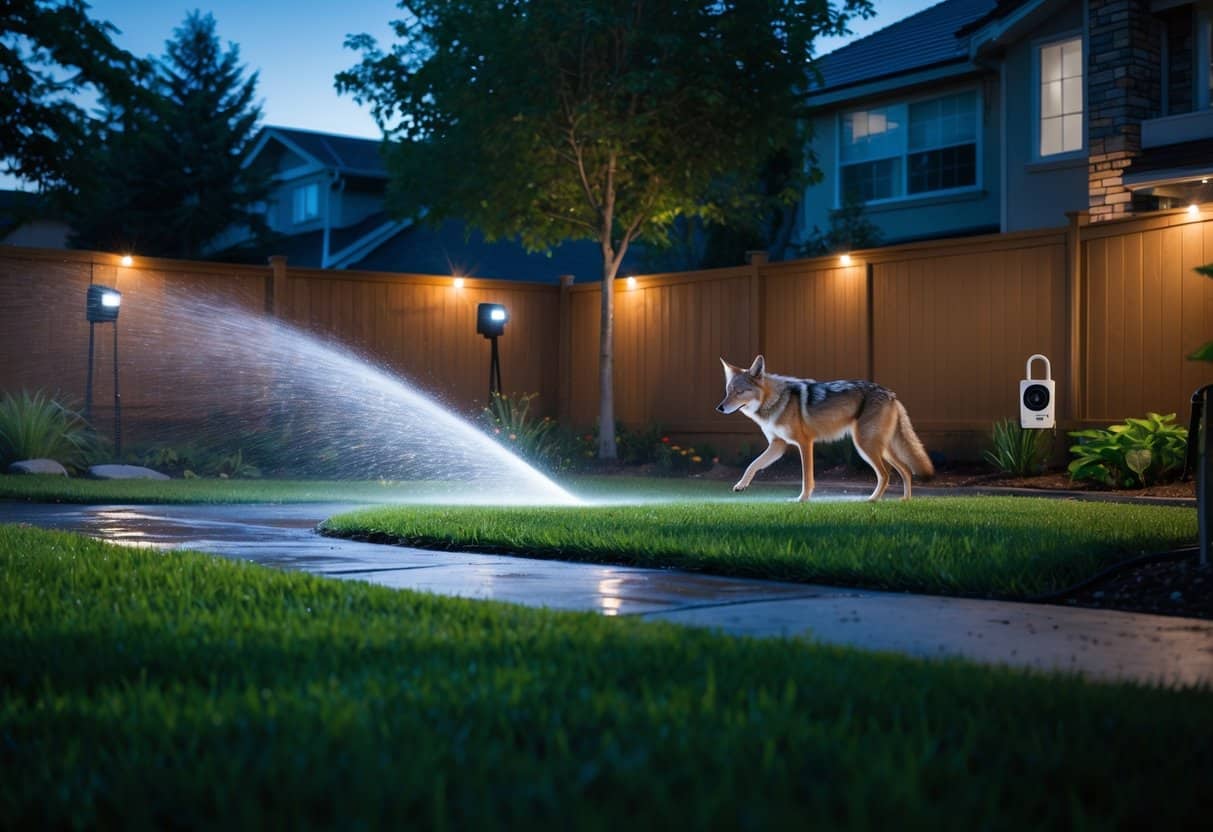
Most coyotes steer clear of people, but if they figure out your yard has snacks or shelter, they might get bold. If you understand how coyotes think and act to make your yard less appealing, you’ll protect your family and pets—without hurting the animals.
Let’s look at what actually works to keep coyotes away.
Effective Ways to Make Coyotes Leave
If you want coyotes to leave, you need to act in ways they don’t like. Figure out what draws them in, cut those things off, and use tools that scare them.
Sound and light can warn them that your place isn’t safe.
Understanding Coyote Behavior
Coyotes mostly come out at dawn and dusk. They’re clever and pretty wary, so if they think a spot isn’t safe, they usually stay away.
They roam around looking for food, water, and shelter. If they find easy meals or cozy hiding places, they’ll hang around.
Even though they’re predators, they usually avoid people unless it’s just too easy to get food.
Knowing this, you can focus on making your place less interesting to them. If you know when and why coyotes show up, you can time your efforts better and keep them away.
Removing Attractants from Your Property
Coyotes go where the food is, so removing attractants is a must.
Keep your garbage cans sealed. Don’t leave pet food outside—coyotes can sniff that out from pretty far away.
Trim back bushes and mow tall grass. Coyotes love thick cover to hide in. If there’s nowhere to hide, they’ll probably skip your yard.
Pick up fallen fruit under trees. Skip the bird feeders if they end up attracting rodents, since coyotes hunt those too.
These quick fixes make your yard less of a coyote magnet.
Using Motion-Activated Lights and Alarms
Coyotes hate sudden lights and loud noises. Motion-activated lights and alarms can really spook them.
Put up motion sensor lights that snap on when something moves nearby. That sudden burst of light can send a coyote running.
You could also use alarms or noise-makers that go off with movement. A loud sound when they sneak in makes them think twice about coming back.
If you use both lights and alarms, you hit more of their senses and it’s even harder for them to feel safe.
Hazers, Noise Makers, and Whistles
Coyotes jump at sudden, loud noises. Hazing techniques—like banging pots or blasting an air horn—teach them to stay away.
Keep a whistle on hand for quick, sharp sounds that get their attention.
You can buy special coyote noise-makers if you see them a lot and want to really drive the point home.
If you’re consistent with noise and hazing, coyotes start to see your place as risky and move on.
Physical Deterrents and Outdoor Solutions
You can keep coyotes out with tough barriers, special repellents, and sometimes even animals that guard your yard. Making your place hard to get into is the first step.
Repellents and guard animals add another layer of protection.
Fencing and Hardware Cloth
A fence at least 6 feet tall keeps most coyotes from getting in. Use smooth materials like metal or vinyl so they can’t climb.
Bury the fence 12 to 18 inches underground and angle it outward to stop digging.
Add hardware cloth—wire mesh with small openings—at the bottom of your fence. Make sure there aren’t gaps bigger than 4 inches.
This mesh keeps coyotes and other critters from squeezing through or digging under.
Fences work best when you combine them with other deterrents, like sprinklers or lights that surprise coyotes.
Installing Coyote Rollers
Coyote rollers are smooth bars that spin at the top of your fence. If a coyote tries to climb, the bar rolls and they can’t get a grip.
Install rollers on fences taller than 6 feet for the best effect. They don’t need electricity and just quietly do their job all day.
You can also add angled tops to your fence for extra trouble.
Rollers don’t stop coyotes from digging under, so always pair them with buried hardware cloth.
Coyote Repellents and Predator Urine
Predator urine, like wolf urine, makes your yard smell dangerous to coyotes. Place dispensers with wolf urine around your property’s edge for a clear warning.
These last about a month, but you’ll need to refill them after rain.
Some sprays mix hot peppers, vinegar, and water, which irritate coyotes’ noses if you spray them on plants or around the yard.
Motion-activated sprinklers work too, blasting water and noise when a coyote gets close.
Try switching up repellents now and then so coyotes don’t get used to any one smell or sound.
Remember to refresh repellents, especially during times when coyotes are more active, like mating season.
Guard Animals: Donkeys and Llamas
Donkeys and llamas can make surprisingly good guard animals, especially if you’ve got a big yard or livestock that needs some extra protection.
These animals naturally defend their space. Sometimes they’ll scare off coyotes just by making a lot of noise or acting a bit aggressive.
Donkeys, in particular, seem to notice predators quickly. If a coyote tries to sneak up, donkeys might chase it or even kick at it.
Llamas stay alert and often keep an eye on things. Just having a llama around can make coyotes think twice.
If you’ve got pets or chickens, adding a guard animal might cut down on risk without hurting any coyotes. Just make sure your donkeys or llamas have enough room and the care they need to stay healthy and do their job.


