
Ever wondered if a coyote can breed with a wolf? The short answer: yes—coyotes and wolves can mate and have offspring, known as hybrids or coywolves. Their close genetic relationship and matching chromosome counts make this possible, especially when their habitats overlap.
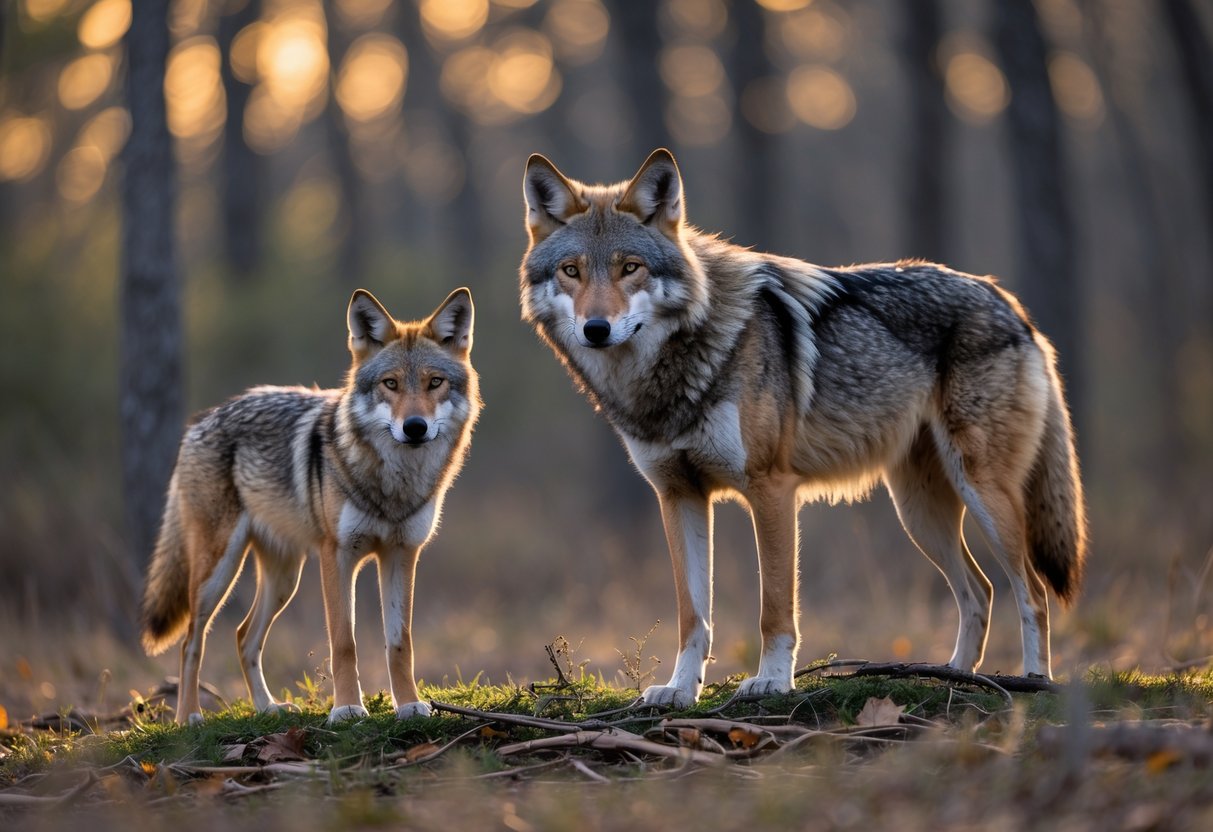
These hybrids pick up traits from both parents. Usually, they’re bigger than coyotes but not quite as large as wolves. Their behavior? It’s a quirky mix of adaptability and teamwork.
If you’re curious about how these animals end up together and what that means for nature, stick around. There’s more to the story about where and why it happens, and honestly, these hybrids are fascinating.
Can Wolves and Coyotes Breed?

Wolves and coyotes can mate because they’re closely related and share a lot of traits. When they do, their pups end up with features from both sides.
These hybrids show up where wolves and coyotes live side by side in North America. Looking at their genetics, what they look like, and where they pop up helps us understand how these animals interact.
Genetic Compatibility and Hybridization
Wolves (Canis lupus) and coyotes (Canis latrans) both have 78 chromosomes. This lets them breed and have offspring.
Since they’re both in the Canis genus, gene flow between them can happen, especially when their territories cross.
Usually, differences in size, behavior, and when they mate keep them apart. But sometimes their breeding seasons sync up, and that’s when wolves and coyotes crossbreed naturally.
We call this process hybridization, and it leads to animals like the coywolf. Hybridization happens a lot more in places where people or habitat loss push these animals together.
Wolf-Coyote Hybrid Offspring Characteristics
When wolves and coyotes mate, their young inherit traits from both parents. These hybrids, or coywolves, tend to be bigger than coyotes but not as hefty as wolves.
They combine the wolf’s strength and social skills with the coyote’s knack for adapting—especially around people. Coywolves usually reach sexual maturity at about two years old, which is a bit later than pure coyotes.
Their voices? They start deep and get higher, kind of a mix between the two. Genetically, you might find a bit of eastern wolf or even domestic dog DNA in the mix.
This variety gives them an edge in all sorts of places, from forests to city streets.
Geographical Regions of Wolf-Coyote Hybrids
You’ll mostly find these hybrids in parts of North America where wolves and coyotes bump into each other. Think the Great Lakes, eastern forests like Ontario, Quebec, and along the Atlantic coast.
Out west, hybrids are pretty rare since wolves and coyotes don’t overlap much. But where people have changed the landscape or hunted these animals, wolves and coyotes end up closer together, and hybrids become more likely.
Some hybrid populations have formed in the wild, and others have started in captivity. They’re most common where wolves and coyotes meet often and have a chance to breed.
If you want to dive deeper, check out this wolf-coyote hybrids research.
Coywolves and Ecological Impact

Coywolves are a blend of coyotes, wolves, and sometimes dogs, shaped by natural selection and changing environments. They mix traits from all sides to fit into new ecological roles.
This hybridization changes how predators and prey interact in the wild.
Coywolf Evolution and Genetic Makeup
Coywolves come from a mix of coyotes, gray wolves, eastern wolves, and a little bit of dog. You’ll find the most wolf genes in places like Ontario and Quebec.
The mix shifts by region. Urban coywolves lean more toward coyote genes, while rural ones show more wolf traits.
This hybrid blend makes them bigger than coyotes but not as large as wolves. They mature later and usually form stronger social groups.
Their gene pool often looks something like:
- About 60% western coyote
- Around 30% eastern wolf
- About 10% domestic dog
That kind of diversity lets them thrive in forests, towns, and open land. It’s honestly impressive how well they’ve adapted.
Differences Between Coywolves, Eastern Coyotes, and Other Hybrids
People often mix up eastern coyotes and coywolves, but they’re not quite the same. Eastern coyotes, especially the ones living in cities, usually carry very little wolf DNA.
Coywolves, on the other hand, tend to have a more even blend of wolf and coyote genes.
When you compare coywolves to pure coyotes, you’ll notice coywolves act less aggressively with their pack. They also hunt in their own way.
Coywolves can change predator-prey relationships because they control deer and smaller animals more effectively than regular coyotes.
Red wolves and eastern wolves also get involved in hybridization, though most folks treat them as separate from coywolves. Their genetics are a bit more tangled.
If you’re curious, understanding these differences shows how hybridization keeps shifting animal roles all over North America.
You can dig deeper into these hybrids and their ecological impact.


