
Ever wondered just how smart chimpanzees are? You’re definitely not alone. Scientists have spent years poking around in chimp minds, hoping to figure out how their intelligence stacks up against ours.
Honestly, measuring IQ in animals isn’t as straightforward as it is for people. Still, researchers have managed to come up with some interesting numbers.

Most estimates put a chimpanzee’s IQ somewhere between 30 and 90, depending on the test and the individual chimp. That’s about the same as a young child.
Some chimps can solve problems, use tools, and even pick up the basics of communication. It’s honestly pretty fascinating.
Just like people, chimps don’t all have the same level of smarts. Some are the “whiz kids” of their troop, while others keep it simple.
Learning about their intelligence makes you realize how much we have in common—and what sets them apart. Curious about how researchers actually test chimp IQ and what those scores really mean? Let’s get into it.
IQ Scores of Chimpanzees: What Do They Really Mean?
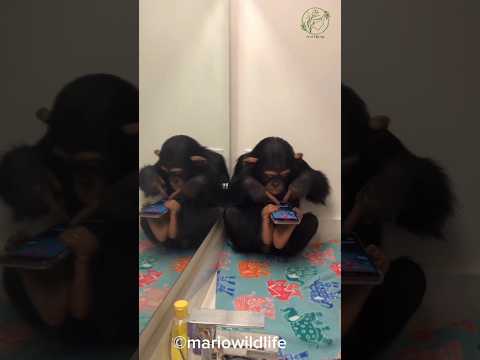
Chimpanzee IQ scores give you a rough sense of their intelligence, but they hardly tell the whole story.
These numbers come from tests made for humans, so they’re not exactly a perfect fit for chimps.
You’ll get an idea of how chimp IQ compares to humans, but you should take those numbers with a grain of salt.
Estimating Chimpanzee IQ Compared to Humans
Most scientists say chimps score somewhere between 35 and 60 on a human IQ scale. That’s about what you’d see from a 3 or 4-year-old child.
Some tests show chimps hitting scores of 80 or even 90, though that’s rare and usually depends on the individual chimp or their environment.
Chimps show off their smarts by using tools, solving problems, and learning from each other. Their brains don’t work exactly like ours, but their skills help them get by in the wild.
Here’s a quick comparison:
| Species | Approximate IQ Range | Human Age Equivalent |
|---|---|---|
| Chimpanzee | 35 – 60 | 3 to 4-year-old child |
| Human (average) | 85 – 115 | Adult |
Comparing IQ like this only gives you a basic idea of what chimps can do mentally.
Limitations of Using Human IQ Tests for Chimpanzees
Human IQ tests focus on stuff like language and math. Chimps don’t use language the same way we do, so these tests miss a lot of their intelligence.
Their smarts are more about survival, learning from others, and using tools.
The tests don’t really measure how chimps communicate with gestures or how they care for each other emotionally.
So, when you see a chimp’s IQ score, remember it’s just a rough guess. Chimps can be clever in ways that a simple test score won’t ever show.
If you want to dig deeper into chimpanzee IQ and how these tests work, check out chimpanzee IQ estimates and their challenges.
Cognitive Abilities and Intelligence of Chimpanzees

You can spot chimpanzee intelligence when you watch how they solve problems, interact, and pick up new skills.
Their mental abilities help them survive in the wild and get along in groups.
Problem-Solving and Tool Use
Chimps figure out how to get food or crack puzzles pretty well. For example, they’ll use sticks to fish termites out of mounds or rocks to smash open nuts.
They don’t just grab tools—they make them, shaping sticks or stones to fit what they need.
That kind of planning shows they really get their environment.
You might notice chimps teaming up with tools, too. Sometimes, they share tools or help each other snag food, which is pretty cool teamwork.
Communication and Social Intelligence
Chimps communicate in all sorts of ways. They use facial expressions, hand gestures, and sounds to get their point across.
A raised hand might mean “let’s play,” for example.
Their social smarts let them form close bonds. If a friend feels down, they’ll comfort them with a hug or some grooming.
That shows they can understand emotions and respond kindly.
Chimps also build alliances to protect their group or find food. You can see how reading others’ behavior helps keep things peaceful in their community.
Learning and Adaptability
Chimpanzees usually learn by watching others, especially the older members of their group.
Young chimps pick up tool use or foraging tricks just by copying what they see. That’s how they end up with all sorts of handy skills.
They don’t just stick to one way of doing things, either. If food runs low, chimps will experiment—maybe try a new food, or grab a different stick.
This flexibility really keeps them going in all kinds of places.
When chimps learn from each other, you end up with these quirky cultural habits. One group might have a totally different tool trick than another.
It’s pretty fascinating how they actually pass knowledge down the line.
If you want to dig deeper into their smarts, check out this page on chimpanzee cognitive abilities and IQ.


