
Yep, a chimpanzee really did go to space. His name? Ham. Back in 1961, he became the first great ape to ride a rocket beyond Earth. That wild trip helped scientists figure out how living creatures might handle the weirdness of space before sending people up there.

Why did they pick a chimp? Researchers trained Ham to do tasks during his suborbital flight, checking if space would mess with his mind or body. That mission paved the way for sending humans.
Curious about how Ham’s journey changed space exploration or what happened to him later? Stick around to hear more about this gutsy astrochimp and how animals helped us reach the stars. If you want more details, check out this page about Ham’s space flight.
Ham the Astrochimp’s Historic Spaceflight
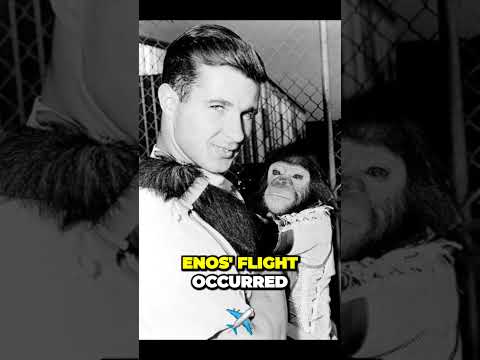
So, here’s how a chimp named Ham helped NASA test early spaceflight tech. His training, his mission, his success—they all played a big part in making human space travel possible.
It’s wild to think how science and animal bravery collided at the start of our journey into space.
Why NASA Chose a Chimpanzee for Spaceflight
NASA picked chimps because they’re surprisingly similar to us. Their organs and reflexes line up pretty closely with humans.
That made Ham a solid choice for testing how space would affect a living, thinking being.
Scientists wanted to see if someone could think and act during a flight. Ham responded to lights and signals, proving tasks could get done even in space.
That gave NASA some real confidence before they risked sending people.
Chimps like Ham aren’t just smart—they’re tough and can handle stress. That made them better than most animals for dealing with the rough ride of launch and reentry.
Choosing Ham was a careful move to protect future astronauts.
Training at Holloman Air Force Base
Ham started his training at Holloman Air Force Base in New Mexico. NASA and Air Force scientists teamed up at the Holloman Aerospace Medical Center.
They spent more than 200 hours teaching Ham to push levers when lights flashed.
They used treats and mild shocks to teach him quick responses. If Ham hit the right lever fast, he got a banana pellet.
If he missed, he got a small shock on his feet. Not the nicest, but it helped him learn to react under pressure.
The setup mimicked what he’d face in space. It wasn’t easy on him, but Ham adapted.
That training made sure Ham could help NASA test the tech for human flights—especially for quick thinking and motor skills.
The Mercury-Redstone 2 Mission Overview
On January 31, 1961, Ham blasted off in the Mercury-Redstone 2 rocket from Cape Canaveral, Florida.
This was a suborbital flight, so the capsule went up into space but didn’t loop around Earth.
The whole thing lasted about 16 minutes and 39 seconds.
Sensors tracked Ham’s heart rate, breathing, and body temp. Ham even finished his lever tasks in space, showing he could work under wild conditions.
The rocket ran into trouble—a valve glitch gave it more thrust than planned, so Ham’s capsule hit the atmosphere faster than expected.
That meant he faced some intense g forces, but Ham made it through.
The capsule splashed down in the Atlantic, and the USS Donner crew rescued him.
Ham had a scraped nose and was a bit dehydrated, but overall, he was fine. This marked a big win for Project Mercury.
Ham’s Impact on Human Spaceflight
Ham’s safe flight proved living beings could survive space and still function after landing.
His quick thinking in flight showed humans could handle space tasks too.
Just a few months after Ham’s trip, Alan Shepard became the first American in space.
Shepard’s mission relied on what NASA learned from Ham’s flight. They figured out how to track health and keep astronauts safe.
Ham wasn’t just a chimp—he was a trailblazer. His mission helped clear away doubts about sending people to space.
Thanks to Ham, space fans everywhere can appreciate the animal who helped open the door to the stars.
Learn more about Ham the Astrochimp and the Mercury-Redstone 2 mission.
Ham’s Legacy and Life After Space

Ham’s trip to space opened the door for human astronauts. His life afterward says a lot about his importance and what he went through.
You’ll see how people honored him, where he lived, and how his story still shows up in culture.
Recognition and Honors
You might be surprised—Ham got plenty of respect from the space community.
After his flight, they officially named him “Ham” after the Holloman Aerospace Medical Center where he trained.
His mission was a huge deal for the success of later spaceflights.
Ham’s skeleton sits at the National Museum of Health and Medicine in Maryland.
The rest of his remains are buried at the International Space Hall of Fame in New Mexico.
That’s how people remember his part in space exploration.
Ham’s Later Years and Final Resting Place
After his mission, Ham lived at the National Zoo in Washington, D.C.
He spent almost twenty years there, mostly away from other chimps.
In 1980, he moved to the North Carolina Zoo to join a small group.
Ham struggled with heart and liver disease as he got older. He died in 1983 at 25.
His final resting place connects him to space history, with a memorial that highlights what he did for NASA’s early days.
Chimpanzees in Popular Culture
Ham’s story pops up in all sorts of books, films, and documentaries about the early days of the space race. Maybe you’ve read Tom Wolfe’s The Right Stuff—Ham’s flight plays a big role there.
A bunch of movies and shows have put their own spin on Ham’s journey, sometimes changing his name. His story even inspired songs and animated films, which keeps the memory of chimpanzees in space alive for new generations.


