
Ever wondered if a human has ever had a child with a chimpanzee? It’s a wild question, honestly, but it pops up because humans and chimps share so much DNA.
You might’ve heard stories or rumors about so-called “humanzee” hybrids. The truth, though, is a lot less dramatic than the myths make it seem.

Humans and chimpanzees can’t have a child together—their genetics and chromosome numbers just don’t match up. Humans have 23 pairs of chromosomes, chimps have 24. That gap alone makes a viable offspring impossible.
A few scientists poked at the idea long ago, but none of their experiments led anywhere. Most stories you’ll hear aren’t backed up by any real evidence.
Curious why? Let’s dig into what science says.
Has a Human Ever Had a Child with a Chimpanzee?
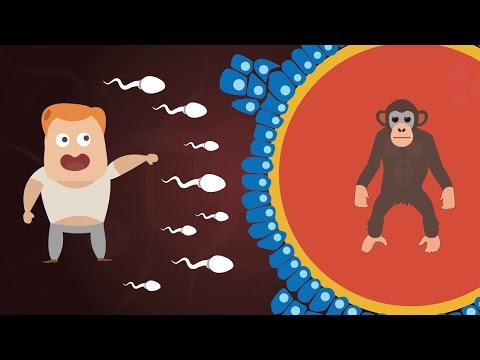
People have tossed around the idea of a human having a child with a chimpanzee for decades. Stories, scientific claims, even some strange experiments have floated around.
But if you look at the facts, the answer is pretty clear.
Historical Claims and Controversies
You might stumble on strange old stories about humans and apes. Some go back as far as the 11th century, telling of supposed offspring from a human and an ape.
None of these stories have ever been proven. Most of them stem from myths or legends, not reality.
Jump to the 1920s, and a Soviet scientist named Ilya Ivanovich Ivanov tried to create a human-chimpanzee hybrid through artificial insemination. He injected female chimpanzees with human sperm, but not a single pregnancy resulted.
Later, rumors in China claimed similar experiments happened in the 1960s. Again, no proof ever surfaced.
These claims stick around in some circles, but they’re based on unverified reports and misunderstandings.
Scientific Evidence and Verification
When you look at the science, humans and chimpanzees have different numbers of chromosomes. Humans have 23 pairs; chimps have 24.
That mismatch makes it almost impossible for a hybrid to form naturally.
Scientists have suggested that early human ancestors and chimpanzees might’ve interbred millions of years ago. But those events happened long before modern humans were around.
Today, nobody has ever verified a case where a human and a chimpanzee produced offspring.
Researchers have seen human sperm interact with ape eggs a little, but it never results in a pregnancy or a living hybrid.
Attempts at Humanzee Creation
You’ve probably seen the word humanzee—it means a supposed human-chimpanzee hybrid. Ivanov in the 1920s and maybe some later Chinese researchers tried to make one.
None of those attempts worked.
There was a chimpanzee named Oliver. Some people thought he was a hybrid, but genetic tests proved he was just a regular chimp with some quirky features.
Trying to make a humanzee brings up a lot of ethical and scientific problems. So far, every experiment failed or stopped early to avoid crossing any lines.
If anything, the idea still lives in science fiction, not real life.
Want to read more? Check out this article on human-chimpanzee hybrid scientific reality.
Genetic and Biological Barriers

So, why can’t a human and a chimpanzee have a child together? The reasons come down to chromosomes, how genes work, and how hybrids develop in nature.
Chromosome Differences
Humans have 46 chromosomes in 23 pairs. Chimps have 48, in 24 pairs.
That difference? It happens because human chromosome 2 actually fused from two separate chimp chromosomes (2a and 2b).
Chromosomes need to match up pretty closely for reproduction to work. This fusion makes things tricky.
When sperm and egg cells try to combine, the extra or mismatched chromosomes cause problems. That stops a healthy embryo from forming.
There are also big changes in the structure of the chromosomes. Humans and chimps have several inversions and rearrangements. All that adds another layer of difficulty.
Genetic Compatibility Challenges
Chromosomes do more than just pair up; their genes have to work together to build a living thing. Humans and chimps differ by about 1.23% in their DNA, but some parts of their genomes are even more different because of insertions, deletions, and changes in gene copy number.
Genes for brain development, immunity, and reproduction have changed a lot between the species. The way cells recognize and talk to each other has shifted, too.
These differences make it nearly impossible for fertilization and hybrid embryos to succeed.
Even if an embryo somehow formed, gene regulation and biological signals probably wouldn’t match up. The embryo would almost certainly fail to develop.
Hybridization in Other Species
Hybrid animals definitely exist, but they usually come from species that have much closer genetic compatibility and similar chromosome numbers.
For instance, horses and donkeys can mate and produce mules because their genomes line up well enough. Mules usually end up sterile, though.
But when it comes to humans and chimpanzees, the gap is just too wide. Their last common ancestor lived about 6 or 7 million years ago.
Since that time, their gene sequences and chromosome structures have changed a lot.
People actually tried creating hybrids between humans and chimps. There were even some wild experiments in the 1920s involving artificial insemination.
None of those attempts ever produced offspring. That pretty much shows how strong the reproductive barriers are.
If you want to dive deeper, check out this detailed review of human and chimpanzee chromosome differences and the challenges that come with them.


