
Ever wondered if a human has ever had a child with a chimpanzee? It’s a question that comes up now and then, probably because humans and chimps share so much DNA.
But honestly, the answer’s pretty straightforward—no, humans and chimpanzees can’t have a child together. Their genetics just don’t match up enough to make that possible.

You’ll hear stories about scientists trying to create a human-chimpanzee hybrid, sometimes called a “humanzee.” None of these attempts have worked.
Researchers have poked at the idea for decades, but there aren’t any verified cases. Even if our distant ancestors mixed genes way back, modern humans and chimps simply can’t.
Curious about why this is impossible? The science behind it is actually pretty interesting.
Let’s look at the genetic barriers and the odd history behind these ideas—and why some claims just don’t match up with reality.
Can a Human Have a Child with a Chimpanzee?
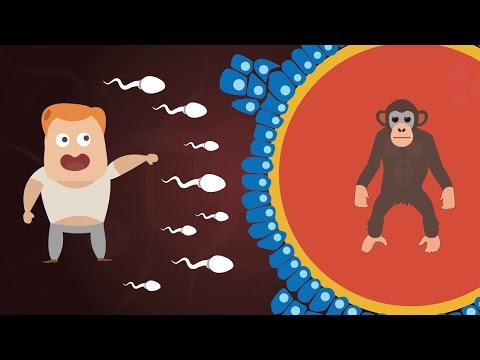
The idea of a human having a child with a chimpanzee brings up all sorts of questions about biology and genetics. People have tossed around claims and stories, but the facts show it’s just not likely.
Digging into the main scientific reasons—and a few past attempts—makes it clear what’s actually possible.
Scientific Evidence and Reported Cases
Nobody has ever confirmed a case where a human and a chimpanzee produced a child. Some stories from the 20th century talk about experiments, but solid proof is missing.
For instance, rumors floated around about a chimp impregnated by human sperm, but when people checked, the stories didn’t hold up. They’re mostly unconfirmed or just don’t add up.
Scientific studies don’t support the idea of any human-chimpanzee hybrid being born. Most of these claims come from rumors or secondhand stories with no real documentation.
Without solid evidence, these tales stay in the realm of folklore, not science.
Human-Chimpanzee Genetic Barriers
Humans and chimpanzees share about 95% of their DNA, which sounds like a lot, but the key differences matter. Humans have 23 pairs of chromosomes, chimps have 24.
That difference alone makes it nearly impossible to create viable offspring.
On top of that, their reproductive systems don’t match up. Chimps can’t carry a human embryo because their bodies are just too different.
These genetic and biological barriers are the main reasons a human-chimpanzee child can’t happen naturally.
Attempts at Hybridization
Some people actually tried to create a human-chimpanzee hybrid. Soviet scientist Ilya Ivanov gave it a shot in the 1920s by mixing human and chimpanzee reproductive material.
His project fell apart when the chimpanzee sperm donor died, and practical as well as ethical issues stopped the experiments.
In 1967, a Chinese scientist reportedly inseminated a chimpanzee with human sperm, but political chaos ended things before they went anywhere. No results ever came out of it.
So, while the idea caught some scientists’ attention, real-world efforts just hit dead ends.
Myths and Misconceptions
There are a lot of myths about a human-chimpanzee child. Stories about “humanzees” or half-human, half-chimp beings usually mix up rumors and fiction.
Some people claim hybrids were born and then hidden or killed, but there’s just no credible evidence for any of that.
Media and pop culture sometimes blow up the DNA similarity thing or misread the science. It’s easy to get caught up in wild headlines, but they rarely have facts to back them up.
Knowing the real science helps you spot the difference between what’s true and what’s just a good story.
Historical Experiments and Ethical Considerations

People have rarely tried to study human-chimpanzee relationships by breeding or close interaction, and these efforts always stirred up controversy. They raised tough ethical questions and sparked debate about how far science should go with primates so close to us.
Ilya Ivanov’s Research
Ilya Ivanov, a Russian scientist, tried to create a human-chimpanzee hybrid back in the early 20th century. He attempted artificial insemination with chimpanzee sperm in human females and vice versa.
None of those experiments led to a pregnancy or offspring.
Even in his time, Ivanov’s work caused controversy. Political pressure and doubts about the ethics of crossing species lines brought his experiments to a halt.
Today, people look back at his attempts as an example of early scientific curiosity—and a lack of concern for animal and human welfare.
Gordon Gallup’s Perspectives
Gordon Gallup, a psychologist, talked about why comparing humans and chimpanzees matters for understanding behavior. He focused on cognitive and emotional similarities instead of breeding experiments.
Gallup encouraged researchers to study how chimps think and learn, not to try and create hybrids.
His approach highlights ethical ways to learn about our close relatives—by observing and interacting, not crossing boundaries that shouldn’t be crossed.
Ethical and Moral Challenges
Trying to breed humans and chimpanzees brings up some huge ethical and moral questions. You have to think about the rights and welfare of both humans and animals.
A lot of scientists say it’s just wrong to use chimpanzees as objects in experiments that push the boundaries of natural species. Laws today usually ban these kinds of crossbreeding experiments.
People now focus more on protecting chimpanzees, respecting their intelligence, and making sure researchers treat them ethically. If you read about old attempts, you’ll see how these issues really influenced today’s rules and attitudes.


