Ever wondered if you could actually befriend a chimpanzee, the way you might with your dog or cat? Well, the answer’s not a simple yes or no, but yeah—you can form a bond with a chimpanzee. Still, it takes a whole lot of patience, respect, and a real understanding of their wild side.
Chimps have strong instincts and pretty complicated social lives. These things really shape how they connect with you.
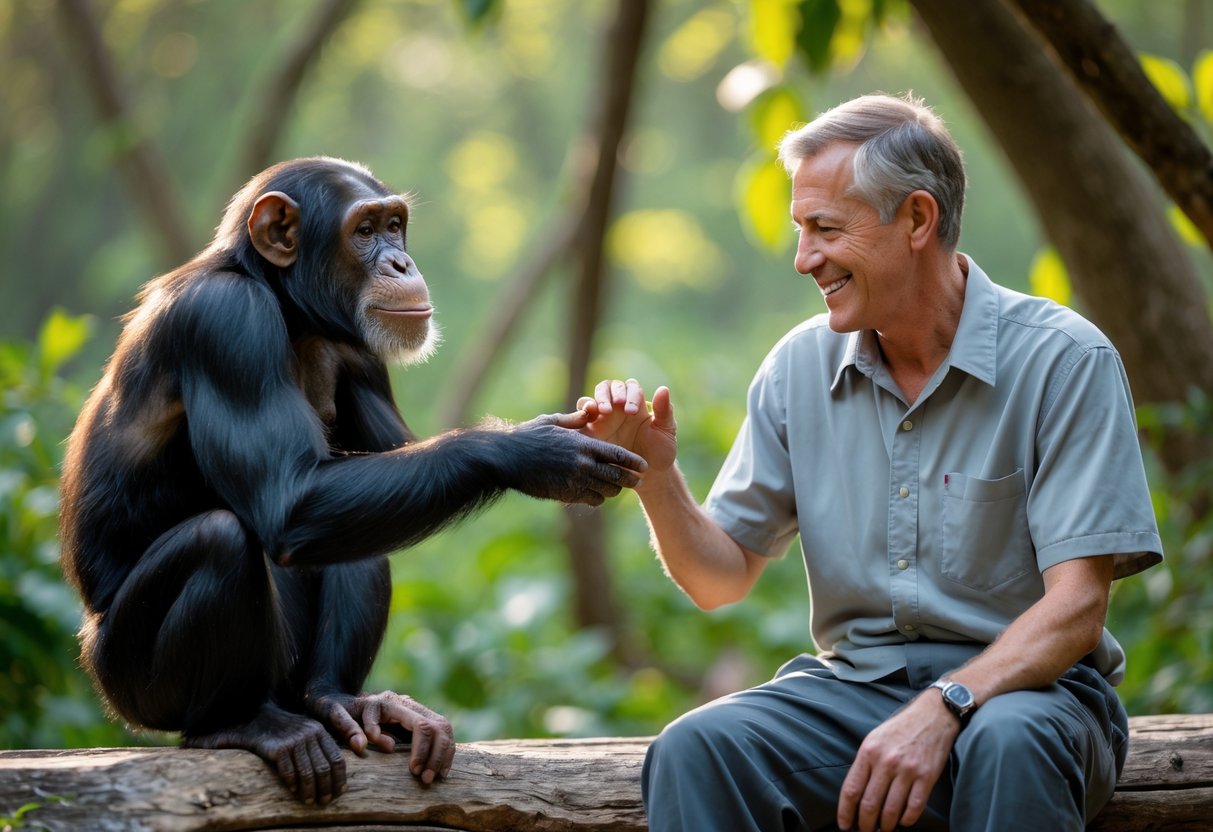
Chimps can be playful, sometimes even affectionate. But honestly, their behavior isn’t much like ours.
They’ll act unpredictably or get aggressive, especially if they feel threatened or stressed. If you want to build trust or even a friendship, you’ve got to keep these challenges in mind and always put safety first.
Curious about how these connections work or what makes chimp friendships so unique? Learning about their communication and social habits can open your eyes to why these bonds are both fascinating and, well, kind of complicated.
If you want more details on how humans and chimps interact, check out this guide on befriending a chimpanzee.
Human-Chimpanzee Relationships: Social Bonds and Challenges

If you want to bond with a chimpanzee, you’ve got to understand their social world—and honestly, there’s a limit to how close you can get.
Scientists have learned a lot from famous studies, and you’ll find that chimps naturally build friendships, but there are risks. Primatologists really help guide how we interact with these animals.
Famous Cases and Scientific Studies
Jane Goodall probably comes to mind first—she’s one of the most famous primatologists out there. Back in the 1960s, she started studying chimpanzees and showed the world that chimps have deep emotions and complex social lives.
Her work really changed how people see animals. She proved chimps can form strong friendships and even use tools.
Other scientists have spent years watching chimps in the wild and in captivity. They’ve found that chimps spend loads of time grooming each other, which helps them build trust.
These studies paint a pretty vivid picture of chimp behavior. Their social structures are surprisingly close to ours.
If you want to dive deeper, there’s a site all about chimpanzee bonds and friendships.
The Social Nature of Chimpanzees
Chimps live in societies with clear rules and hierarchies. Males often team up, which helps them gain power and share resources.
Grooming is huge for them—it’s how they say, “I trust you,” or, “Let’s stay friends.” Without these social bonds, chimps really struggle.
Their social world mixes competition with cooperation. They have to watch who they trust, especially in bigger groups where things can get tense.
Because of all this, chimp friendships take time and a lot of patience. Their social nature is fascinating, but it also makes them tricky companions.
Risks and Behavioral Differences
Chimps are our close relatives, but make no mistake—they’re still wild animals with powerful instincts. Sometimes they show affection, but they can also act out aggressively, especially if something spooks them.
If you try to befriend a chimp, you’re taking real risks. Their behavior isn’t always like ours.
They can switch moods without warning or react with surprising force. Chimps are way stronger than we are, so even their “play” can be dangerous.
You really shouldn’t try to touch or feed wild chimps. That can stress them out or lead to some pretty nasty surprises.
The Role of Primatologists
Primatologists know primates inside and out. When you visit chimp habitats, these experts show you how to interact safely and respectfully.
Their knowledge protects both you and the chimps. They also work hard on conservation, teaching people about chimp social lives and why their natural environments matter.
Primatologists fight against poaching and habitat loss. If you follow their advice and respect chimp behavior, you’ll get to appreciate chimps without putting anyone in danger.
If you’re curious about their research, check out the Leakey Foundation’s work.
Captivity, Welfare, and Legal Issues in Human-Chimpanzee Interactions
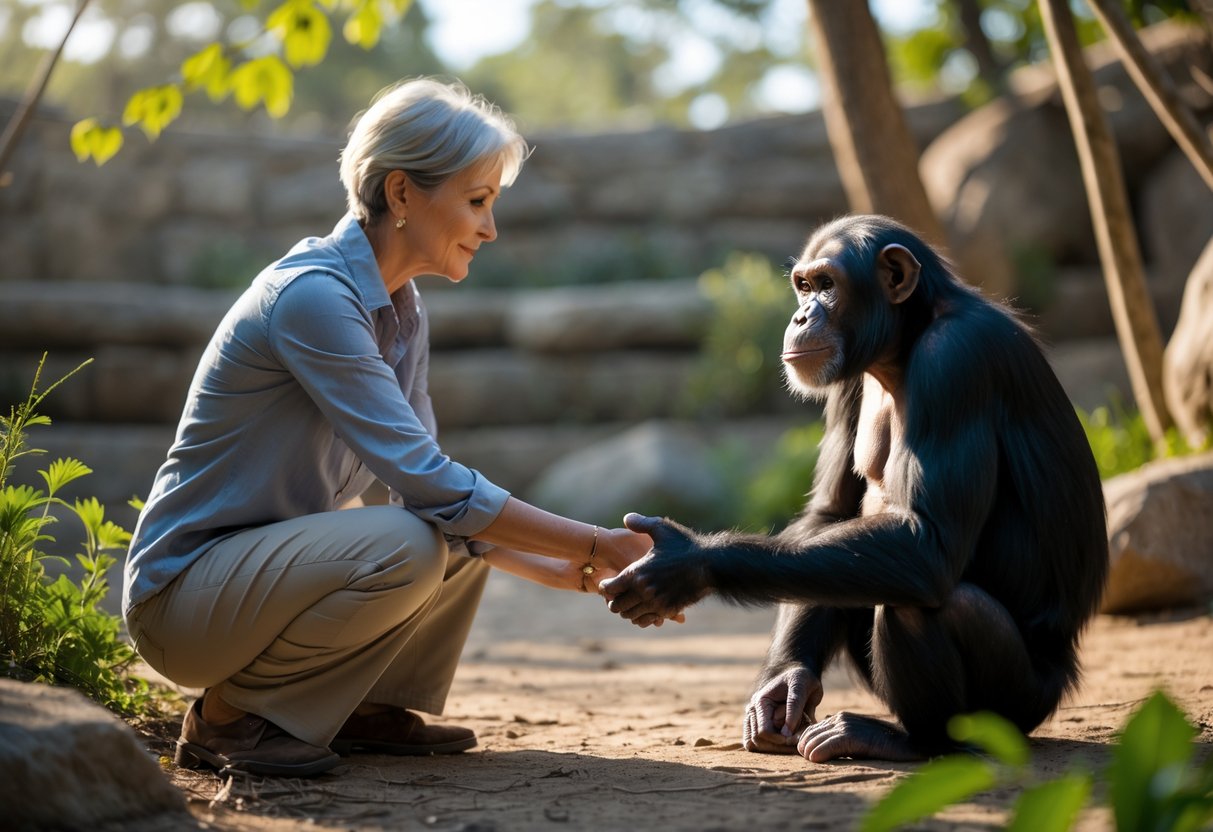
When chimps live in captivity, their lives and behavior change—sometimes a lot. How people care for them, where they stay, and the laws that protect them all play a role in their safety and health.
Understanding these things helps you see just how complicated relationships between humans and chimps can get.
Captive Chimpanzees and Former Pets
A lot of chimps you meet in sanctuaries or zoos once lived as pets. That history really affects how they act around people.
Chimps are strong and sometimes unpredictable, so former pets need careful handling. If they grew up with humans and not other chimps, they often miss out on learning social skills.
This can lead to stress or odd behaviors. When these chimps move to sanctuaries—like the ones run by the Animal Welfare Institute—staff slowly introduce them to other chimps and help them rebuild social bonds.
Even in captivity, chimps keep their wild instincts. You might see friendly behavior, but they can still get scared or upset and react suddenly.
Zoos, Exhibits, and Sanctuaries
Zoos like the Lincoln Park Zoo in Chicago set up indoor and outdoor areas for chimps, with activities to keep them busy. These places try to mimic the wild as much as possible, but space and social groups are usually limited.
Sanctuaries focus more on giving chimps a natural social life with other chimps. They offer bigger spaces and more freedom.
In both places, care teams learn to read chimp body language and understand their needs. Good care means regular health checks, mental challenges, and chances to socialize.
These things help cut down on boredom and stress. Still, captivity always changes how chimps behave and connect.
Media, Entertainment, and the ‘Chimp Crazy’ Controversy
You see chimps in movies and ads, looking playful and cute, but honestly, that’s misleading. Using chimps for entertainment stresses them out and leads to unnatural behaviors.
The whole “Chimp Crazy” controversy points out how people often misunderstand what chimps need. The program works to raise awareness about their complex social lives and the risks that come with human interaction.
When people force chimps into these roles, the animals usually suffer both physically and mentally. That makes it even harder for them to trust humans—and it can make things riskier for everyone involved.
Ethical and Legal Protections
Chimpanzees now have more legal protections than ever before. The Endangered Species Act steps in to shield them from exploitation and unsafe treatment.
Some laws set limits on research and require better care standards in captivity. Groups like the Animal Welfare Institute keep pushing for stricter rules about housing and treatment, which honestly, chimps deserve.
Legal actions don’t always go as far as some people hope. A Chicago court, for instance, refused to grant legal rights to a captive chimp named Tommy. That case really highlights the limits in how the law views chimps as individuals.
If you know about these protections, you’ll probably think more carefully about how chimps should be treated, especially if you ever visit or support places that keep them.


