Ever wondered just how smart a chimpanzee is? Well, the answer isn’t exactly a single, neat number.
Most scientists estimate a chimpanzee’s IQ falls somewhere between 35 and 60, which lines up with the intelligence of a 3 to 4-year-old human child. That number can shift depending on the test or the individual chimp, but it gives you a pretty good sense of their ability to solve problems and learn new things.
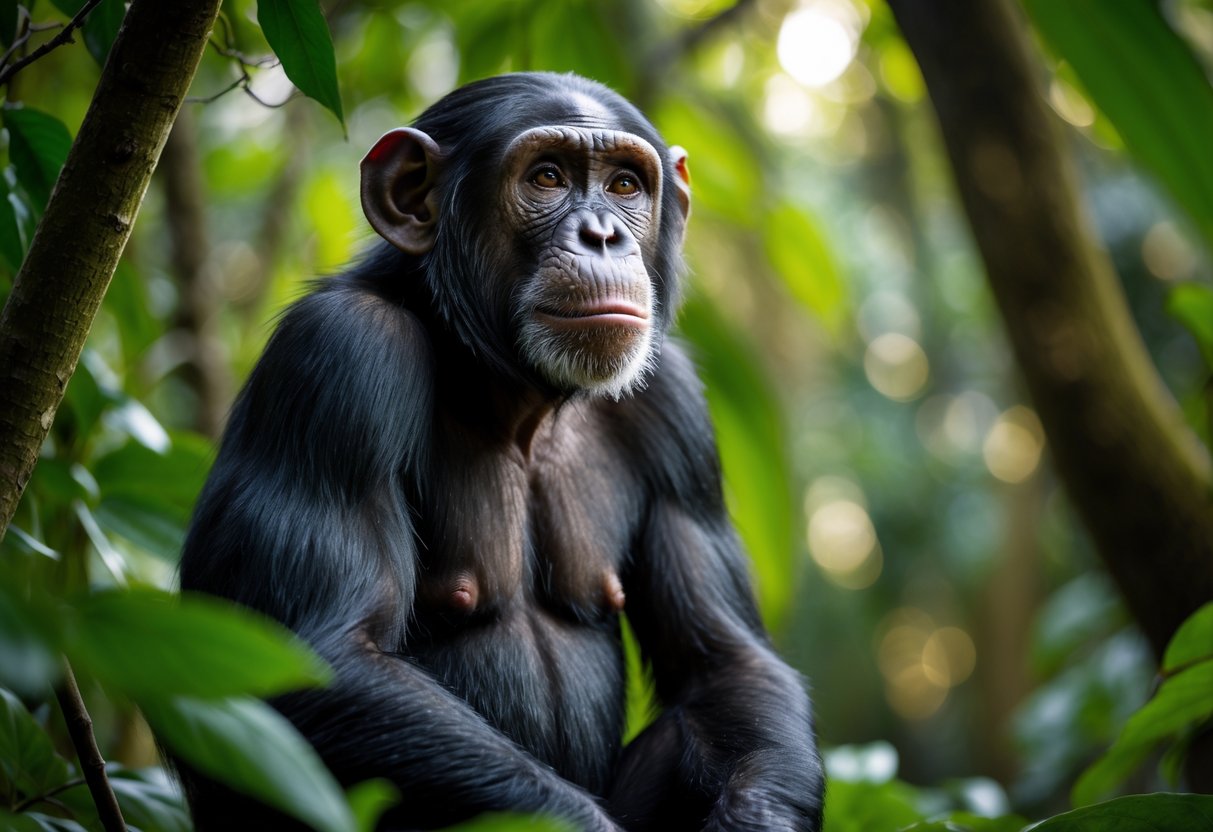
Chimpanzees show off their smarts in all sorts of ways. You’ll see it when they pick up sticks to fish for termites or figure out how to crack a tough nut.
They use tools, solve puzzles, and communicate with each other in ways that really help them survive. These skills also help them build strong relationships with other chimps.
Learning about their IQ can help you appreciate how close they are to us. Sure, they don’t think exactly like people, but they’ve got their own kind of cleverness.
If you stick around, you’ll find out what makes their intelligence stand out. From the way they learn to their social lives, chimpanzees have a thoughtful side that might surprise you.
Estimating the IQ of a Chimpanzee

If you want to understand chimpanzee IQ, you’ll need to look at how their brains compare to ours, what their average scores look like, and why testing animal intelligence can get complicated. The numbers you see for chimpanzee IQ can vary a lot, and the way we measure it really affects the results.
Human IQ Scale Versus Chimpanzee IQ
IQ tests are built for humans, so using them on chimps doesn’t really give you a perfect answer. Chimps just don’t think the same way we do—their brains process things differently.
Scientists usually estimate that chimps land between 35 and 60 on the human IQ scale. That’s about what you’d expect from a 3 to 4-year-old child.
But chimps don’t approach learning or problems like we do. Using a human scale only gives a rough idea.
You’ve got to remember that their thinking style and brain structure aren’t quite like ours.
Average IQ Scores for Chimpanzees
Most studies put chimpanzee IQ somewhere in that 35 to 60 range. Sometimes, you’ll hear reports of scores as high as 80 or 90, but that usually depends on the specific test or how much the chimp has learned from its environment.
A lot of factors play into these numbers—brain size, environment, and even what kind of test they’re taking. For example:
- Chimps can use tools in smart ways.
- They figure out puzzles to get food.
- They learn by watching what others do.
These actions really show off their thinking skills and match up with those IQ estimates.
Limitations of IQ Testing in Animals
Human IQ tests focus on stuff like language and math, so they don’t work all that well for chimps. Chimps don’t use language like we do, which means the tests miss out on a lot of what makes them clever.
Their intelligence is more about survival, getting along with others, and knowing how to use tools. Regular IQ tests just don’t measure that very well.
So, when you see a chimpanzee IQ score, treat it as a rough guess, not a perfect measurement. Chimps often show off smarts that go way beyond what a number can capture.
If you want to dig deeper into the range of chimpanzee intelligence (and why measuring animal IQ is so tricky), check out this article on chimpanzee IQ estimates.
Understanding Chimpanzee Intelligence

Chimpanzee intelligence pops up in all sorts of places. You’ll spot it in the way they tackle problems, pick up new skills from each other, and express themselves with gestures and sounds.
These abilities help them survive and stick together as a group.
Problem-Solving and Tool Use
Chimps can solve problems in ways that might surprise you. You might catch one grabbing a stick to poke into a termite mound or using a rock to crack open a tough nut.
That’s not just luck or instinct—they really understand how to use the things around them. When chimps work together to reach food that’s hard to get, you can see them planning ahead.
They’re always coming up with new tricks to solve challenges in the wild. These moments show how their minds work when it comes to thinking things through.
Social Learning and Cultural Differences
Young chimps pick up a lot just by watching older ones. You’ll notice them copying how to find food or make tools, learning important skills as they go.
That’s how they pass knowledge down from one generation to the next. Different groups of chimps can have their own special habits.
One group might fish for termites in a unique way, while another uses different tools altogether. These differences are kind of like cultures, showing that chimpanzee intelligence includes learning from each other and adapting to their surroundings.
Communication and Emotional Intelligence
Chimpanzees chat with each other through a mix of facial expressions, sounds, and hand gestures.
You’ll spot their signals for play, warning about danger, or asking for help. These little exchanges keep their groups running smoothly.
They really show their emotions, too. When a friend feels upset, a chimp might hug or groom them to offer comfort.
You can see how they pick up on feelings in others and genuinely care about those around them. Their emotional intelligence builds trust and tight bonds inside their groups.
Learn more about chimpanzee cognitive skills and behaviors at What is the IQ of a Chimpanzee? Understanding Their Cognitive Abilities.


