
Ever wondered if chimpanzees are actually aggressive, or if that’s just something people say? Honestly, chimpanzees do show aggression, but it’s just part of who they are—it’s not only because of humans.
They use aggression to protect their territory, compete for mates, and keep order in their groups.
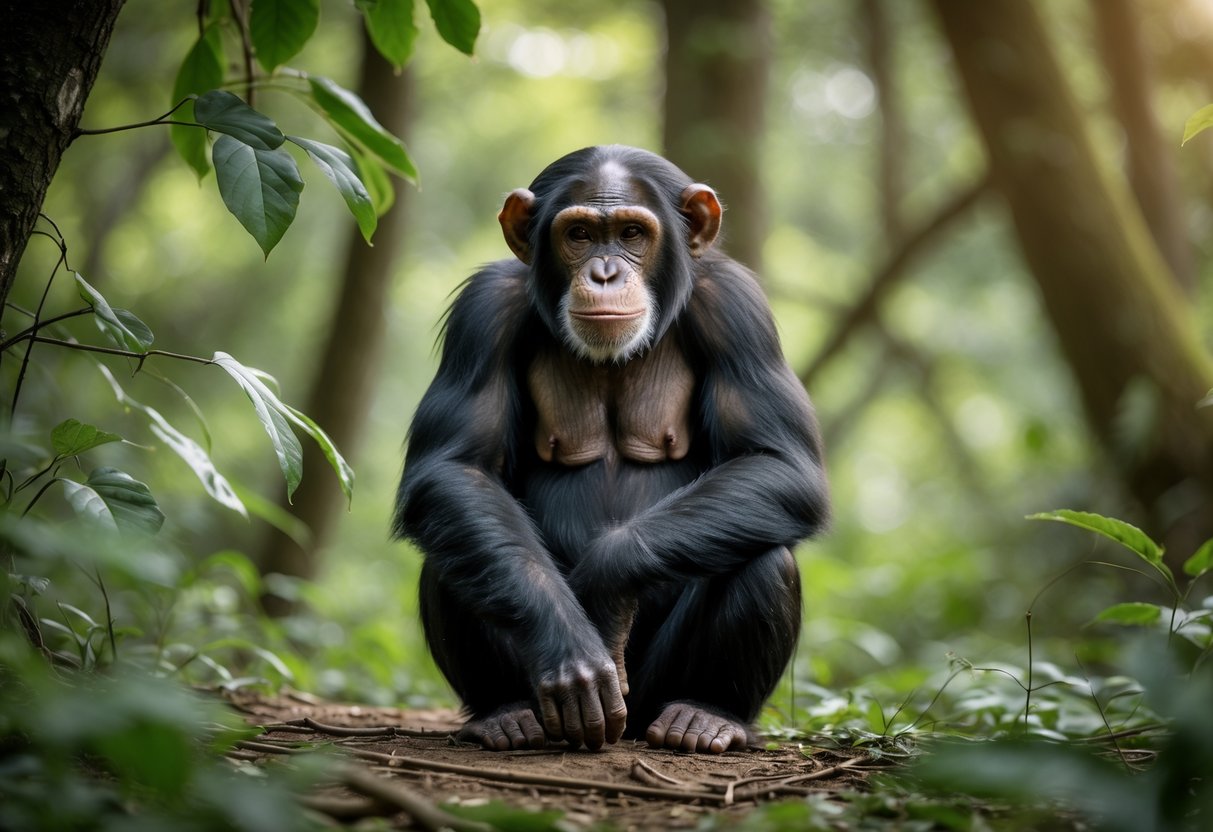
Still, aggression only takes up a small slice of their day.
Most of the time, chimps hang out, groom each other, or just explore their surroundings.
Understanding why they act this way can really show you how close—and different—we are to them.
If you’re curious about what sparks their aggression and how it fits into their world, well, there’s more to dig into.
How Aggression Manifests in Chimpanzees

You’ll see chimpanzee aggression in a bunch of ways—from loud, wild displays to real fights.
Their behavior changes depending on whether they’re in the wild or in captivity.
Plus, males and females tend to show aggression differently.
Types of Aggressive Behaviors
Chimps usually show two main types of aggression: reactive and proactive.
Reactive aggression is that quick, angry flash when a chimp feels threatened or frustrated.
It’s impulsive, not really planned out.
Proactive aggression, though, is more calculated.
Chimps use it during hunts or when groups clash over territory.
You might catch them charging, biting, or even swinging tools at others.
Sometimes, they team up to attack rival groups.
But don’t forget—aggression is just one part of their lives.
Most of the time, they’re socializing or grooming, which keeps things calm.
Differences Between Wild and Captive Chimpanzees
In the wild, chimpanzees fight mostly to survive.
They’ll defend their territory, compete for mates, or protect their community.
Their aggressive acts can look like group attacks or loud, showy displays to scare others off.
Wild chimps also build strong social bonds that help keep violence in check.
When they’re in captivity, though, things shift.
Limited space and odd groupings can stress them out, which sometimes leads to more or different aggression.
You might see chimps in zoos biting or slapping because they’re bored or crowded.
Still, with good care and thoughtful social setups, caretakers can lower aggression in captivity.
Who is More Aggressive: Male vs. Female Chimpanzees
Male chimps usually act more physically aggressive than females.
They fight for status, control over mates, or to protect their group.
You’ll often spot them patrolling borders or challenging rivals with big, bold displays.
Female chimps aren’t as physically violent, but they can get aggressive to protect their young or hold onto food and space.
Their aggression is more about competing for resources—maybe chasing or threatening others.
So, while males are louder about it, females definitely use aggression in their own ways to survive and succeed.
Underlying Causes and Evolution of Aggression

Chimpanzee aggression runs deep, shaped by their biology and social lives.
Their aggressive acts tie back to survival, group dynamics, and sometimes even the challenges that come from living near humans.
Evolutionary Roots of Aggression
Millions of years of evolution have shaped chimpanzee aggression.
This behavior helped their ancestors survive and compete for resources.
Aggression often boosts reproductive success because males can defend territory and mates.
Chimpanzees and humans actually share a common ancestor from about 5 to 7 million years ago.
Both species organize group attacks, so maybe this kind of violence is partly inherited.
But aggression isn’t always on—it comes out when it helps survival or keeps order.
Think of it as just another way they protect their community and improve chances for their young.
Social Structure and Competition
Chimpanzee social life gets pretty complicated, with groups ranging from 30 to over 100 members.
Aggression usually pops up during fights over dominance, territory, or mates.
Groups with more males tend to have more frequent attacks.
Each male tries to move up the social ladder, so competition is fierce.
Chimps sometimes coordinate raids on neighboring groups to defend or grab new territory.
This kind of planned aggression stands apart from random fights.
You’ll see it more in areas where there’s high population density—basically, more chimps fighting for less space and food.
Their social structure really shapes when and how aggression shows up.
Impact of Human Activities
People farm, log, and hunt in areas where chimpanzees live. You might assume this always sparks more violence, but actually, research says human disturbance doesn’t directly cause chimps to be more aggressive.
Chimpanzees follow their own social instincts, even if people are nearby. When their habitats shrink, though, chimps end up closer together, and that could mean more tension.
It’s interesting to realize that aggression is just part of who they are—not simply a reaction to us showing up.
You can dig into more details in the Live Science study on chimpanzee aggression.


