
Ever watched bumble bees buzzing around flowers and wondered what sets the queen apart from the rest? The queen bumble bee stands out—she’s bigger, fertile, and the only one laying eggs. Worker bees, meanwhile, are smaller females who do all the busy work but can’t reproduce.
That’s the core difference, and it shapes everything about how their colonies run.
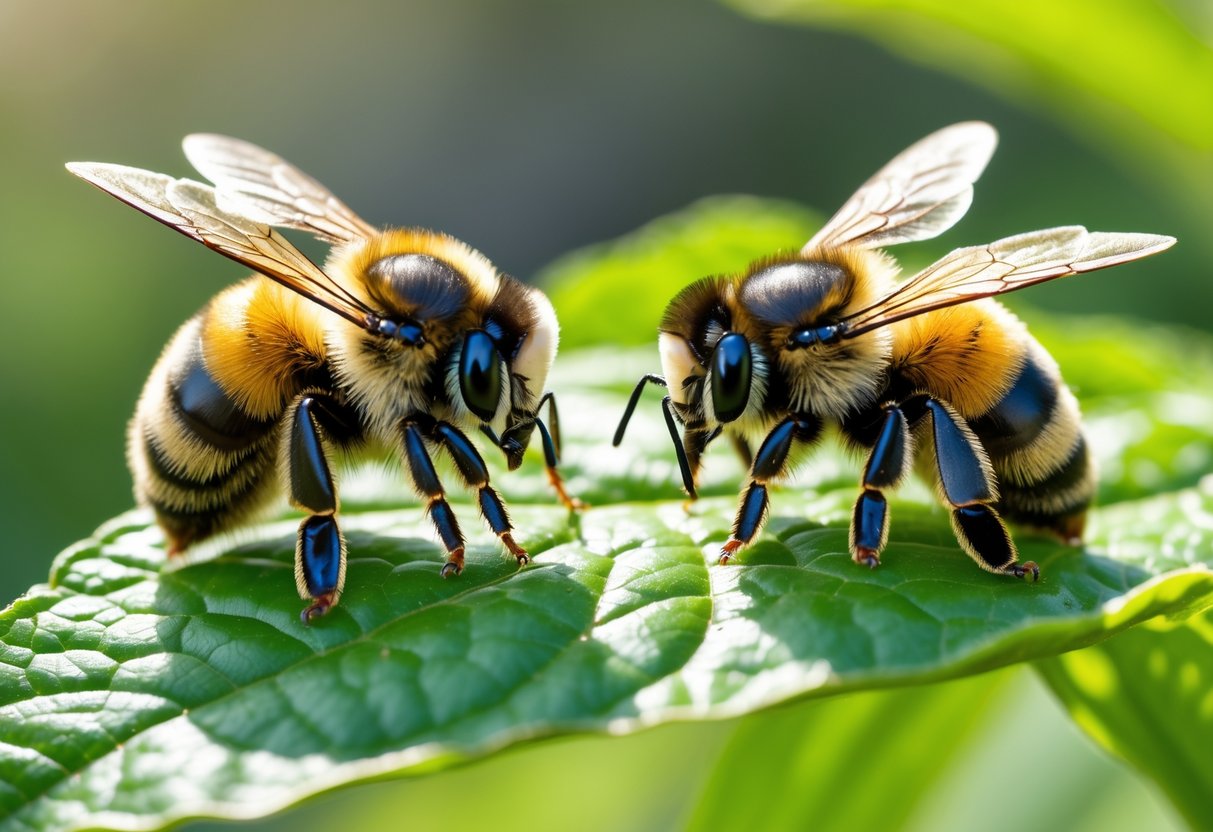
Each year, the queen wakes up from her winter nap and starts a brand new colony. She finds a cozy spot, builds a nest, and gets busy laying eggs to grow her family.
Worker bees head out to collect pollen and nectar. They feed the young, keep the nest tidy, and basically make sure everything’s humming along. Next time you spot a queen outside, you’re actually seeing the heart of the bumble bee colony.
The queen’s main job is to keep the colony growing. Workers handle the feeding and protection. This teamwork keeps nature buzzing—literally.
Key Differences Between Queen Bumble Bees and Worker Bumble Bees

Queen bumble bees and workers really do differ in plenty of ways. Their bodies, jobs, egg-laying abilities, and life cycles all look pretty different.
These differences help the whole colony thrive.
Physical Characteristics and Size
Queen bumble bees are usually much larger than their worker sisters. Their abdomens look longer and rounder, which helps when they lay eggs.
You’ll notice queens also have bigger compound eyes and stronger wings for those long-distance flights.
Worker bees, on the other hand, are smaller and more slender. They’ve got special pollen baskets on their legs for food runs.
Workers don’t develop full reproductive organs, so they stick to other tasks in the hive.
If you watch a bee colony closely, you can spot the queen just by her size.
Roles and Responsibilities in the Colony
The queen’s job is pretty straightforward: lay eggs. She keeps the colony growing and healthy.
She also releases pheromones that help control the workers and keep things running smoothly.
Worker bees take care of almost everything else. They gather nectar and pollen, build and fix the hive, feed the young, and defend against threats.
Workers also look after the queen and the drone bees.
These separate jobs let the colony survive through the seasons.
Reproductive Abilities and Egg Laying
Only the queen lays eggs in the colony. She mates with drone bees during a special flight, then stores the sperm for use all season.
The queen lays both fertilized and unfertilized eggs. Fertilized eggs hatch into female workers, while unfertilized eggs become male drones.
Workers can’t reproduce in a healthy hive. If the queen disappears, some workers might lay unfertilized eggs, but it’s not the norm.
The queen’s egg-laying really controls how big and successful the colony gets.
Queen Bumble Bee Life Cycle
A queen starts out like a worker but goes through some unique steps. After she hatches, she mates, then spends the winter hibernating alone.
That winter rest is crucial for her survival and for starting a new colony in spring.
When spring arrives, she builds a tiny hive and lays eggs. The first batch becomes workers who help grow the hive.
The queen keeps laying eggs all season until the cold weather returns.
Worker bees don’t live nearly as long—usually just weeks. Queens can live up to a year, depending on the species.
If you know this life cycle, it’s easier to predict when your colony will grow or shrink.
You can read more about these differences at queen bumble bee roles and worker bee tasks and queen vs worker bee responsibilities.
Behavioral and Ecological Importance

Queen and worker bumble bees both play unique, important roles. Their actions impact pollination, hive life, defense, and even farming.
If you get how this works, you’ll notice just how much bumble bees matter to nature and agriculture.
Foraging and Pollination Roles
In gardens and fields, worker bumble bees do most of the pollinating. They spend their days collecting nectar and pollen, bringing it back as food for the hive.
This doesn’t just feed the bees—it helps flowers reproduce and keeps plants thriving.
Queens mostly focus on starting new colonies and laying eggs. In the very early days, the queen does a bit of foraging, but once workers hatch, they take over.
That split of duties keeps the hive running well and well-fed.
Bumble bees are top-notch pollinators. They visit all sorts of flowers and can work in cooler weather, which honey bees usually can’t handle.
That makes them especially valuable for early spring crops and wildflowers.
Hive Organization and Communication
A bumble bee colony relies on everyone knowing their role. The queen lays eggs and produces new bees.
Workers do nearly everything else—building the wax honeycomb, feeding young bees, and keeping things in order.
Bees talk to each other using movements and chemical signals. Workers use scents and pheromones to guide each other to food.
Queens also release pheromones to let everyone know she’s there and in charge.
These systems keep the hive organized. Without the workers’ teamwork and the queen’s leadership, the whole thing would fall apart.
Defensive Behaviors and Stinging
You might worry about getting stung, but bumble bees and honey bees aren’t the same. Worker bumble bees can sting if threatened, mainly to protect their hive.
They don’t lose their stinger like honey bees do, so they can sting more than once.
Queens almost never sting. They spend most of their time inside, focused on laying eggs.
Workers act as guards and will buzz loudly or even bite if they sense danger.
If you respect bumble bees and give them space, you probably won’t get stung. They really only get aggressive if they’re defending their home.
Impact on Ecosystems and Agriculture
Bumble bees play a huge role as pollinators because of how they forage. They boost wild plants and help crops like tomatoes, peppers, and berries thrive. Honestly, your food supply would look a lot less colorful and reliable without them.
They keep plant diversity alive, which is great for other insects and animals too. Lots of farmers actually want more bumble bees around to get better crop yields, and they’re not even after honey—that’s more of a honey bee thing.
If you care about clean ecosystems and sustainable agriculture, protecting bumble bees just makes sense. These bees do best in healthy habitats with plenty of different flowers.
For more details on how queens and workers keep the colony running, check out Queen Bumble Bee vs. Worker Bumble Bee key roles.


