
If you’re dealing with too many bees buzzing around your home or garden, you’re probably wondering how to get rid of them without making things worse. The best way to move bees along is by using gentle, natural methods that encourage them to leave while keeping these important pollinators safe. That way, you stay protected and the environment gets a break too.
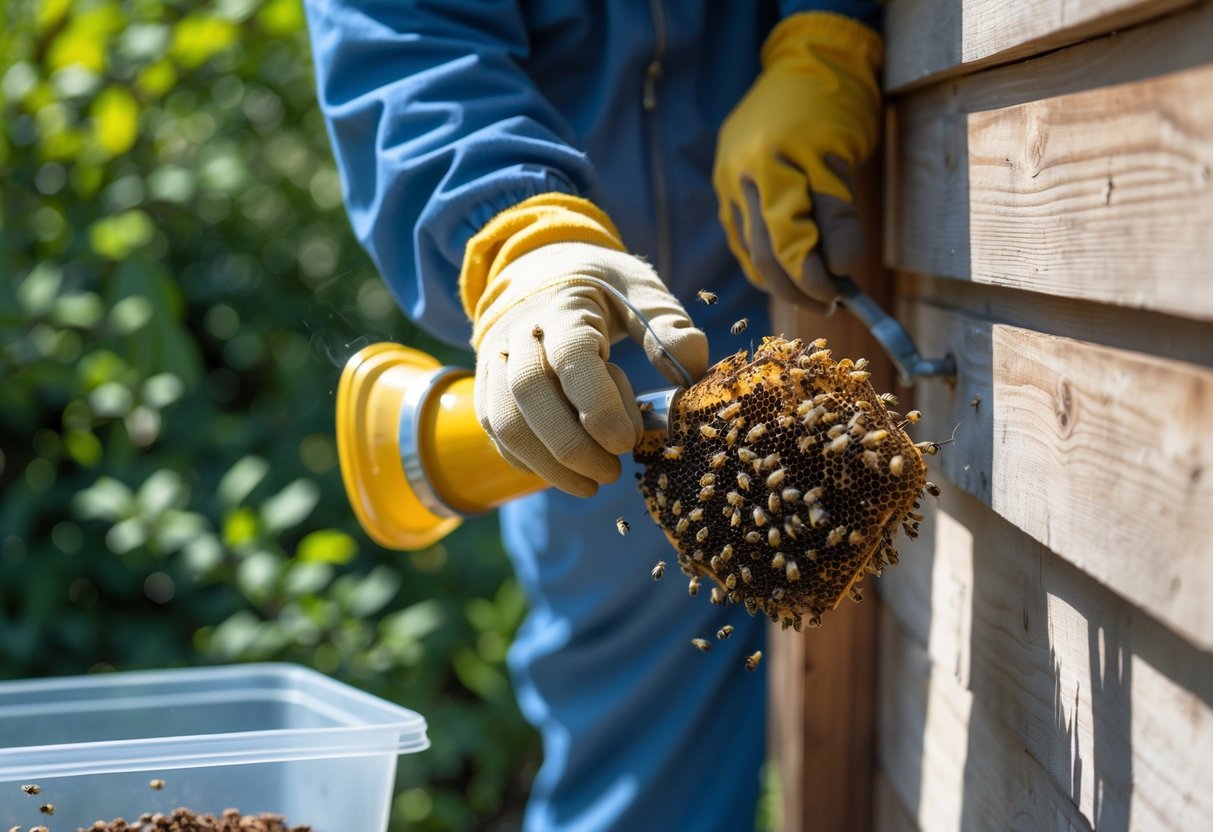
Bees play a huge part in pollinating plants, so you really don’t want to reach for harsh chemicals that could harm them. Instead, try planting bee-repelling plants, spraying with natural solutions, or even calling a local beekeeper to help move the hive.
Knowing how to manage bees in a careful way lets you keep your space comfortable without messing with nature.
Effective Ways to Get Rid of Bees
Start by figuring out which bees you’re dealing with, then work to keep them from settling in, and use gentle repellents if you need to. Sometimes, you might need to remove a hive or get professional help to keep everyone safe.
Identifying Common Bee Species
Figuring out which bees are hanging around your yard helps you pick the right approach. Honeybees live in big hives and help pollinate your plants. They usually won’t sting unless you bother them.
Carpenter bees drill into wood and can mess with your home’s structure. Ground bees nest in dirt and usually don’t want anything to do with people.
You can spot carpenter bees by their shiny, black, hairless bellies. Ground bees make little holes in the ground and tend to keep their distance. If you identify the bees correctly, you can decide if you need to act or just leave them alone.
Preventive Actions to Keep Bees Away
Get rid of things that attract bees in the first place. Keep food and drinks covered when you’re outside. Try not to wear bright or floral clothes that make you look like a flower.
Seal up cracks and holes around your house so carpenter bees can’t move in. Keep bee-friendly plants, like clover or lots of flowers, away from patios or play areas. Put up screens or netting over spots where bees might sneak into your home.
Check your yard every so often, especially mid-morning to early afternoon when bees are busiest, so you can catch hives early.
Natural Bee Repellents and Scents
Bees really don’t like certain smells. You can put out mothballs, cinnamon, or vinegar near places where bees hang around. Citronella candles or plants like eucalyptus and mint also make bees think twice about sticking around.
Try mixing garlic in hot water, let it sit overnight, and then spray it where bees like to visit. This doesn’t hurt the bees, but it usually convinces them to move on.
Skip the harsh chemicals—they do more harm than good. Stick with these gentle repellents to keep bees away without hurting them or the environment.
Safe Removal Methods and When to Call a Professional
If bees set up a hive on your property, don’t try to remove it yourself unless you know what you’re doing. Bee stings can get serious, especially if you’re allergic.
You can use smoke to calm bees for a short time, but honestly, that’s something beekeepers handle best. Humane removal means trapping bees without killing them, then moving them somewhere safe.
Try a bee trap or call a beekeeper who knows how to relocate honeybees. If carpenter bees are chewing up your house or you find a big hive close by, you’ll want to call a pro who can move the bees and fix any damage.
That way, you stay safe and the bees get a chance to keep doing their thing.
For more info on safe removal, check out how to get rid of bees without killing them.
Natural Remedies and Repellents for Bees

You have lots of options when it comes to using plants, scents, and homemade sprays to keep bees away. These tricks let you protect your home and yard without hurting the bees.
Using Bee-Repellent Plants
Some plants naturally make bees stay away because they don’t smell sweet or have much pollen. Try planting marigolds, mint, eucalyptus, or citronella around your yard to make bees lose interest.
Mint grows fast, so keep it in a pot unless you want it everywhere. Marigolds add a ton of color and keep bees at bay. Eucalyptus leaves put out a strong scent that bees really don’t like.
Citronella works for mosquitoes too, so it’s a win-win. Planting or setting out citronella near your favorite outdoor hangouts is a simple way to cut down on bee visits.
Homemade and Store-Bought Bee Repellents
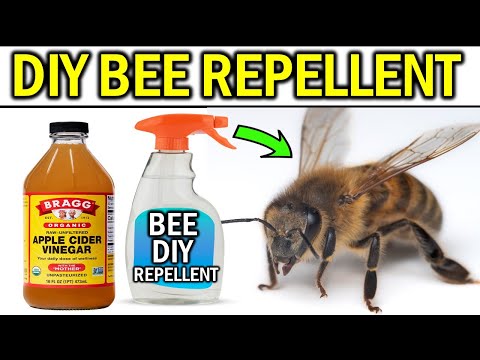
You can whip up simple sprays at home to send bees packing. Mix water with vinegar, or add cinnamon and garlic extracts for a natural spray that bees avoid.
Some folks like store-bought sprays made with essential oils like citronella or lemongrass. They block the scents bees use to find flowers.
Mothballs can work too—hang them near doors or spots where bees show up. Just be careful, since mothballs can be toxic to pets and kids.
Mixing homemade sprays and mothballs gives you a way to keep bees away without reaching for harsh chemicals.
Strategic Scents That Deter Bees
Some smells just throw bees off or send them buzzing elsewhere. If you’re hanging out outside, try lighting up citronella candles—they work surprisingly well for keeping bees at bay.
People also use strong scents like cloves, cayenne pepper, or garlic as natural repellents. Maybe you’ll want to sprinkle a bit of powdered cayenne near your flower beds, or crush some cloves and toss them in little bags to hang around the porch.
Citronella candles don’t just smell good—they also hide the floral scents that usually attract bees. If you set these scents up in the right spots, you’ll probably notice fewer bees bothering you.
Want more ideas or step-by-step recipes? Check out natural options for bee control at Natural Bee Repellents.


