
You’ve probably seen honey bees and bumble bees buzzing around flowers, but honestly, they’re not as similar as you might think.
The main difference between a honey bee and a bumble bee comes down to size, looks, and lifestyle. Bumble bees look bigger, rounder, and way fuzzier, while honey bees seem smaller, slimmer, and not quite as hairy.
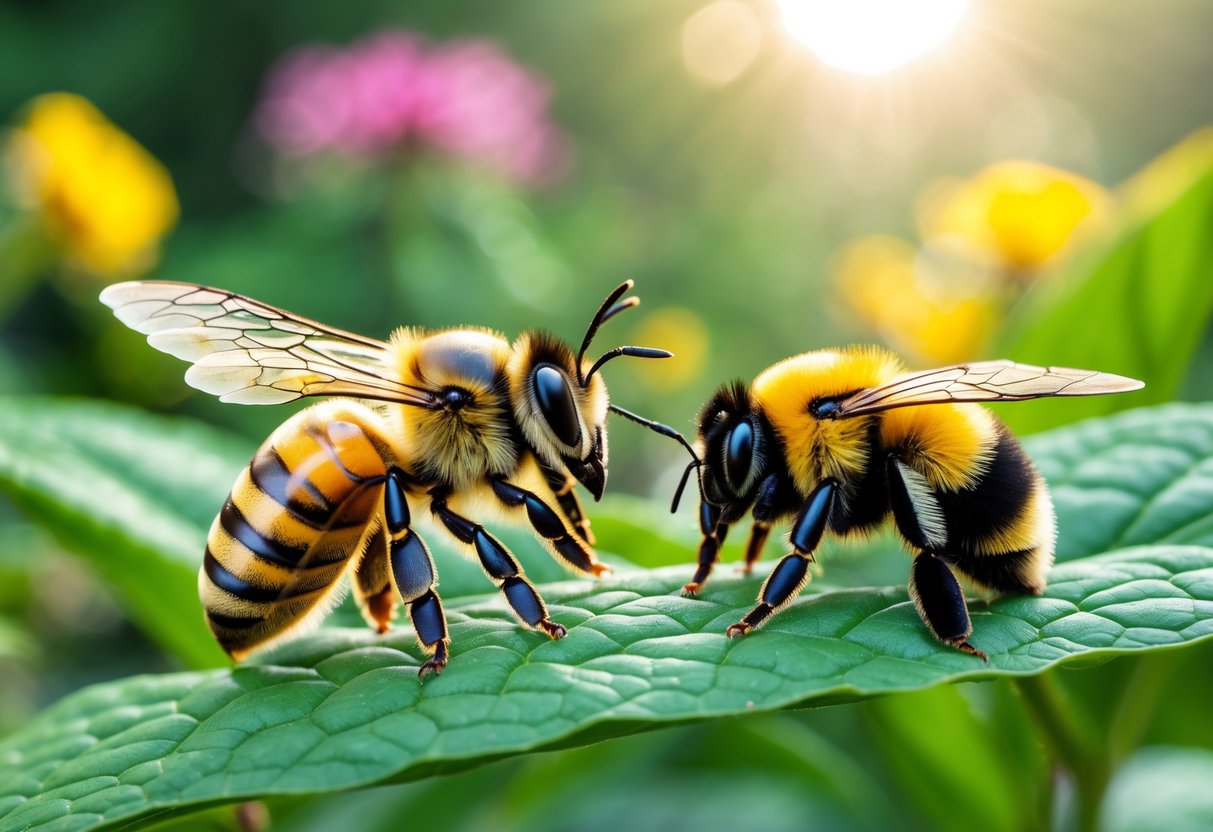
Honey bees build large colonies and make complex hives that last through winter.
Bumble bees prefer smaller, simpler nests underground or tucked away, and only the queen survives the cold months.
When you spot them in your garden or at the park, it’s kind of cool to notice these differences.
If you’re curious about how their behavior and even the honey they make aren’t quite the same, let’s walk through the basics so you can tell these bees apart without much effort.
Key Differences Between Honey Bees and Bumble Bees

You’ll spot some obvious differences in how honey bees and bumble bees look, where they hang out, and how they act in their colonies.
Their size, nest style, social habits, and even their defenses all set them apart.
Physical Appearance and Size
Bumble bees come across as larger and rounder than honey bees.
They’re covered in thick, fuzzy hair that helps them stay warm—kind of like little flying teddy bears.
Their colors pop, usually with bold black and yellow stripes.
Honey bees, on the other hand, look smaller and slimmer.
They’ve got smoother bodies with less fuzz, so they look shinier and not nearly as fluffy.
Their colors are more subdued—think light brown, golden, and darker stripes.
Bumble bees usually measure about 1 to 1.6 inches, while honey bees are closer to 0.5 to 0.6 inches.
So, if you see a big, fuzzy bee, chances are it’s a bumble bee.
Nesting Locations and Hive Structure
You’ll find most bumble bee nests hidden underground.
They like old rodent holes or thick grass for safety.
Sometimes they’ll use birdhouses or dense bushes, but their nests don’t have that neat waxy structure you see in honey bee hives.
Honey bees build their hives above ground, often in hollow trees or those classic man-made boxes.
They make their hives out of beeswax, with hundreds or thousands of hexagonal cells to store honey and raise new bees.
Honey bee hives stick around for years and get pretty elaborate.
Bumble bee nests, though, stay small and simple—and last just one season.
Colony Size and Social Behavior
Honey bee colonies can get huge, with tens of thousands of bees living together.
Each hive has a queen, lots of worker bees, and some drones.
They work together to keep the queen happy and the hive running all year.
Bumble bee colonies are much smaller, usually with only a few hundred bees.
There’s still a queen and some workers, but not nearly as many as in a honey bee hive.
Bumble bees don’t make a lot of honey or store it for winter like honey bees do.
Honey bees have this neat way of communicating—they dance inside the hive to tell each other where to find food.
Bumble bees aren’t as organized about it, but they’re still excellent pollinators.
Stingers and Defense Mechanisms
Honey bees have barbed stingers.
If one stings you, the stinger gets stuck in your skin, and the bee dies soon after.
This makes honey bees pretty defensive, especially near their hives.
Bumble bees have smooth stingers, so they can sting more than once and don’t die from it.
They’re usually less aggressive, but they’ll defend their nests if you mess with them.
Both bees sting only to protect themselves.
You’ll probably get stung by a honey bee more often near their hives since their colonies are bigger and more protective.
Pollination and Ecological Roles

Honey bees and bumble bees both help plants by moving pollen, but they go about it differently.
Their habits really shape how well they pollinate and what roles they play in nature.
They also differ in how they gather food and interact with people who keep bees.
Pollination Efficiency and Methods
Bumble bees are amazing at something called buzz pollination.
They vibrate their bodies to shake pollen loose, which helps plants like tomatoes and blueberries make more fruit.
Honey bees don’t buzz pollinate.
Instead, they visit all sorts of flowers and rely on their big numbers and teamwork to spread pollen around.
Honey bees are great for pollinating crops, but bumble bees handle wildflowers and tough weather better.
Honey and Pollen Gathering
Honey bees use little baskets on their legs—called pollen baskets—to carry pollen.
They gather and store a lot of pollen and nectar to make honey, always thinking ahead for the whole hive.
Bumble bees also collect nectar and pollen, but they mostly use it right away to feed their smaller colony.
They don’t store much honey since their nests are tiny and temporary.
That difference shapes how each bee fits into the environment and the food chain.
Beekeeping and Domestication
People keep honey bees mostly because you can harvest honey and wax from their large, structured hives. Beekeepers actively manage these bee populations to help out with crop pollination.
Of course, honey bees face threats like the varroa mite. If you don’t treat infestations, these mites can seriously damage hives.
Bumble bees, on the other hand, usually aren’t farmed. Their smaller nests are tough to control, and honestly, they just don’t make much honey.
Sometimes, though, growers raise bumble bees to pollinate greenhouses. Most bumble bees live wild and seem better suited to native flowers and natural habitats.
If you’re looking to support local plants, both types of bees help out. They just do it in their own ways, depending on their pollination strengths and what the ecosystem needs.


